Love this? Save it for later!
Share the inspiration with your friends
Introduction
“You want me to cook steak? On a weeknight?” my friend Mark asked, eyebrows raised as I pulled out a thick cut from the fridge. It was a random Tuesday evening, and honestly, I wasn’t planning anything fancy. But Mark’s skepticism reminded me of the countless times I’d fumbled the perfect steak—either overcooked, dry, or just meh. Then, a few months ago, I stumbled upon a simple method that changed everything.
It wasn’t during some grand culinary class or fancy restaurant demo, no. It happened while I was at a local butcher shop, chatting with Joe—the kind of guy who knows every cut and has stories about each one. He shared a tip about letting the steak rest long enough before hitting the pan, and something about the searing heat that sealed in the juices. I was half-listening while juggling a cracked bowl and a toddler yelling in the background, but I scribbled down his advice anyway.
That night, I tried it. I mean, I really tried it, despite the chaos—forgot the timer once, almost flipped too early, but the result? A perfectly medium-rare steak with that glorious pink center and juicy, tender texture that I’d only dreamed about. Since then, it’s my go-to recipe whenever I want a steak that steals the show without hours of fuss. Maybe you’ve been there, hunting for a steak that’s tender but not raw, flavorful but not overdone. Let me tell you, this recipe is the answer.
Why You’ll Love This Recipe
Trust me, I’m picky about steak—if it’s not right, I’d rather skip it. This recipe, however, has been tested over many dinners with friends, family, and even the occasional unexpected guest (like Mark!). Here’s why it stands out:
- Quick & Easy: Ready in under 30 minutes, perfect for those busy weeknights when you crave something special but don’t want to spend all evening cooking.
- Simple Ingredients: No mystery spices or rare cuts here—just quality steak, salt, pepper, and a few pantry staples that most kitchens have.
- Perfect for Any Occasion: Whether it’s a casual dinner or impressing friends on the weekend, this steak fits right in.
- Crowd-Pleaser: I’ve yet to meet anyone who didn’t give this recipe a thumbs up. It’s juicy, tender, and perfectly cooked every time.
- Unbelievably Delicious: The secret sear and resting time create a flavor and texture combo that hits all the right notes.
This isn’t just another steak recipe—it’s a method I refined after plenty of trial and error. The magic lies in the timing: hitting the pan hot enough to create a crust but gentle enough to keep the inside pink and tender. And honestly, once you get this down, you’ll feel like a steakhouse pro in your own kitchen.
What Ingredients You Will Need
This recipe stays true to the basics, focusing on quality over complexity. The ingredients are straightforward but essential for that juicy, tender finish.
- Steak: Choose a thick cut like ribeye, striploin, or filet mignon, about 1 to 1.5 inches thick (2.5 to 3.8 cm). I prefer USDA Choice or better for marbling.
- Salt: Coarse kosher salt or sea salt works best to season the steak evenly and help form that crust.
- Freshly Ground Black Pepper: Adds a classic bite; grind it fresh just before cooking.
- Oil: Use a high smoke point oil like grapeseed, canola, or avocado oil to sear the steak without burning.
- Butter: Unsalted, for basting near the end, adding richness and flavor.
- Garlic: A couple of smashed cloves for aroma while basting (optional, but trust me, it’s worth it).
- Fresh Herbs: Thyme or rosemary sprigs to infuse that savory note during basting.
If you want to play around, you can swap butter with ghee for a slightly nuttier flavor or try finishing with a splash of red wine for a subtle tang. Just make sure your steak is well rested before cooking—it makes all the difference!
Equipment Needed
- Heavy-Bottomed Skillet or Cast Iron Pan: Essential for even heat and great searing. I’ve tried non-stick, but nothing beats cast iron for crust.
- Tongs: For flipping the steak gently without piercing the meat and losing juices.
- Instant-Read Meat Thermometer: Super helpful to hit that perfect medium-rare without guesswork. A budget-friendly model works just fine.
- Plate and Foil: For resting the steak after cooking—don’t skip this step!
- Small Spoon: For basting butter over the steak during cooking.
If you don’t have a cast iron, a stainless steel pan can do the trick, but make sure it’s hot before adding the steak to avoid sticking. Also, keep your tongs handy; flipping with a fork can make the steak lose precious juices.
Preparation Method
- Bring the Steak to Room Temperature (15-20 minutes): Take your steak out of the fridge and let it rest on the counter. This helps it cook evenly. I usually set a kitchen timer because I get distracted easily!
- Season Generously: Pat the steak dry with paper towels to remove moisture, then season both sides with coarse kosher salt and freshly ground black pepper. Don’t be shy here; the salt helps form that crust.
- Preheat Your Pan: Place your cast iron skillet on medium-high heat and let it get very hot, about 3-5 minutes. You’ll know it’s ready when a drop of water sizzles immediately.
- Sear the Steak (3-4 minutes per side): Add a tablespoon of high smoke point oil to the pan, swirl it around, then gently lay the steak away from you to avoid splatters. Don’t move it around—let it form a crust. Flip after about 3-4 minutes, depending on thickness.
- Add Butter, Garlic & Herbs (Last 2 minutes): Reduce heat to medium. Add 2 tablespoons unsalted butter, smashed garlic cloves, and fresh thyme or rosemary sprigs. Tilt the pan and use a spoon to baste the melted butter over the steak repeatedly. This adds flavor and keeps it moist.
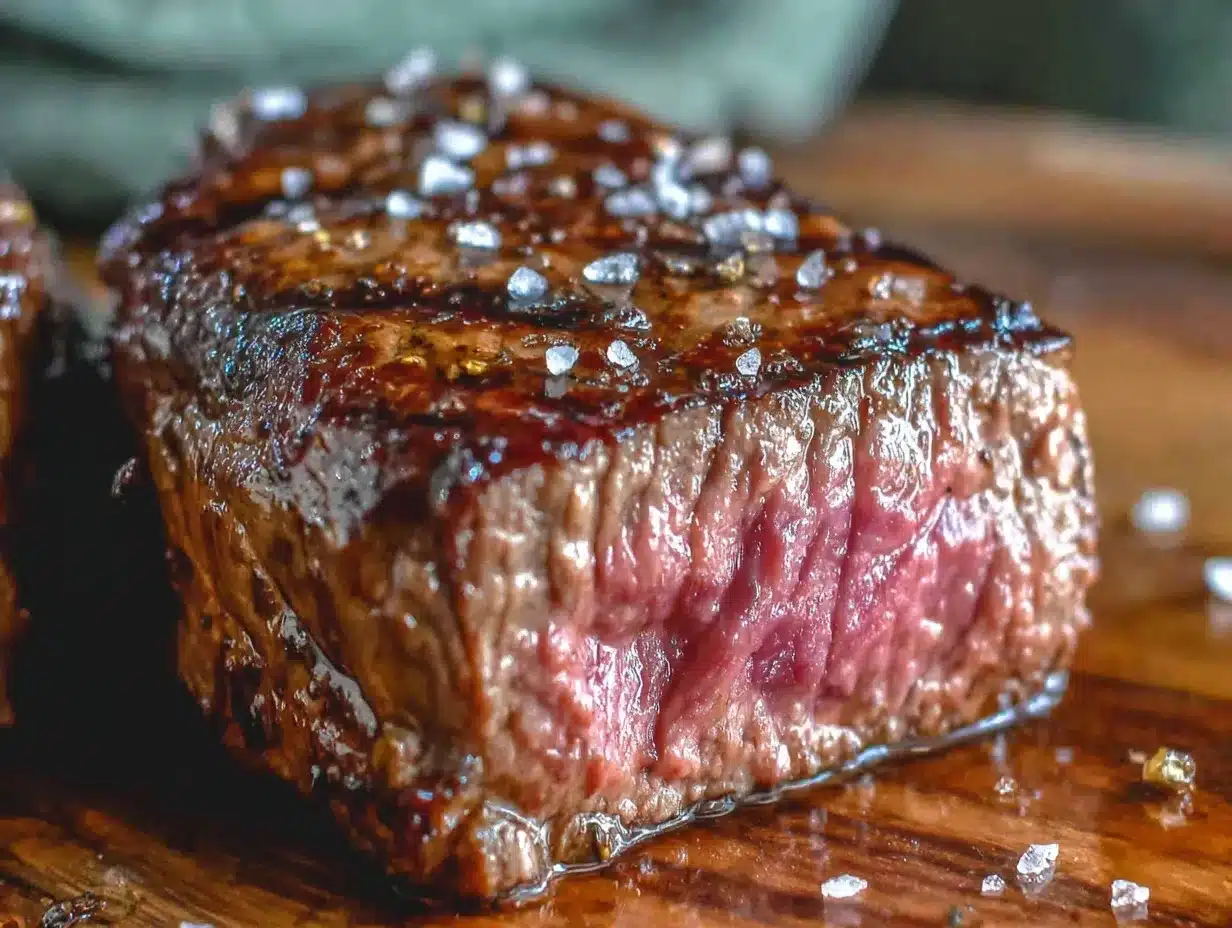
- Check Temperature: Use an instant-read thermometer to check for 130°F (54°C) for perfect medium-rare. If it’s a bit under, give it 30-second increments on each side.
- Rest the Steak (5-10 minutes): Transfer steak to a warm plate, cover loosely with foil, and let it rest. This step lets the juices redistribute, so every bite is juicy and tender.
Pro Tip: If you want to test doneness without a thermometer, gently press the steak with your finger—it should feel like the fleshy part under your thumb when your hand is relaxed.
Cooking Tips & Techniques
- Don’t Skip Resting: I used to rush this step, thinking the steak was ready right off the pan. Resting is where all the magic happens—juices settle and the steak stays tender.
- Keep the Pan Dry: If you notice too much liquid in the pan, pat the steak dry again before searing. Excess moisture prevents a good crust.
- Use High Heat for Searing: A hot pan is your best friend. It locks in juices quickly and creates that mouthwatering crust.
- Turn Only Once: Resist the urge to flip the steak multiple times. One flip helps develop an even crust.
- Baste for Flavor: Basting with butter and herbs adds richness and subtle aroma you won’t get otherwise.
- Timing Matters: Thickness is key. A thinner steak needs less time—watch it closely to avoid overcooking.
- Practice Makes Perfect: I still have “learning moments” occasionally, but following these steps keeps me out of trouble most times.
Variations & Adaptations
- For a Spicy Kick: Add a pinch of smoked paprika or cayenne pepper to your seasoning for some heat.
- Garlic Butter Finish: Mix softened butter with minced garlic and parsley. Spread over steak just before serving for an indulgent twist.
- Oven Finish: For thicker cuts, after searing both sides, pop the skillet in a preheated 400°F (200°C) oven for 3-5 minutes to reach medium-rare.
- Allergen-Friendly: Swap butter for olive oil or a dairy-free spread to keep it vegan-friendly (though not steak, obviously!).
- Herb Variations: Try tarragon, sage, or oregano instead of thyme or rosemary for different flavor profiles.
Once, I tried finishing the steak with a splash of balsamic vinegar during basting—unexpected but delicious! Feel free to experiment, but keep the core technique intact for that juicy, tender texture.
Serving & Storage Suggestions
Serve your perfect medium-rare steak immediately after resting, sliced against the grain to maximize tenderness. A sprinkle of flaky sea salt right before serving adds a nice pop.
Pair it with classic sides like garlic mashed potatoes, sautéed green beans, or a fresh arugula salad dressed with lemon vinaigrette. For drinks, a full-bodied red wine like Cabernet Sauvignon or Malbec complements the rich flavors beautifully.
If you have leftovers, wrap steak tightly in foil or airtight containers and refrigerate for up to 3 days. To reheat, gently warm in a skillet over low heat with a splash of broth or water to keep it moist—microwaving can dry it out.
Interestingly, some say steak flavors deepen after resting overnight, so don’t be afraid to enjoy it cold or lightly warmed in a sandwich the next day.
Nutritional Information & Benefits
This medium-rare steak recipe is a great source of high-quality protein, essential for muscle repair and energy. A typical 6-ounce (170 g) serving provides about 400 calories, 35 grams of protein, and important nutrients like iron, zinc, and vitamin B12.
Choosing grass-fed or organic beef can boost omega-3 fatty acids and antioxidants. Plus, cooking steak medium-rare helps preserve tenderness and nutrients better than overcooking.
If you’re watching carbs, steak fits perfectly into low-carb or keto diets, especially when paired with non-starchy veggies. Just be mindful if you have any red meat sensitivities or allergies.
Conclusion
Honestly, mastering the perfect medium-rare steak with juicy, tender texture isn’t as intimidating as it seems. With just a few simple steps and some patience, you can create a memorable meal that satisfies every time. I love this recipe because it turns steak night into a celebration, no matter how hectic the day was.
Feel free to tweak seasonings or herbs to your taste—this recipe is a solid foundation for your own steak adventures. Now, go ahead and give it a try! And hey, when you do, drop a comment and tell me how it went or share your own twists. Nothing makes me happier than hearing your steak stories.
Remember: great steak doesn’t have to be complicated. It just needs a little love and the right technique.
FAQs
How do I know when my steak is perfectly medium-rare?
Use an instant-read thermometer to check for 130°F (54°C) internal temperature. Alternatively, the finger test can help—you want the steak to feel like the fleshy part below your thumb when your hand is relaxed.
Can I use a grill instead of a pan to cook this steak?
Absolutely! Preheat your grill to high heat and follow the same timing guidelines. Just keep an eye on flare-ups and rest the steak afterward like you would from the pan.
What’s the best steak cut for medium-rare cooking?
Ribeye, striploin, and filet mignon are excellent choices because of their thickness and marbling, which help keep the steak juicy and tender.
Why is resting the steak so important?
Resting lets the juices redistribute throughout the meat, so when you slice it, the juices don’t immediately run out, keeping the steak moist and flavorful.
Can I prepare the steak ahead of time?
You can season the steak a few hours before cooking and keep it refrigerated. Just bring it to room temperature before cooking for even doneness.
Pin This Recipe!
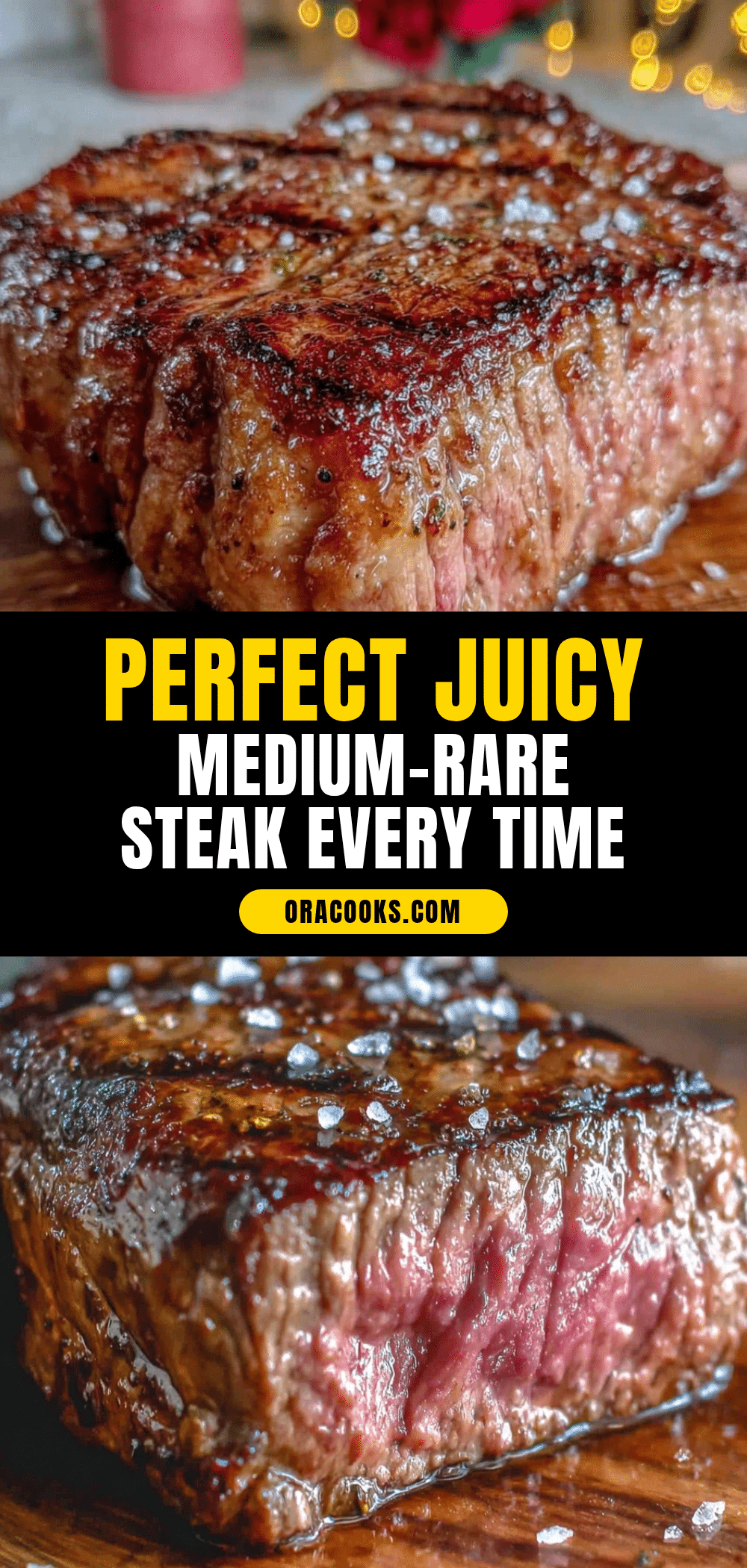
Perfect Medium-Rare Steak Recipe
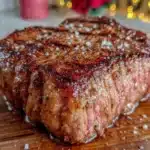
A simple and reliable method to cook a juicy, tender medium-rare steak with a perfect pink center, ready in under 30 minutes.
- Prep Time: 15-20 minutes
- Cook Time: 10-12 minutes
- Total Time: 30 minutes
- Yield: 1 serving 1x
- Category: Main Course
- Cuisine: American
Ingredients
- 1 thick cut steak (ribeye, striploin, or filet mignon), 1 to 1.5 inches thick
- Coarse kosher salt or sea salt
- Freshly ground black pepper
- 1 tablespoon high smoke point oil (grapeseed, canola, or avocado oil)
- 2 tablespoons unsalted butter
- 2 smashed garlic cloves (optional)
- Fresh thyme or rosemary sprigs
Instructions
- Bring the steak to room temperature for 15-20 minutes.
- Pat the steak dry with paper towels and season both sides generously with coarse kosher salt and freshly ground black pepper.
- Preheat a heavy-bottomed skillet or cast iron pan on medium-high heat for 3-5 minutes until very hot.
- Add 1 tablespoon of high smoke point oil to the pan and swirl to coat.
- Place the steak in the pan away from you and sear without moving for 3-4 minutes.
- Flip the steak and sear the other side for 3-4 minutes.
- Reduce heat to medium and add 2 tablespoons unsalted butter, smashed garlic cloves, and fresh herbs.
- Tilt the pan and baste the steak repeatedly with melted butter for 2 minutes.
- Check the internal temperature with an instant-read thermometer; aim for 130°F (54°C) for medium-rare. If under, cook in 30-second increments per side.
- Transfer the steak to a warm plate, cover loosely with foil, and rest for 5-10 minutes before slicing against the grain and serving.
Notes
Resting the steak after cooking is essential to redistribute juices and maintain tenderness. Use a high smoke point oil to avoid burning. Flip the steak only once to develop a good crust. Basting with butter, garlic, and herbs adds flavor and moisture.
Nutrition
- Serving Size: 6 ounces (170 grams)
- Calories: 400
- Sodium: 150
- Fat: 28
- Saturated Fat: 12
- Protein: 35
Keywords: medium-rare steak, steak recipe, juicy steak, tender steak, cast iron steak, easy steak recipe, weeknight dinner