Love this? Save it for later!
Share the inspiration with your friends
“You know that moment when you hear the faint hum of a sous vide machine and suddenly the kitchen feels like a five-star restaurant? That’s exactly how it went down the first time I tried making the perfect sous vide filet mignon with tender juiciness. It was a late Thursday evening, and honestly, I had no grand plan—just a craving for steak that wouldn’t disappoint. I’d always thought filet mignon was a bit intimidating to cook at home, prone to drying out or overcooking. But, let me tell you, this method changed everything.”
“The whole thing started with a slightly cracked vacuum bag (yes, rookie move) and a timer that I almost forgot to set. But the slow, precise cooking in that warm water bath turned the lean, delicate cut into something unbelievably tender and juicy. I mean, I was skeptical at first—how could a steak cooked in a plastic pouch submerged in water possibly beat a sizzling pan? But the results? Flawless. Tender, melt-in-your-mouth, with that perfect pink center that’s so hard to nail otherwise.”
“Maybe you’ve been there, hoping for steakhouse-quality filet mignon but ending up with something tough or underwhelming. I get it. That’s why this recipe has stayed in my rotation. It’s not just about cooking meat; it’s about the quiet joy of cutting into that fork-tender slice and savoring every bite, knowing you nailed it. So, let me walk you through how to get that same perfect sous vide filet mignon with tender juiciness at your own table—without any stress or guesswork.”
Why You’ll Love This Recipe
- Precision Cooking: The sous vide technique guarantees perfectly cooked filet mignon every single time, with no risk of overcooking.
- Unmatched Tenderness: Slow, gentle heat breaks down the fibers, resulting in a juicy, buttery texture that’s hard to beat.
- Simple Ingredients: Just a few pantry staples and quality filet mignon—no complicated marinades or mystery spices.
- Perfect for Special Occasions: Whether it’s a date night or a celebratory dinner, this recipe impresses without the fuss.
- Hands-Off Cooking: Once sealed and submerged, the sous vide does all the work, freeing you up for sides or cocktails.
- Flavor Boost: A quick sear after sous vide locks in flavor and adds that irresistible crust.
This isn’t your average steak recipe. The magic lies in the gentle water bath that cooks evenly from edge to center, so there’s no more guessing if it’s medium-rare or overdone. Plus, the finishing sear on a cast iron pan adds that classic steakhouse crust that makes you close your eyes after the first bite. Honestly, it’s the kind of recipe that makes you want to invite friends over just to show off. And trust me, they’ll be asking for seconds.
What Ingredients You Will Need
This recipe uses simple, wholesome ingredients to deliver bold flavor and that melt-in-your-mouth texture without any fuss. Most are pantry staples or easily found at your local market.
- Filet Mignon Steaks – 2 steaks, about 6 oz (170 g) each, trimmed (look for USDA Choice or Prime for best tenderness)
- Salt – Kosher salt preferred for seasoning
- Freshly Ground Black Pepper – For seasoning just before searing
- Garlic Cloves – 2 cloves, smashed (adds subtle aroma during sous vide cooking)
- Fresh Thyme or Rosemary – 2 sprigs (optional but recommended for earthy notes)
- Unsalted Butter – 2 tablespoons, for the final sear (I recommend Kerrygold for richness)
- Olive Oil or Neutral Oil – 1 tablespoon, for searing
Substitutions: If you prefer, swap fresh herbs for dried (use about 1 teaspoon), or omit altogether. For a dairy-free option, use coconut oil or avocado oil instead of butter for searing. If you can’t find filet mignon, try this method with other tender cuts like ribeye or sirloin, adjusting time slightly.
Equipment Needed
- Sous Vide Immersion Circulator: Essential for precise temperature control; brands like Anova or Joule work great and are fairly budget-friendly.
- Vacuum Sealer & Bags: Helps seal the steaks airtight for even cooking; if you don’t have one, high-quality resealable freezer bags and the water displacement method can work.
- Cast Iron Skillet or Heavy-Bottomed Pan: For the all-important sear to create a crust that locks in flavor.
- Tongs: For handling the steaks safely during searing.
- Thermometer (optional): To confirm steak temperature, although sous vide precision means this is rarely needed.
Personally, I’ve found that a cast iron skillet makes a big difference in developing that perfect crust—nonstick pans just don’t get hot enough. If you’re on a budget, a sturdy stainless steel pan works fine, but just be sure it can handle high heat. Also, keep your vacuum sealer clean and dry after use to extend its lifespan.
Preparation Method
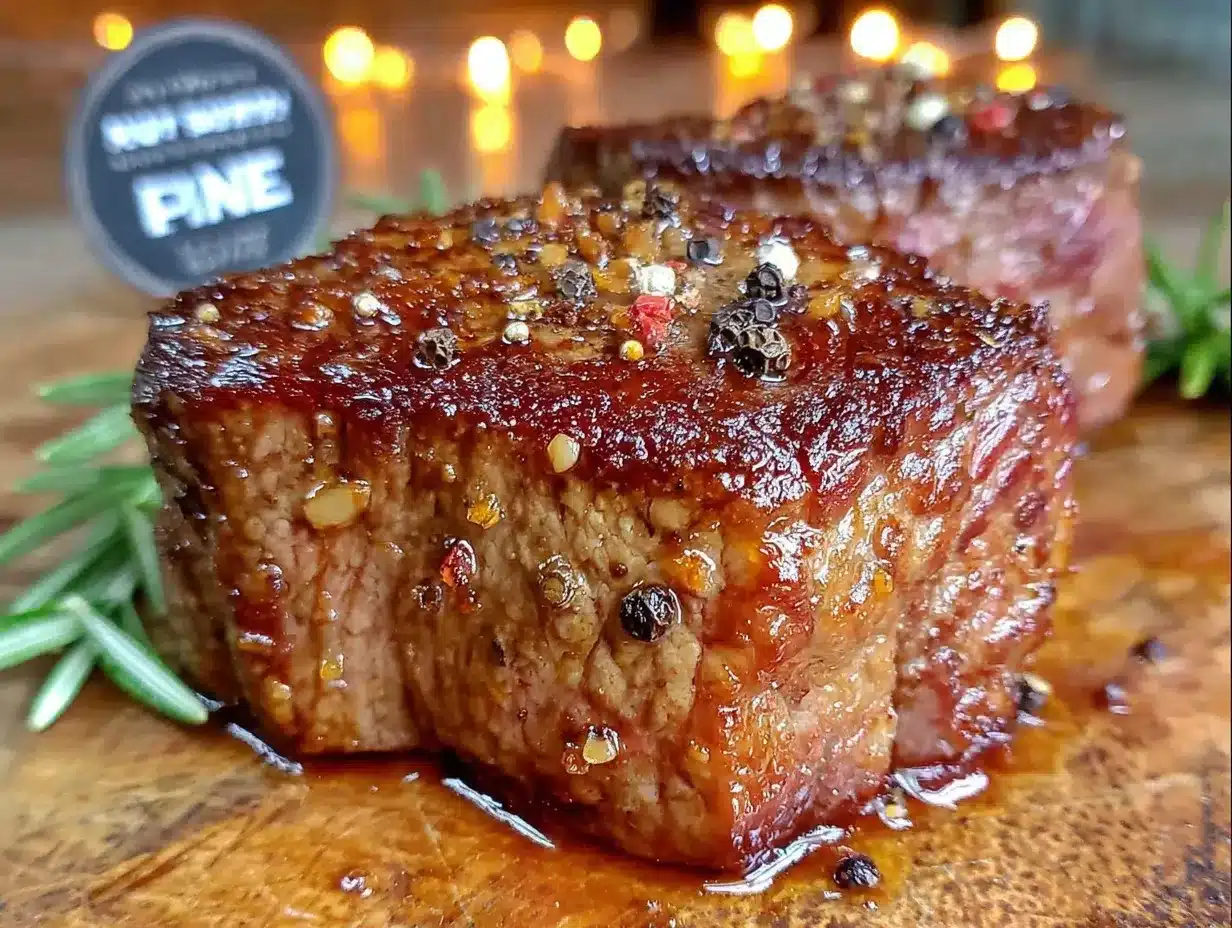
- Season the Steaks: Pat the filet mignon dry with paper towels. Generously season both sides with kosher salt. This initial seasoning helps bring out the natural flavor. Let them rest at room temperature for about 15 minutes.
- Bag Your Steaks: Place each steak in a vacuum bag along with smashed garlic cloves and herb sprigs. If you don’t have a vacuum sealer, use a resealable bag and carefully lower it into water to push out air before sealing the top.
- Set Up Sous Vide: Fill a large pot or container with water and attach your immersion circulator. Set the temperature to 130°F (54.5°C) for medium-rare, or adjust slightly for preferred doneness (125°F/52°C for rare, 140°F/60°C for medium).
- Cook the Steaks: Submerge the sealed bags fully in the water bath. Cook for 1 to 2 hours. The beauty here is the flexibility—the steak won’t overcook if you leave it a little longer, but I usually aim for 90 minutes for perfect tenderness.
- Remove and Dry: Once done, take the bags out and carefully remove the steaks. Pat them very dry with paper towels—this is crucial for a great sear. Moisture is the enemy of crust.
- Sear for Crust: Heat a cast iron skillet over high heat. Add olive oil and butter. When the butter foams and oil is shimmering, add the steaks. Sear each side for 45 to 60 seconds until a deep brown crust forms. Don’t forget to sear the edges if your steaks are thick.
- Rest and Serve: Let the steaks rest for a few minutes after searing to redistribute juices. Slice against the grain and enjoy that tender juiciness!
Tip: If your kitchen smells of garlic and herbs and you’re tempted to skip resting, don’t! Resting really seals the deal on tenderness. Also, don’t crowd the pan when searing; doing one steak at a time keeps the pan hot enough for a perfect crust.
Cooking Tips & Techniques
One of the trickiest parts when cooking filet mignon is avoiding dryness. The sous vide method solves this beautifully by cooking at a consistent temperature. Here are some tips I picked up after a few trial runs:
- Don’t Skip the Drying: After sous vide, drying the steaks thoroughly prevents steaming when searing, which kills that crust formation.
- High Heat Sear: Use a cast iron skillet and crank up the heat. A quick, hot sear is all you need—longer searing risks overcooking the steak’s edges.
- Timing Flexibility: Sous vide allows a window—your steak won’t go from perfect to ruined in minutes like with traditional cooking. This helps if you’re multitasking.
- Use Fresh Herbs and Garlic: Adding them to the bag during sous vide infuses subtle flavor without overpowering the steak.
- Resting Matters: Let the steak rest after searing to keep juices locked inside. I usually tent mine with foil for 5 minutes.
My first attempt had me rushing the sear, and the crust was barely there. Lesson learned: patience and heat are your best friends here. Oh, and don’t forget to season with black pepper right before searing—you want that pepper to toast slightly, not burn in the water bath.
Variations & Adaptations
This sous vide filet mignon recipe is wonderfully adaptable depending on your preferences or dietary needs:
- Garlic Butter Twist: Add a dollop of garlic herb butter on top right after searing for an indulgent finish.
- Spicy Kick: Rub a pinch of smoked paprika or cayenne pepper on the steaks before sealing for a subtle heat layer.
- Herb-Free Option: For a cleaner flavor, omit garlic and herbs and rely solely on salt and pepper seasoning.
- Alternative Cuts: Try ribeye or New York strip with the same sous vide method; adjust cooking time depending on thickness.
- Allergen-Friendly: Leave out butter and use avocado oil for a dairy-free version that still sears beautifully.
One time, I mixed fresh thyme with a splash of soy sauce in the bag, and it added a subtle umami depth that surprised me. Feel free to experiment, but remember, the sous vide method keeps the steak’s natural flavor front and center.
Serving & Storage Suggestions
This filet mignon is best served immediately after searing while the crust is crisp and the inside warm and tender. I like to plate it with a simple side of roasted vegetables or a fresh green salad to balance the richness.
For drinks, a bold red wine like Cabernet Sauvignon pairs beautifully, or a peppery cocktail if you’re feeling festive. Leftovers can be refrigerated in an airtight container for up to 3 days. To reheat, gently warm in a low oven (about 250°F/120°C) or briefly sous vide again at 130°F (54.5°C) to avoid overcooking.
Keep in mind, the crust won’t be as crisp after reheating, so a quick pan sear can bring back some of that texture. Over time, the flavors deepen, making leftovers surprisingly delicious—if you can resist eating it all at once!
Nutritional Information & Benefits
A 6 oz (170 g) portion of filet mignon cooked sous vide typically contains around 350 calories, 45 grams of protein, and 18 grams of fat, making it a satisfying and protein-packed meal. This cut is leaner than many other steaks, which means you get a tender bite without excessive fat. The controlled cooking method helps preserve moisture and nutrients better than high-heat grilling or frying.
This recipe is naturally gluten-free and low in carbs, suitable for paleo or keto diets. Just watch the choice of side dishes and sauces if you’re managing allergens or calories. Personally, I appreciate how this method honors the ingredient’s integrity without adding unnecessary fats or fillers.
Conclusion
Perfecting the sous vide filet mignon with tender juiciness was a game-changer in my kitchen. It’s the kind of recipe that turns a simple steak dinner into a memorable occasion, no matter the day of the week. Honestly, I love how it removes the guesswork and gives consistent results that impress every time.
Feel free to make it your own—switch up the herbs, tweak the seasoning, or try different cuts. Just remember the basics: a precise water bath, drying well, and a hot sear. I’d love to hear how you make this recipe your own, so drop a comment below or share your tweaks!
Now, it’s your turn to enjoy melt-in-your-mouth filet mignon that’s as tender as it is juicy. Happy cooking!
Frequently Asked Questions
How long should I sous vide filet mignon for?
Cook filet mignon sous vide for 1 to 2 hours at 130°F (54.5°C) for medium-rare. You can go up to 4 hours without overcooking due to the gentle heat.
Can I sous vide filet mignon without a vacuum sealer?
Yes! Use a resealable freezer bag and the water displacement method: slowly lower the bag into water to push out air, then seal just above the waterline.
What temperature is best for sous vide filet mignon?
130°F (54.5°C) gives a perfect medium-rare. Adjust to 125°F (52°C) for rare or 140°F (60°C) for medium doneness.
How do I get a good crust after sous vide cooking?
Pat the steak very dry, then sear in a very hot cast iron skillet with oil and butter for 45-60 seconds per side until browned.
Can I sous vide frozen filet mignon?
Yes, but add about 30-60 minutes to the cooking time to ensure it reaches the proper internal temperature.
For more delicious steak recipes, you might find the crispy garlic chicken or garlic butter steak recipes inspiring for your next meal.
Pin This Recipe!
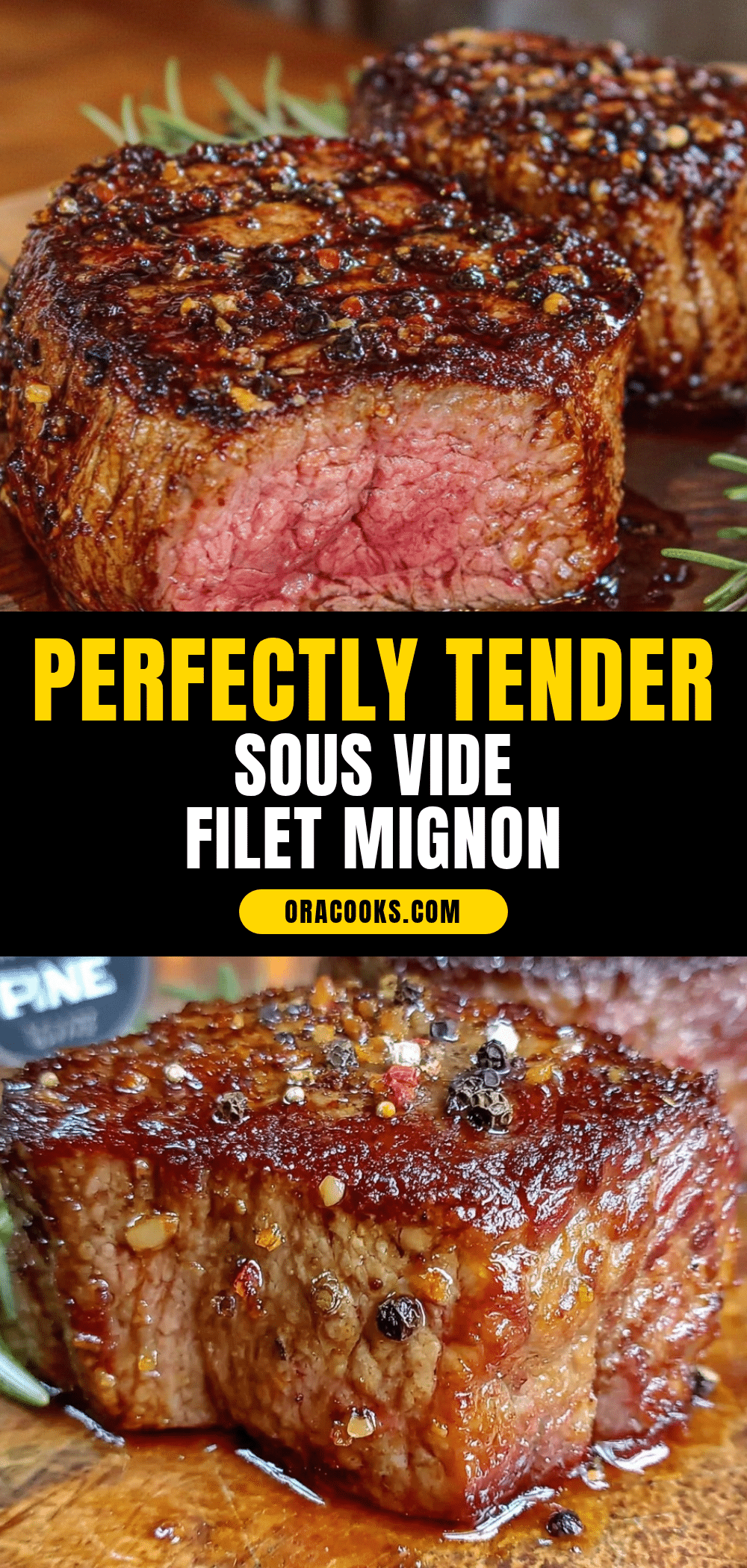
Perfect Sous Vide Filet Mignon Recipe Easy Tender Juiciness Guide
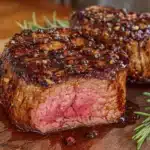
This sous vide filet mignon recipe guarantees perfectly cooked, tender, and juicy steak with a flavorful crust, ideal for special occasions or a stress-free gourmet meal at home.
- Prep Time: 15 minutes
- Cook Time: 1 hour 30 minutes
- Total Time: 1 hour 45 minutes
- Yield: 2 servings 1x
- Category: Main Course
- Cuisine: American
Ingredients
- 2 filet mignon steaks, about 6 oz (170 g) each, trimmed
- Kosher salt, for seasoning
- Freshly ground black pepper, for seasoning just before searing
- 2 garlic cloves, smashed
- 2 sprigs fresh thyme or rosemary (optional)
- 2 tablespoons unsalted butter, for searing
- 1 tablespoon olive oil or neutral oil, for searing
Instructions
- Pat the filet mignon dry with paper towels. Generously season both sides with kosher salt. Let rest at room temperature for about 15 minutes.
- Place each steak in a vacuum bag with smashed garlic cloves and herb sprigs. If no vacuum sealer, use a resealable bag and use the water displacement method to remove air before sealing.
- Fill a large pot or container with water and attach the immersion circulator. Set temperature to 130°F (54.5°C) for medium-rare, or adjust to 125°F (52°C) for rare, 140°F (60°C) for medium.
- Submerge sealed bags fully in the water bath. Cook for 1 to 2 hours, aiming for 90 minutes for perfect tenderness.
- Remove bags and carefully take out steaks. Pat very dry with paper towels to ensure a good sear.
- Heat a cast iron skillet over high heat. Add olive oil and butter. When butter foams and oil shimmers, sear steaks for 45 to 60 seconds per side until a deep brown crust forms. Sear edges if steaks are thick.
- Let steaks rest for a few minutes after searing to redistribute juices. Slice against the grain and serve.
Notes
Pat steaks very dry before searing to prevent steaming and ensure a good crust. Use high heat for a quick sear to avoid overcooking edges. Rest steaks after searing to lock in juices. Season with black pepper just before searing to toast the pepper without burning.
Nutrition
- Serving Size: 1 steak (6 oz)
- Calories: 350
- Fat: 18
- Protein: 45
Keywords: sous vide, filet mignon, steak, tender, juicy, easy steak recipe, sous vide steak, medium-rare steak, cast iron sear