Love this? Save it for later!
Share the inspiration with your friends
“I wasn’t expecting my Uber driver to drop life-changing cooking tips between traffic jams,” I confessed to my friend one evening. It was just one of those days when dinner plans had gone sideways, and I found myself stuck in rush-hour traffic, starving and uninspired. As we inched forward, Amir—my driver—started chatting about his secret to quick, delicious meals after late-night shifts. That’s how I got introduced to this easy flavor-packed 3-step stir-fry formula for any protein and veggies. Honestly, it sounded too simple to be true, but you know what? I gave it a shot that very night, juggling a cracked wok and a phone timer, and it turned out even better than I imagined.
Maybe you’ve been there—rummaging through the fridge at 7 PM, wondering how to whip up something tasty without a list of complicated ingredients or a three-hour prep. This stir-fry recipe became my go-to when time was tight but flavor still mattered. What makes it special is how it adapts effortlessly to whatever protein and veggies you have on hand, making it a kitchen lifesaver rather than a recipe you dread following. There was one night I forgot to buy soy sauce—yeah, total rookie move—but improvising with what I had still brought out incredible, bold flavors.
After a few tries, this 3-step stir-fry formula stuck with me because it’s not just a recipe—it’s a quick cooking method that fits into real life. Whether it’s a busy Tuesday, a last-minute guest, or just that craving for something savory and fresh, this stir-fry has been my reliable answer. I’m excited to share it with you, hoping it becomes a staple in your kitchen too.
Why You’ll Love This Recipe
This easy flavor-packed stir-fry recipe has been tested and tweaked after countless weeknight dinners and casual get-togethers. It’s simple, fast, and honestly, kind of foolproof once you get the hang of the 3-step method. Here’s why it’s a keeper:
- Quick & Easy: Comes together in under 20 minutes, perfect for busy evenings or when you’re craving something fresh and satisfying without the wait.
- Simple Ingredients: Uses pantry staples and common veggies so you don’t have to hunt down exotic items.
- Perfect for Any Occasion: Whether you’re making a solo dinner, feeding a hungry family, or bringing a dish to a casual potluck, it fits the bill.
- Crowd-Pleaser: The balanced seasoning and versatility make it loved by both kids and adults—no picky eaters left behind.
- Unbelievably Delicious: The combination of savory, sweet, and a hint of heat creates a flavor profile that’s comforting yet exciting.
What sets this stir-fry apart? It’s not just slapping veggies in a pan and hoping for the best. The formula prioritizes layering flavors in three simple steps—from marinating the protein lightly to cooking veggies just right for that perfect crunch. Plus, the sauce is a blend that I’ve adjusted over time for maximum taste without making a mess. You might find yourself closing your eyes after the first bite, savoring that harmony of flavors. It’s comfort food in a flash, and honestly, it’s become my favorite quick dinner solution.
What Ingredients You Will Need
This recipe uses straightforward, wholesome ingredients that pack a punch without fuss. Most of these are pantry staples or easily swapped based on what you have on hand. The protein and veggies are flexible, making this formula a real kitchen MVP.
- Protein Options (choose one):
- Chicken breast or thighs, thinly sliced (about 1 lb / 450g)
- Firm tofu, pressed and cubed (14 oz / 400g)
- Beef sirloin or flank steak, thinly sliced (1 lb / 450g)
- Shrimp, peeled and deveined (1 lb / 450g)
- Vegetables (mix & match up to 4 cups / 600g):
- Broccoli florets (adds crunch and color)
- Bell peppers, thinly sliced (any color)
- Snap peas or snow peas
- Carrots, julienned
- Mushrooms, sliced (cremini or button)
- Baby corn (canned or fresh)
- Sauce Ingredients:
- Soy sauce or tamari (3 tbsp) — I personally prefer Kikkoman for its balanced saltiness
- Hoisin sauce (1 tbsp) for a touch of sweetness
- Rice vinegar (1 tbsp) for brightness
- Sesame oil (1 tsp) for that toasty aroma
- Fresh garlic (2 cloves, minced)
- Fresh ginger (1 tbsp, minced or grated)
- Brown sugar or honey (1 tsp) to balance the flavors
- Red pepper flakes (optional, for heat)
- Other Essentials:
- Vegetable or canola oil (2 tbsp) for stir-frying
- Green onions, chopped (for garnish)
- Sesame seeds (optional, for garnish)
If you’re looking for gluten-free options, swapping soy sauce with tamari works great. For a dairy-free and vegan version, just stick with tofu or veggies and check that your hoisin sauce doesn’t contain animal products. When it comes to fresh veggies, try to pick ones that cook quickly and keep a bit of crunch—nobody wants soggy stir-fry! Personally, I find that mixing colors and textures makes every bite interesting.
Equipment Needed
To get started with this easy stir-fry, here’s what you’ll want in your kitchen arsenal:
- Wok or Large Skillet: A wok is ideal for high-heat, fast cooking and tossing ingredients. If you don’t have one, a large heavy-bottomed skillet works just fine.
- Sharp Chef’s Knife: Precise slicing helps everything cook evenly, so a good knife is a must.
- Cutting Board: Preferably one with a groove for catching juices, especially if you’re prepping meat or tofu.
- Mixing Bowls: For marinating the protein and mixing the sauce.
- Measuring Spoons: To get the balance right in your sauce.
- Spatula or Wooden Spoon: For stirring without scratching your cookware.
If you’re on a budget, a non-stick skillet and a good knife are enough to nail this recipe. I used to battle with a tiny pan and a dull knife before upgrading, and trust me—it makes a world of difference. Also, keeping your wok or skillet well-seasoned means less sticking and easier cleanup, which is a win in my book.
Preparation Method
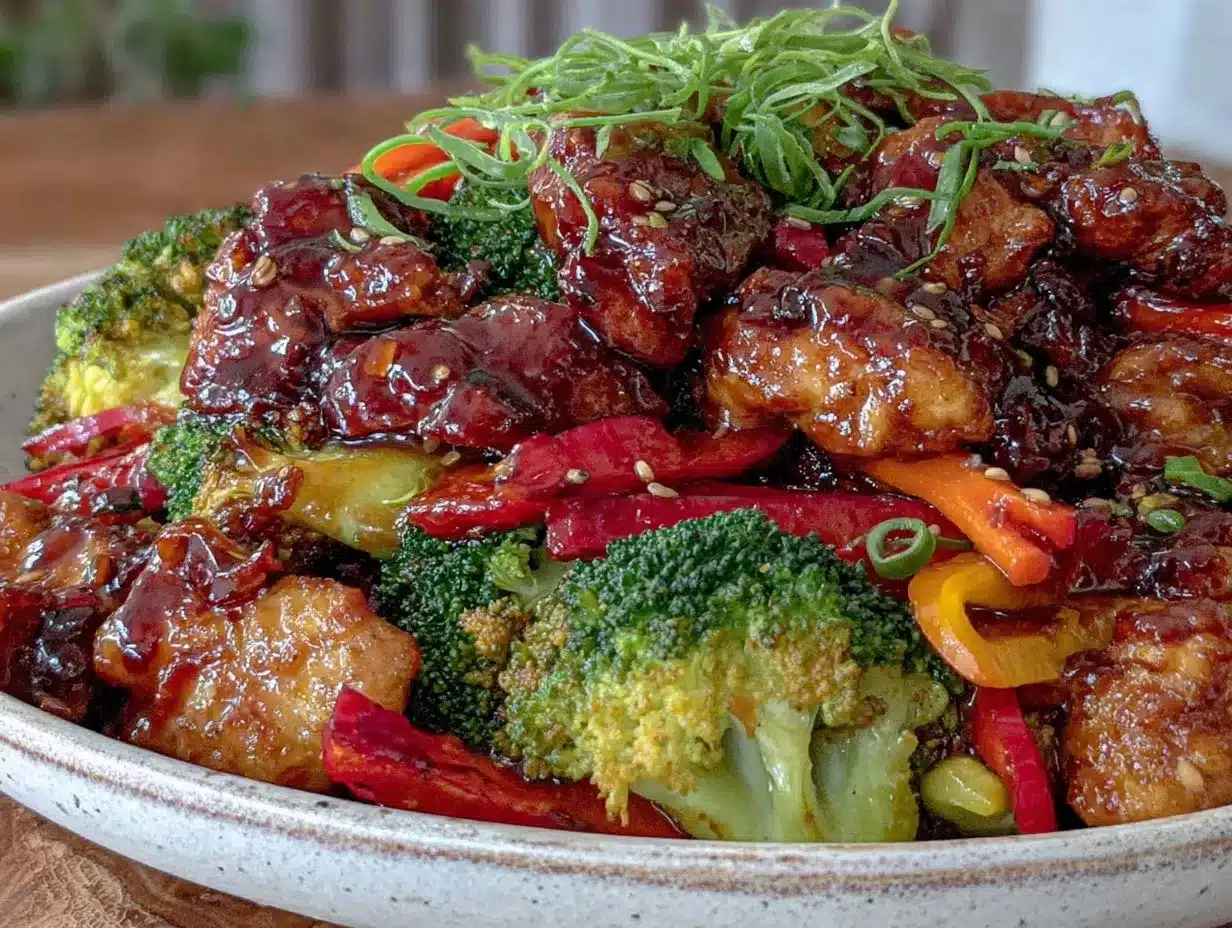
- Prep Your Protein and Veggies (10 minutes): Thinly slice your chosen protein into bite-sized strips or cubes. For tofu, press out excess moisture with paper towels before cubing to get a better sear. Chop veggies into uniform pieces to ensure even cooking. While you prep, get your sauce ingredients ready in a small bowl—whisk together soy sauce, hoisin, rice vinegar, sesame oil, minced garlic and ginger, brown sugar, and a pinch of red pepper flakes if you like heat.
- Marinate the Protein (5 minutes): Toss the protein in half of the sauce mixture, letting it soak in the flavors briefly. This step is crucial—it boosts flavor without needing hours of marinating. If you’re short on time, even a quick toss right before cooking works surprisingly well.
- Cook in Three Steps (about 10 minutes):
- Heat 1 tablespoon of oil in your wok or skillet over medium-high heat until shimmering.
- Add the marinated protein, spreading it out to get a good sear. Cook undisturbed for 2-3 minutes, then stir-fry until cooked through and lightly caramelized. Remove protein from pan and set aside.
- Add another tablespoon of oil, then toss in the vegetables that take longer to cook first (like carrots and broccoli). Stir-fry for 2-3 minutes before adding quicker-cooking veggies like bell peppers and snap peas. Keep stirring to prevent burning but maintain that crisp texture.
- Return protein to the pan, pour in the remaining sauce, and toss everything together for 1-2 minutes until heated through and coated with sauce.
- Final Touches: Remove from heat, garnish with chopped green onions and a sprinkle of sesame seeds. Serve immediately over steamed rice or noodles.
Pro tip: Keep your heat on high but watch for smoke signals—too hot, and you risk burning garlic or veggies. Also, don’t overcrowd the pan; cook in batches if needed to keep that signature stir-fry sizzle. I remember once trying to fit double the veggies at once—lesson learned, it turned into a soggy mess!
Cooking Tips & Techniques
Getting stir-fry just right can seem tricky, but it’s all about timing and technique. Here are some tips I’ve picked up along the way:
- Prep Everything Before You Cook: Stir-frying moves fast. Have all ingredients chopped and sauces mixed before heating the pan.
- High Heat is Key: You want a quick sear for that slightly charred flavor. If your pan isn’t hot enough, food steams instead of fries.
- Don’t Crowd the Pan: Overcrowding traps moisture and kills the crispness. Stir-fry in batches if your pan is small.
- Layer Flavors: Marinate the protein briefly, then add sauce at the end to coat everything evenly.
- Use Oils with High Smoke Points: Vegetable, canola, or peanut oil are great options. Save sesame oil for finishing to keep its flavor vibrant.
- Watch Your Garlic and Ginger: They burn quickly. Add them early in the sauce or with the protein, not with the delicate veggies.
- Learn from Mistakes: I once forgot to press tofu, and it turned mushy. Pressing it really makes a difference in texture.
- Multi-task Like a Pro: While protein cooks, toss veggies in another pan or steam rice to save time.
Variations & Adaptations
This stir-fry formula is like a blank canvas—easy to tweak for your preferences or dietary needs.
- Vegetarian/Vegan: Use tofu or tempeh instead of meat. Swap hoisin sauce for a vegan brand and use tamari for gluten-free soy sauce.
- Low-Carb/Keto: Skip rice or noodles and serve over cauliflower rice or spiralized veggies.
- Spicy Kick: Add fresh sliced chili or a drizzle of chili garlic sauce in the final step for extra heat.
- Seasonal Veggies: In fall, swap in Brussels sprouts or butternut squash cubes. Spring calls for asparagus and snap peas.
- Different Cooking Methods: Try air-frying the protein first for added crispness before tossing in the stir-fry.
Once, I made this with leftover roast pork and kale, adding a splash of orange juice to the sauce. It was a surprisingly bright twist that I still make when I want something a little different.
Serving & Storage Suggestions
This stir-fry is best enjoyed hot and fresh to keep that wonderful crunch and vibrant flavor. Serve it over steamed jasmine rice, brown rice, or your favorite noodles—egg noodles or rice noodles work great.
For a complete meal, pair it with a simple miso soup or a crisp cucumber salad. A chilled glass of green tea or light beer balances the savory notes nicely.
Leftovers store well in an airtight container in the fridge for up to 3 days. When reheating, add a splash of water and toss in a hot pan to bring back some texture rather than microwaving straight away, which can make veggies soggy. Flavors often deepen after sitting overnight, so sometimes it tastes even better the next day.
Nutritional Information & Benefits
This recipe offers a balanced meal with protein, fiber, and plenty of vitamins from fresh veggies. Depending on your protein choice, it provides a good source of lean protein or plant-based protein for vegetarians.
Key ingredients like garlic and ginger add antioxidants and anti-inflammatory benefits. Using sesame oil and hoisin in moderation gives flavor without heavy fats. If you opt for tamari, it can reduce gluten intake, making this dish friendly for those with sensitivities.
Overall, this stir-fry fits nicely into various dietary preferences, from low-calorie to paleo or vegan, depending on your ingredient swaps. It’s a wholesome, satisfying meal that doesn’t compromise on taste or nutrition.
Conclusion
Why fuss over complicated dinners when this easy flavor-packed 3-step stir-fry formula can deliver delicious results with minimal effort? I love how flexible it is—you really can use whatever protein and veggies you have, making it a practical solution for busy cooks. Plus, the layered flavors make it feel like a special meal, not just “whatever’s in the fridge.”
Give it a try, tweak it to your taste, and let me know how you make it your own. Honestly, once you get the hang of this stir-fry formula, it might just become your weeknight hero too. Feel free to drop a comment below with your favorite protein or veggie combos—I’m always curious to see new takes on this classic.
Happy cooking and here’s to many tasty, stress-free dinners ahead!
FAQs
Can I use frozen vegetables in this stir-fry?
Yes, frozen veggies work fine but add them a bit earlier in the cooking process to allow thawing and avoid excess water in the pan.
How do I prevent my stir-fry from getting soggy?
Cook in batches to avoid overcrowding, use high heat, and add veggies in stages based on their cooking times to keep them crisp.
What’s the best protein for this stir-fry?
Any lean protein like chicken, beef, shrimp, or tofu works well. The key is slicing it thin for fast cooking and marinating briefly for flavor.
Can I make the sauce ahead of time?
Absolutely! The sauce keeps well in the fridge for up to a week. Just give it a quick stir before using.
What can I serve with this stir-fry?
It pairs beautifully with steamed rice, noodles, or even cauliflower rice for a low-carb option. A light soup or fresh salad also complements it nicely.
For a tasty twist on weeknight meals, you might enjoy trying this crispy garlic chicken recipe that shares some similar flavor notes and quick cooking techniques. Also, if you’re into quick veggie dishes, the roasted Brussels sprouts are a perfect side to round out your meal.
Pin This Recipe!
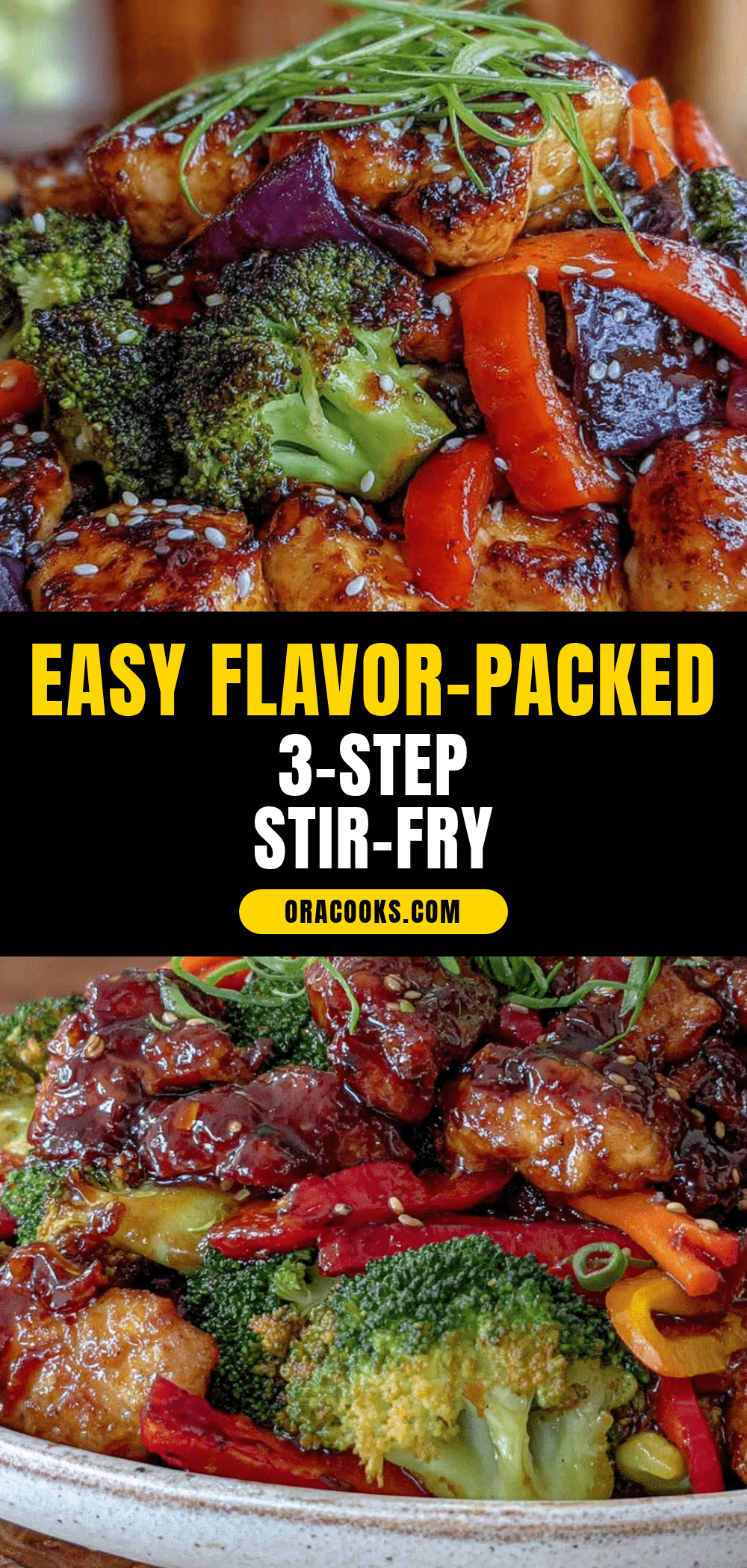
Easy Flavor-Packed Stir-Fry Recipe 3 Steps for Any Protein Veggies

A quick and versatile stir-fry recipe that adapts to any protein and vegetables you have on hand, delivering bold, balanced flavors in just three simple steps.
- Prep Time: 15 minutes
- Cook Time: 10 minutes
- Total Time: 25 minutes
- Yield: 4 servings 1x
- Category: Main Course
- Cuisine: Asian
Ingredients
- 1 lb (450g) chicken breast or thighs, thinly sliced (or firm tofu 14 oz / 400g, beef sirloin or flank steak 1 lb / 450g, or shrimp 1 lb / 450g)
- Up to 4 cups (600g) mixed vegetables: broccoli florets, bell peppers (any color), snap peas or snow peas, carrots (julienned), mushrooms (cremini or button, sliced), baby corn (canned or fresh)
- 3 tbsp soy sauce or tamari
- 1 tbsp hoisin sauce
- 1 tbsp rice vinegar
- 1 tsp sesame oil
- 2 cloves fresh garlic, minced
- 1 tbsp fresh ginger, minced or grated
- 1 tsp brown sugar or honey
- Red pepper flakes (optional)
- 2 tbsp vegetable or canola oil
- Chopped green onions (for garnish)
- Sesame seeds (optional, for garnish)
Instructions
- Prep your protein and veggies: Thinly slice protein into bite-sized strips or cubes. Press tofu to remove excess moisture if using. Chop vegetables into uniform pieces. Whisk together soy sauce, hoisin, rice vinegar, sesame oil, garlic, ginger, brown sugar, and red pepper flakes in a small bowl.
- Marinate the protein: Toss the protein in half of the sauce mixture and let it soak for about 5 minutes.
- Cook in three steps:
- a. Heat 1 tablespoon of oil in a wok or large skillet over medium-high heat until shimmering.
- b. Add marinated protein, sear undisturbed for 2-3 minutes, then stir-fry until cooked through and lightly caramelized. Remove protein and set aside.
- c. Add remaining tablespoon of oil, stir-fry longer-cooking vegetables (carrots, broccoli) for 2-3 minutes, then add quicker-cooking veggies (bell peppers, snap peas) and stir-fry to maintain crispness.
- d. Return protein to pan, pour in remaining sauce, toss everything together for 1-2 minutes until heated through and coated.
- Remove from heat, garnish with green onions and sesame seeds. Serve immediately over steamed rice or noodles.
Notes
Use high heat and avoid overcrowding the pan to keep vegetables crisp. Press tofu well for better texture. Sauce can be made ahead and stored in the fridge for up to a week. Cook in batches if needed. For gluten-free, substitute soy sauce with tamari. For vegan, ensure hoisin sauce is plant-based.
Nutrition
- Serving Size: 1 serving (about 1/4
- Calories: 320
- Sugar: 7
- Sodium: 850
- Fat: 12
- Saturated Fat: 2
- Carbohydrates: 18
- Fiber: 4
- Protein: 28
Keywords: stir-fry, quick dinner, easy recipe, chicken stir-fry, tofu stir-fry, vegetable stir-fry, weeknight meal, healthy dinner, gluten-free option, vegan option