Love this? Save it for later!
Share the inspiration with your friends
Carol wasn’t trying to impress anyone. I’d stopped by her farmhouse on a random Tuesday afternoon to pick up a wooden crate she said I could have for my seedlings, and the smell hit me before I even got through the mudroom. It was that kind of rich, savory aroma that wraps around you like a blanket—beef and wine and something earthy I couldn’t quite name. She was standing at the stove in her gardening clogs, stirring a pot with a wooden spoon that had seen better days, and she just shrugged when I asked what was for dinner. “Oh, just a stew,” she said. “It’s nothing fancy.”
But it was. Honestly, it was the kind of meal that makes you forget you were only planning to stay for ten minutes. I ended up sitting at her kitchen table for an hour, watching her pull out ingredients without measuring anything, tasting from the spoon, adding a pinch of this and a splash of that. She didn’t have a recipe written down anywhere—it was all in her head, all from memory. I kept trying to mentally note what she was doing, but she moved too fast. The whole thing felt less like cooking and more like instinct.
I asked her later if she’d ever written it down, and she laughed. “Why would I? It’s just stew.” But that’s the thing—it wasn’t just stew. It was the kind of dish that makes you close your eyes after the first bite, the kind that feels like a hug in a bowl. I spent the next three weeks trying to recreate it in my own kitchen, failing twice before I got close. Maybe you’ve been there, chasing a flavor you can’t quite pin down. This recipe is the result of those attempts, plus a few tweaks of my own. It’s the perfect companion for chilly autumn nights when all you want is something warm and slow and deeply satisfying.
Why You’ll Love This Recipe
This isn’t just another beef stew recipe—it’s the one I turn to when the leaves start turning and the air gets that crisp bite. I’ve tested it more times than I can count, tweaking the cooking time, adjusting the herbs, and even swapping out vegetables depending on what looked good at the market. After all that trial and error, I can confidently say this version hits all the right notes.
- Rich, Deep Flavor: The secret is browning the beef in batches and letting the wine reduce before adding the broth. It creates layers of flavor you just can’t get from dumping everything in a pot at once.
- Tender, Fall-Apart Meat: Low and slow is the name of the game here. After a couple of hours in the Dutch oven, the beef becomes so tender it practically melts on your tongue.
- Simple, Wholesome Ingredients: No fancy grocery store trips needed. Carrots, potatoes, onions, and a decent cut of beef—that’s really all it takes.
- Perfect for Chilly Autumn Nights: This stew was made for those evenings when you want to curl up on the couch with a bowl of something warm and watch the leaves blow around outside.
- Crowd-Pleaser: I’ve served this at casual weeknight dinners and slightly fancier gatherings, and it disappears every single time. Kids and adults both go back for seconds.
- Gets Better the Next Day: If you can resist eating it all in one sitting, the leftovers are even more incredible. The flavors meld together overnight into something truly special.
What makes this recipe different from the dozens of other beef stews out there? It’s the combination of a full-bodied red wine, fresh thyme, and a splash of balsamic vinegar at the end for brightness. That little touch cuts through the richness and keeps every bite interesting. It’s comfort food, sure, but it’s comfort food with a little sophistication—the kind of meal that feels special without requiring a ton of effort.
What Ingredients You Will Need
This recipe relies on simple, hearty ingredients that come together to create something far greater than the sum of their parts. Most of these are likely already in your pantry or fridge, especially if you’ve been stocking up for autumn cooking.
For the Stew Base
- 2 ½ pounds beef chuck, cut into 1 ½-inch cubes (look for well-marbled pieces—it makes a huge difference in tenderness)
- 3 tablespoons all-purpose flour (for coating the beef and helping thicken the stew)
- 2 teaspoons kosher salt, plus more to taste
- 1 teaspoon black pepper, freshly ground
- 3 tablespoons olive oil, divided (use a good-quality one for browning)
- 1 large yellow onion, diced (about 1 ½ cups)
- 4 cloves garlic, minced
- 2 tablespoons tomato paste (I prefer the kind that comes in a tube—easier to use and store)
- 1 cup dry red wine, like Cabernet Sauvignon or Merlot (use something you’d actually drink)
- 4 cups beef broth, low-sodium (I like Better Than Bouillon mixed with water for the best flavor)
- 2 bay leaves
- 4 sprigs fresh thyme (or 1 teaspoon dried, but fresh really is better here)
- 1 tablespoon balsamic vinegar (this is my secret ingredient—don’t skip it)
For the Vegetables
- 4 large carrots, peeled and cut into 1-inch chunks
- 3 celery stalks, sliced into ½-inch pieces
- 1 ½ pounds Yukon Gold potatoes, peeled and cut into 1-inch cubes (they hold their shape better than russets)
- 8 ounces cremini mushrooms, halved (optional, but they add a lovely earthy depth)
- 1 cup frozen peas (stirred in at the very end for a pop of color and sweetness)
A quick note on substitutions: If you’re avoiding alcohol, you can replace the red wine with an equal amount of additional beef broth plus a tablespoon of red wine vinegar for acidity. For a gluten-free version, swap the all-purpose flour with a gluten-free all-purpose blend or use cornstarch slurry at the end to thicken. And if you’re not a mushroom fan, just leave them out—the stew will still be delicious.
Equipment Needed
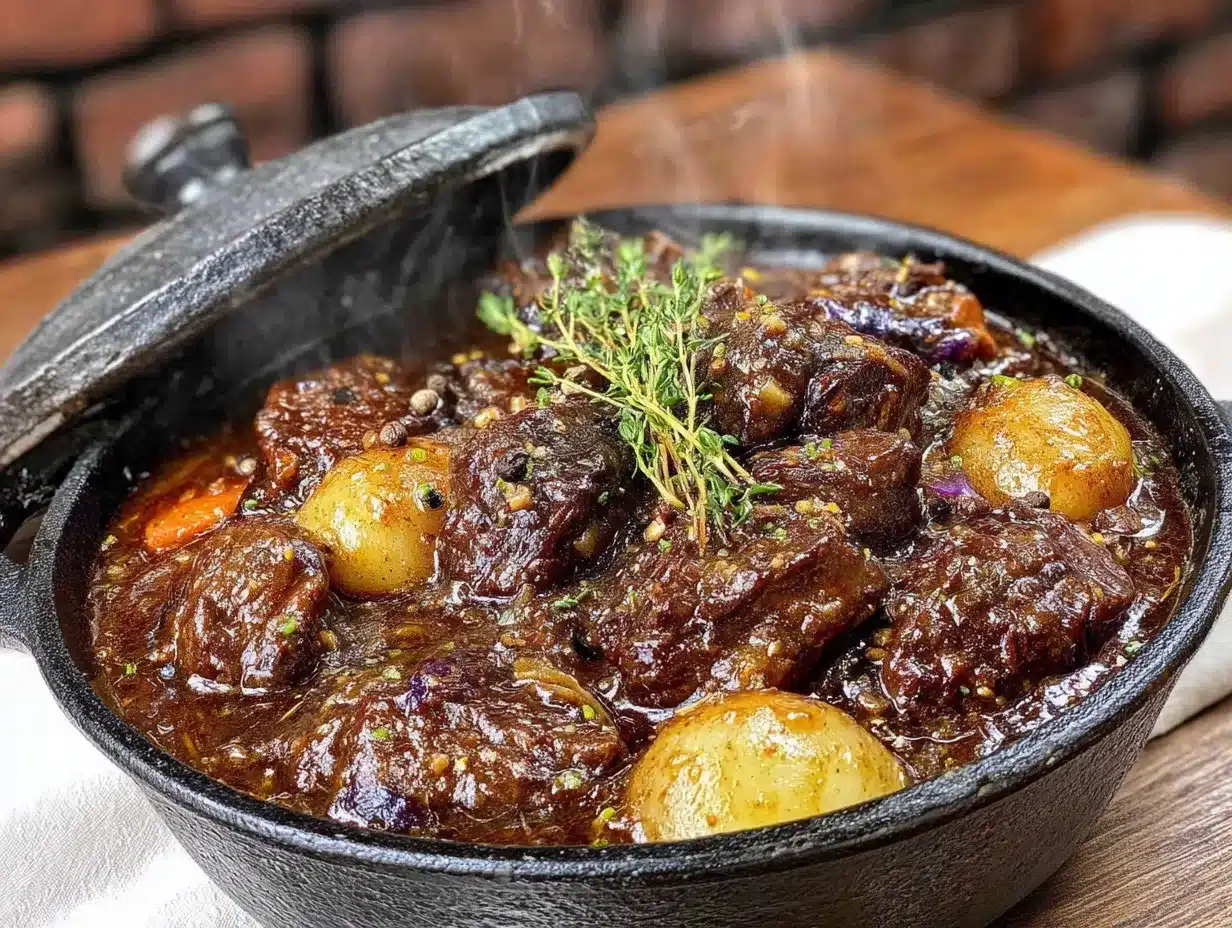
The star of the show here is a good Dutch oven. I use a 6-quart enameled cast iron one from Le Creuset that I saved up for years to buy, and honestly, it was worth every penny. But you don’t need to spend that kind of money—a Lodge enameled Dutch oven is a fantastic budget-friendly option that performs beautifully. If you don’t have a Dutch oven, a heavy-bottomed stockpot or a large oven-safe pot with a tight-fitting lid will work too.
You’ll also need a sharp chef’s knife for cutting the beef and vegetables, a large cutting board, a wooden spoon for stirring (metal can scratch enameled surfaces), and a set of measuring cups and spoons. A pair of tongs is helpful for turning the beef while browning, and a ladle makes serving much neater. That’s really it—nothing fancy, just good, basic kitchen tools that’ll last.
One tip: If you’re using a new Dutch oven for the first time, don’t crank the heat too high when browning the beef. Cast iron retains heat really well, so medium-high is plenty. I learned that the hard way when I scorched my first batch of stew—live and learn, right?
Preparation Method
- Prep the beef and vegetables (15 minutes): Pat the beef cubes dry with paper towels—this is crucial for good browning. In a large bowl, combine the flour, 1 teaspoon of salt, and ½ teaspoon of pepper. Add the beef and toss until each piece is lightly coated. Set the beef aside while you chop the onion, garlic, carrots, celery, and potatoes. Keep the vegetables separate since they’ll go into the pot at different times.
- Brown the beef in batches (20 minutes): Heat 2 tablespoons of olive oil in your Dutch oven over medium-high heat. Once the oil shimmers, add the beef in a single layer—don’t overcrowd the pot. You’ll likely need to do this in 3 batches. Let the beef brown undisturbed for 3-4 minutes per side, then use tongs to turn the pieces. The goal is a deep, golden-brown crust on at least two sides. Transfer the browned beef to a plate and repeat with the remaining batches. If the pot starts to look dry, add a little more oil between batches.
- Sauté the aromatics (5 minutes): Reduce the heat to medium and add the remaining 1 tablespoon of olive oil. Toss in the diced onion and cook, stirring occasionally, until softened and translucent, about 4 minutes. Add the minced garlic and cook for 30 seconds more until fragrant. Scrape up any browned bits from the bottom of the pot—that’s pure flavor right there.
- Build the flavor base (5 minutes): Stir in the tomato paste and cook for 1 minute, stirring constantly. It should darken slightly and smell rich. Pour in the red wine and use your wooden spoon to scrape up every last bit of goodness from the bottom of the pot. Let the wine simmer for 2-3 minutes until it reduces by about half. This step concentrates the flavor and cooks off the alcohol.
- Add the broth and seasonings (2 minutes): Return the browned beef to the pot, along with any juices that accumulated on the plate. Pour in the beef broth, then add the bay leaves and fresh thyme sprigs. Stir everything together, bring it to a gentle simmer, then reduce the heat to low. Cover the pot with the lid and let it cook undisturbed for 1 hour.
- Add the root vegetables (5 minutes): After an hour, uncover the pot and stir in the carrots, celery, and potatoes. If you’re using mushrooms, add them now too. The stew should be at a gentle simmer—if it’s bubbling too vigorously, turn the heat down a notch. Re-cover the pot and let it cook for another 45 minutes to 1 hour, or until the vegetables are tender and the beef is fork-tender.
- Finish and adjust seasoning (5 minutes): Remove the bay leaves and thyme stems (the leaves will have fallen off, so don’t worry about those). Stir in the frozen peas and the balsamic vinegar. Taste the stew and adjust the salt and pepper as needed. Let it simmer uncovered for 5 minutes to thicken slightly. The stew should be rich, savory, and just a little glossy from the balsamic.
- Rest before serving (10 minutes): This step is optional but recommended. Let the stew sit off the heat for 10 minutes before serving. This allows the flavors to settle and the texture to become even more luscious. Serve hot with crusty bread or over egg noodles.
Cooking Tips & Techniques
Let me save you from the mistakes I made along the way. The first time I made this stew, I rushed the browning step and ended up with gray, sad beef that had all the flavor of wet cardboard. I mean, it was edible, but it wasn’t memorable. Browning the beef properly is the single most important step in this entire recipe. Don’t skimp on it, and don’t crowd the pan. If you pile too much beef in at once, it steams instead of sears, and you lose all that lovely caramelization.
Another thing I learned the hard way: patience is key. I know it’s tempting to crank up the heat to speed things along, but low and slow is what makes the beef tender. If you boil the stew aggressively, the meat will turn tough and stringy. A gentle simmer—where you see small bubbles breaking the surface—is exactly what you’re after. Trust the process.
One trick I picked up from Carol that day: taste as you go. She was constantly dipping her spoon into the pot, adjusting, tweaking. I do the same now, especially at the end when I add the balsamic vinegar. Sometimes the stew needs a little more salt, sometimes a splash more vinegar. Your taste buds are the best tool you have.
Also, if you’re short on time, you can prep the vegetables the night before and store them in the fridge. The beef can also be cut and coated with the flour mixture a day ahead. Just keep it covered in the fridge. This makes the actual cooking process much smoother on a busy weeknight.
Variations & Adaptations
One of the best things about this stew is how adaptable it is. I’ve made it with different vegetables depending on what’s in season, and it’s always turned out great. Here are a few variations to try:
- Herb Swap: If you don’t have fresh thyme, rosemary works beautifully too. Use 2 sprigs instead of 4, since rosemary has a stronger flavor. I’ve also added a sprig of sage for a more earthy, almost woodsy note—perfect for late autumn.
- Root Vegetable Medley: Swap the potatoes for parsnips, turnips, or sweet potatoes. Each brings its own sweetness and texture. Parsnips, in particular, add a subtle peppery flavor that pairs wonderfully with the beef.
- Slow Cooker Version: After browning the beef and sautéing the aromatics, transfer everything to a slow cooker. Cook on low for 8 hours or high for 4-5 hours. Add the peas and balsamic vinegar in the last 30 minutes. The texture will be slightly different—less thick—but still incredibly delicious.
- Dairy-Free Option: The recipe as written is naturally dairy-free, so no changes needed. But if you want a creamier version, stir in a splash of heavy cream or coconut milk at the end for a richer texture.
- Spicy Twist: Add a pinch of red pepper flakes along with the garlic, or stir in a teaspoon of smoked paprika for a subtle smoky heat. I tried this once on a whim and it was surprisingly good.
Serving & Storage Suggestions
This stew is best served hot, straight from the pot, with a side of crusty bread for dipping. I like to ladle it into wide, shallow bowls so the broth has room to spread out. A sprinkle of fresh parsley on top adds a nice pop of color, though it’s purely for looks. If you’re feeling fancy, serve it over buttered egg noodles or a bed of creamy mashed potatoes—either way, it’s pure comfort.
As for storage, this stew is a gift that keeps giving. Let it cool completely, then transfer it to an airtight container and refrigerate for up to 4 days. The flavors actually improve overnight as the ingredients meld together. I often make a double batch on Sunday just so I have easy lunches for the week.
To freeze, portion the stew into freezer-safe bags or containers, leaving a little room for expansion. It’ll keep for up to 3 months. When you’re ready to eat, thaw it in the fridge overnight and reheat gently on the stovetop over medium-low heat. You might need to add a splash of water or broth to loosen it up, since the stew will thicken as it sits. Don’t microwave it straight from frozen—the texture gets weird, and you’ll lose that lovely velvety quality.
One more thing: I’ve noticed the stew tastes even better on the second day. Something about the rest allows the flavors to deepen and harmonize. So if you can, make it a day ahead. Your future self will thank you.
Nutritional Information & Benefits
This stew is hearty and satisfying, but it’s also packed with good-for-you ingredients. Here’s a rough estimate per serving (based on 6 servings):
| Nutrient | Amount per Serving |
|---|---|
| Calories | 485 |
| Protein | 38g |
| Fat | 18g |
| Carbohydrates | 32g |
| Fiber | 6g |
| Sugar | 9g |
| Sodium | 890mg |
Beef is an excellent source of high-quality protein, iron, and B vitamins, which support energy levels and immune function. The carrots and potatoes provide beta-carotene, vitamin C, and potassium, while the peas add a boost of fiber and plant-based protein. The mushrooms, if you include them, offer selenium and antioxidants. All in all, this is a well-rounded meal that nourishes your body while warming your soul.
If you’re watching your sodium intake, use low-sodium beef broth and go easy on the added salt. You can also reduce the amount of beef and bulk up the vegetables for a lighter version. But honestly, I think food like this is meant to be enjoyed without guilt—it’s real food, made from real ingredients, and that’s something to feel good about.
Conclusion
This Dutch oven beef stew has become my go-to for chilly autumn nights, and I hope it becomes yours too. It’s the kind of recipe that feels like a warm hug after a long day—simple to make, deeply satisfying, and full of flavor that only gets better with time. Whether you’re feeding a crowd or just yourself, this stew delivers comfort in every spoonful.
Don’t be afraid to make it your own. Swap in your favorite vegetables, adjust the herbs, or add a little extra wine if that’s your thing. Cooking should be about intuition and enjoyment, not strict rules. I’ve made this stew a dozen different ways, and every version has been delicious in its own right.
I’d love to hear how it turns out for you. Drop a comment below and let me know if you tried any variations—or if you have a secret ingredient of your own that you swear by. And if you’re looking for more cozy autumn recipes, check out my homemade butternut squash soup for another bowl of seasonal comfort. Happy cooking, friends!
Frequently Asked Questions
Can I make this stew in an Instant Pot?
Absolutely! Use the sauté function to brown the beef and cook the aromatics, then pressure cook on high for 35 minutes with a natural release. Add the vegetables after the pressure cooking and simmer for 10 minutes, or use the sauté function to cook them through.
Why is my beef tough?
Tough beef usually means it wasn’t cooked long enough. Chuck roast needs time to break down the connective tissue—at least 1 ½ to 2 hours of gentle simmering. If it’s still tough, give it another 30 minutes and check again.
Can I use a different cut of beef?
Yes! Chuck is ideal, but brisket or bottom round work well too. Avoid lean cuts like sirloin or tenderloin—they’ll dry out and turn tough during the long cooking time.
How do I thicken the stew if it’s too thin?
Mix 1 tablespoon of cornstarch with 2 tablespoons of cold water to make a slurry, then stir it into the simmering stew. Let it cook for 2-3 minutes to thicken. You can also mash some of the potatoes against the side of the pot to release their starch naturally.
Can I omit the wine?
Sure. Replace it with an equal amount of beef broth plus 1 tablespoon of red wine vinegar or balsamic vinegar for acidity. The flavor will be slightly different but still delicious.
Pin This Recipe!
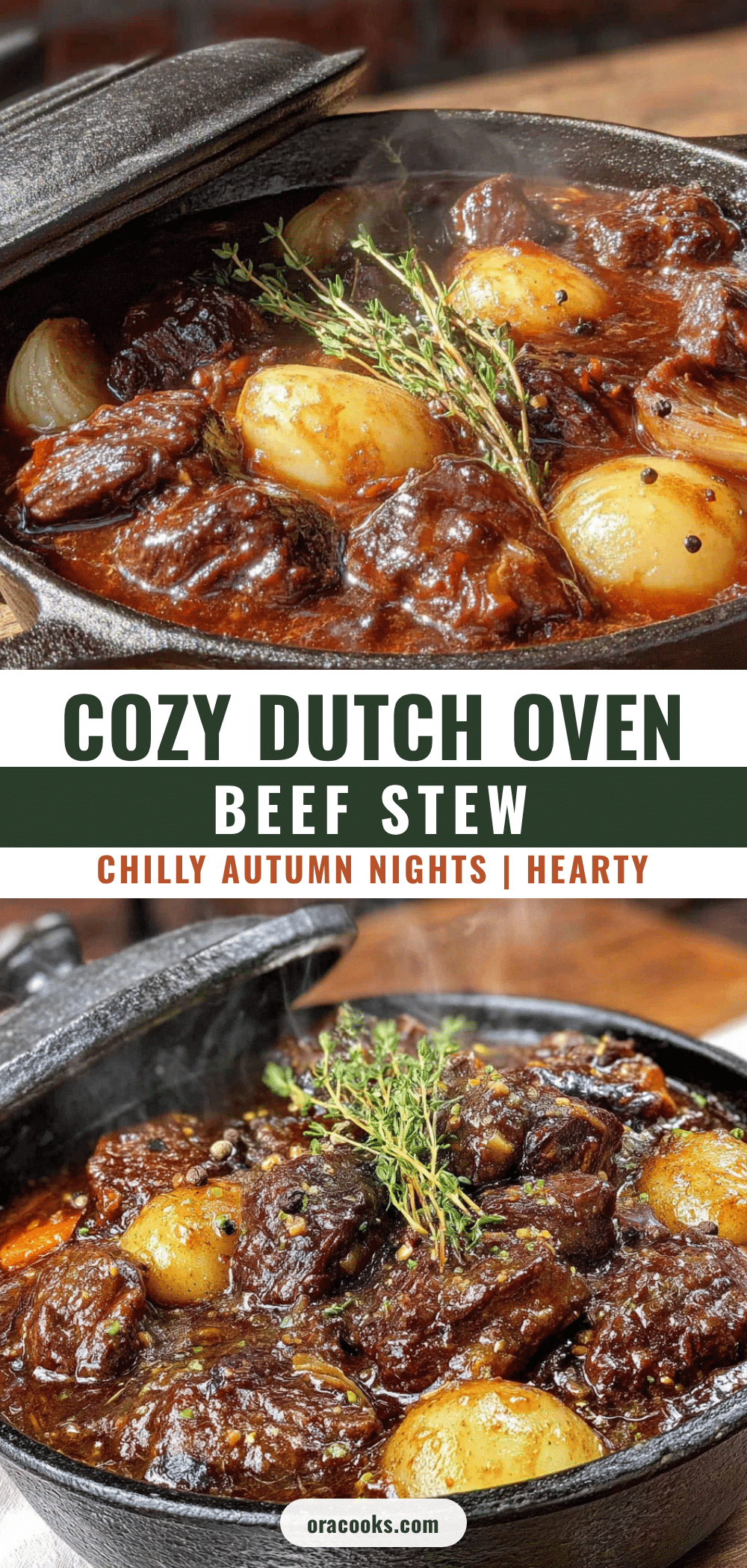
Easy Dutch Oven Beef Stew for Cozy Autumn Nights
This hearty beef stew is the perfect companion for chilly autumn nights, featuring tender fall-apart beef, rich red wine, and a secret splash of balsamic vinegar for brightness. It’s comfort food with a little sophistication, made with simple, wholesome ingredients.
- Prep Time: 15 minutes
- Cook Time: 2 hours 30 minutes
- Total Time: 2 hours 45 minutes
- Yield: 6 servings 1x
- Category: Main Course
- Cuisine: American
Ingredients
- 2 ½ pounds beef chuck, cut into 1 ½-inch cubes
- 3 tablespoons all-purpose flour
- 2 teaspoons kosher salt, plus more to taste
- 1 teaspoon black pepper, freshly ground
- 3 tablespoons olive oil, divided
- 1 large yellow onion, diced (about 1 ½ cups)
- 4 cloves garlic, minced
- 2 tablespoons tomato paste
- 1 cup dry red wine (like Cabernet Sauvignon or Merlot)
- 4 cups low-sodium beef broth
- 2 bay leaves
- 4 sprigs fresh thyme (or 1 teaspoon dried)
- 1 tablespoon balsamic vinegar
- 4 large carrots, peeled and cut into 1-inch chunks
- 3 celery stalks, sliced into ½-inch pieces
- 1 ½ pounds Yukon Gold potatoes, peeled and cut into 1-inch cubes
- 8 ounces cremini mushrooms, halved (optional)
- 1 cup frozen peas
Instructions
- Prep the beef and vegetables (15 minutes): Pat the beef cubes dry with paper towels. In a large bowl, combine the flour, 1 teaspoon of salt, and ½ teaspoon of pepper. Add the beef and toss until each piece is lightly coated. Set the beef aside while you chop the onion, garlic, carrots, celery, and potatoes. Keep the vegetables separate since they’ll go into the pot at different times.
- Brown the beef in batches (20 minutes): Heat 2 tablespoons of olive oil in your Dutch oven over medium-high heat. Once the oil shimmers, add the beef in a single layer—don’t overcrowd the pot. You’ll likely need to do this in 3 batches. Let the beef brown undisturbed for 3-4 minutes per side, then use tongs to turn the pieces. The goal is a deep, golden-brown crust on at least two sides. Transfer the browned beef to a plate and repeat with the remaining batches. If the pot starts to look dry, ad…
- Sauté the aromatics (5 minutes): Reduce the heat to medium and add the remaining 1 tablespoon of olive oil. Toss in the diced onion and cook, stirring occasionally, until softened and translucent, about 4 minutes. Add the minced garlic and cook for 30 seconds more until fragrant. Scrape up any browned bits from the bottom of the pot—that’s pure flavor right there.
- Build the flavor base (5 minutes): Stir in the tomato paste and cook for 1 minute, stirring constantly. It should darken slightly and smell rich. Pour in the red wine and use your wooden spoon to scrape up every last bit of goodness from the bottom of the pot. Let the wine simmer for 2-3 minutes until it reduces by about half. This step concentrates the flavor and cooks off the alcohol.
- Add the broth and seasonings (2 minutes): Return the browned beef to the pot, along with any juices that accumulated on the plate. Pour in the beef broth, then add the bay leaves and fresh thyme sprigs. Stir everything together, bring it to a gentle simmer, then reduce the heat to low. Cover the pot with the lid and let it cook undisturbed for 1 hour.
- Add the root vegetables (5 minutes): After an hour, uncover the pot and stir in the carrots, celery, and potatoes. If you’re using mushrooms, add them now too. The stew should be at a gentle simmer—if it’s bubbling too vigorously, turn the heat down a notch. Re-cover the pot and let it cook for another 45 minutes to 1 hour, or until the vegetables are tender and the beef is fork-tender.
- Finish and adjust seasoning (5 minutes): Remove the bay leaves and thyme stems (the leaves will have fallen off, so don’t worry about those). Stir in the frozen peas and the balsamic vinegar. Taste the stew and adjust the salt and pepper as needed. Let it simmer uncovered for 5 minutes to thicken slightly. The stew should be rich, savory, and just a little glossy from the balsamic.
- Rest before serving (10 minutes): This step is optional but recommended. Let the stew sit off the heat for 10 minutes before serving. This allows the flavors to settle and the texture to become even more luscious. Serve hot with crusty bread or over egg noodles.
Notes
Browning the beef properly is the most important step—don’t crowd the pan. For a gluten-free version, swap the all-purpose flour with a gluten-free all-purpose blend or use a cornstarch slurry at the end. The stew tastes even better the next day. If you’re short on time, you can prep the vegetables and beef the night before.
Nutrition
- Serving Size: 1 serving (about 1 ½
- Calories: 485
- Sugar: 9
- Sodium: 890
- Fat: 18
- Saturated Fat: 6
- Carbohydrates: 32
- Fiber: 6
- Protein: 38
Keywords: beef stew, Dutch oven, autumn, comfort food, beef, stew, fall recipe