Love this? Save it for later!
Share the inspiration with your friends
“You know, the first time I attempted filet mignon, I was honestly a little intimidated,” I confessed to my friend Mark as we prepped dinner one chilly Friday evening. The steakhouse vibes felt miles away from my modest kitchen, and I was juggling a cracked cast-iron skillet and a bottle of red wine that I’d almost forgotten to chill. It was one of those nights where the power flickered just as I was about to sear the meat—classic me, right? But somehow, between the chaos and the sizzle, this recipe for perfect filet mignon with red wine reduction came together like a little culinary miracle.
It wasn’t handed down from some grand gourmet chef or discovered in a fancy restaurant—it came from an unexpected source: a casual chat with the barista at my local coffee shop. She mentioned how her dad, a retired chef, swore by a simple red wine sauce that made any steak feel like a celebration. Intrigued, I tried it that very weekend, tweaking and tasting until the flavors hit just right. Maybe you’ve been there—wanting to serve something elegant but not overly complicated for a special night in.
That’s exactly why this filet mignon recipe stayed with me. It’s got that perfect balance of rich, tender steak and a luscious, slightly tangy red wine reduction that feels fancy but is surprisingly easy to pull off. If you’re looking for a way to impress without stress, this one’s for you. Let me tell you, after a few tries (and a few burnt attempts), I nailed the timing and technique so that the sauce is velvety and the steak melts in your mouth every single time.
Why You’ll Love This Recipe
Trust me, this perfect filet mignon with red wine reduction is a winner for so many reasons. After testing this recipe on a handful of friends (and being told to “never change it”), I’m confident it’s a staple you’ll want in your cooking repertoire.
- Quick & Easy: Ready in under 30 minutes, perfect for those nights when you want something special but don’t have hours to spend in the kitchen.
- Simple Ingredients: Uses pantry staples and a few fresh components—no hunting down exotic items required.
- Perfect for Elegant Dining: Ideal for date nights, celebratory dinners, or whenever you want to treat yourself without the fuss.
- Crowd-Pleaser: Even steak skeptics have been converted by this tender, juicy filet and rich sauce.
- Unbelievably Delicious: The combination of a perfectly seared filet and the silky red wine reduction delivers layers of flavor that linger.
What sets this recipe apart is the way the red wine reduction is crafted—no complicated steps, just a slow simmer that intensifies the wine’s fruitiness while balancing the savory beef juices. Honestly, it’s the kind of dish that makes you close your eyes at the first bite and smile. Plus, the filet itself is seared to lock in juices, creating that melt-in-your-mouth texture that’s hard to beat. Whether you’re looking to impress guests or simply want a restaurant-worthy meal at home, this recipe hits all the right notes.
What Ingredients You Will Need
This recipe relies on simple, quality ingredients that come together to create bold flavor and an elegant presentation without any fuss. Most are pantry staples, and the fresh components add that special touch.
- For the Filet Mignon:
- 2 filet mignon steaks, about 6 oz (170 g) each, trimmed and patted dry
- Salt and freshly ground black pepper (to taste)
- 2 tablespoons olive oil or avocado oil (for searing)
- 2 tablespoons unsalted butter (for basting)
- 2 cloves garlic, smashed
- 2 sprigs fresh thyme or rosemary (adds aromatic depth)
- For the Red Wine Reduction:
- 1 cup dry red wine (I recommend a Cabernet Sauvignon or Merlot for rich flavor)
- 1/2 cup beef broth (choose low sodium to control saltiness)
- 2 tablespoons shallots, finely minced (adds subtle sweetness)
- 1 teaspoon Dijon mustard (adds tang and helps emulsify the sauce)
- 1 tablespoon unsalted butter (to finish and add silkiness)
- Freshly ground black pepper (to taste)
Feel free to swap beef broth for mushroom broth for an earthier flavor, or use coconut oil instead of butter if you prefer dairy-free options. When selecting the wine, pick something you’d enjoy sipping—it really makes a difference. Also, fresh herbs like thyme or rosemary can be swapped or omitted if you don’t have them on hand; the garlic alone brings a lovely aroma.
Equipment Needed
- Heavy-bottomed skillet or cast-iron pan: Essential for getting that perfect sear on the filet mignon. If you don’t have cast iron, a stainless steel pan works too.
- Tongs: For flipping the steaks without piercing them and losing juices.
- Saucepan: For making the red wine reduction separately.
- Meat thermometer: Helpful to check doneness (medium-rare is 130–135°F / 54–57°C).
- Wooden spoon or whisk: To stir the reduction smoothly.
- Cutting board and sharp knife: For prepping garlic and herbs.
If you don’t have a meat thermometer, just trust your instincts and timing—about 4 minutes per side for medium-rare on a thick steak usually does the trick. I’ve owned both expensive and budget-friendly pans, and honestly, the key is just to preheat well so you get that satisfying sizzle when the meat hits the pan.
Preparation Method
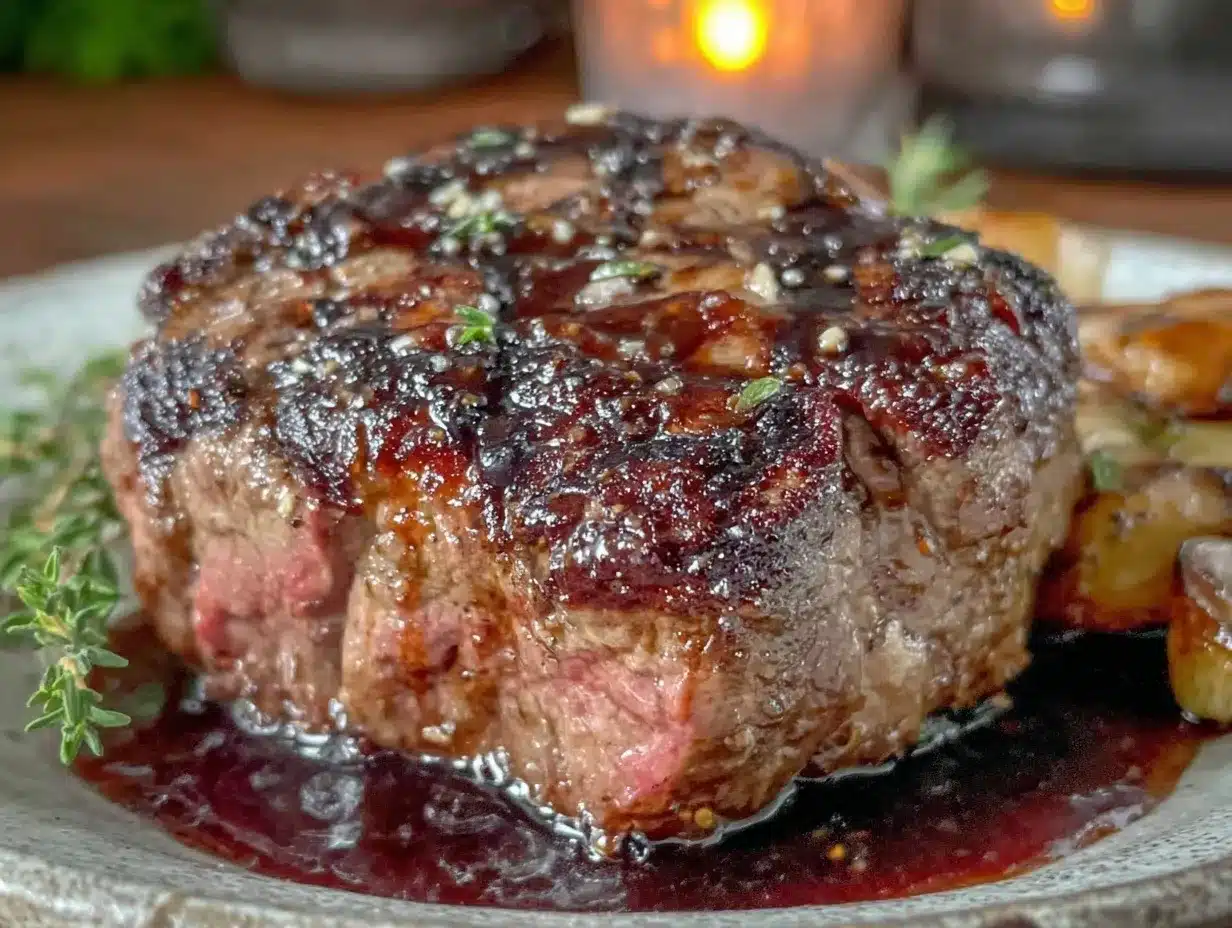
- Bring the steaks to room temperature: About 20–30 minutes before cooking, take the filet mignon out of the fridge. This helps them cook evenly. Pat dry with paper towels to remove any moisture (this is key for a good sear).
- Season generously: Sprinkle salt and freshly ground black pepper on all sides. Don’t skimp here; the seasoning enhances the steak’s natural flavor.
- Preheat your skillet: Place your cast-iron pan over medium-high heat and let it get hot—about 3 minutes. Add olive oil or avocado oil and swirl to coat.
- Sear the steaks: Carefully lay the filets in the pan away from you to avoid splatters. Sear for about 3–4 minutes on the first side without moving them. You’re looking for a deep brown crust.
- Flip and add aromatics: Turn the steaks using tongs. Add butter, smashed garlic cloves, and herb sprigs to the pan. Tilt the pan slightly and spoon the melted butter over the steaks repeatedly for about 3–4 minutes more. This basting step adds flavor and moisture.
- Check doneness: Use a meat thermometer to check internal temperature: 125°F (52°C) for rare, 130-135°F (54-57°C) for medium-rare. If you prefer more done, cook a bit longer, but filet mignon is best enjoyed tender and juicy.
- Rest the steaks: Transfer steaks to a warm plate, tent loosely with foil, and let rest for 5–7 minutes. This redistributes juices so every bite is juicy.
- Make the red wine reduction: While steaks rest, heat a saucepan over medium heat. Add minced shallots and sauté for 1–2 minutes until translucent. Pour in red wine and beef broth, stirring in Dijon mustard. Simmer gently, reducing by half, about 10 minutes. The sauce should thicken slightly and coat the back of a spoon.
- Finish the sauce: Remove from heat and whisk in cold butter until smooth and glossy. Season with pepper to taste. No salt needed if your broth was salted.
- Serve: Spoon the luscious red wine reduction over the filet mignon and garnish with fresh herbs if desired. Enjoy immediately for that perfect elegant dining experience.
If your reduction gets too thick or sticky, add a splash of broth or water to loosen it slightly. And if you notice the pan smoke a bit during searing, just turn down the heat slightly next time—cast iron can be tricky but rewarding once you get the hang of it.
Cooking Tips & Techniques
- Don’t overcrowd the pan: Searing works best when steaks have space. Crowding lowers temperature and causes steaming instead of browning.
- Use room temperature meat: Cold steaks can cook unevenly; letting them sit out a bit helps.
- Patience for crust: Resist flipping too often. Let the Maillard reaction do its magic for a few minutes on each side.
- Butter basting: Adding butter with garlic and herbs creates a subtle depth of flavor and keeps the meat moist. Spoon it over the steak continuously while cooking.
- Resting is crucial: Cutting into a steak too soon lets all those flavorful juices escape. Resting helps keep it juicy.
- Red wine reduction care: Simmer gently—boiling can make the sauce bitter. Reduce slowly to concentrate flavors.
- Use a good-quality wine: Cooking with wine you wouldn’t drink isn’t ideal; flavors concentrate and become more noticeable.
Honestly, my first attempt had me guessing on timing and burning the garlic, but with practice, I learned that lower heat during basting makes a huge difference. Also, multitasking by prepping the sauce while the steak rests saves time and keeps everything warm.
Variations & Adaptations
- Herb variations: Swap thyme or rosemary with fresh sage or tarragon for a different aromatic profile.
- Wine alternatives: Use a full-bodied white wine like Chardonnay for a lighter sauce or a port wine for a sweeter touch.
- Dietary adjustments: For dairy-free, replace butter in the sauce and basting with coconut oil or olive oil. Use vegetable broth instead of beef broth for a vegetarian-friendly reduction.
- Cooking methods: Try finishing the seared filet mignon in a 400°F (200°C) oven for 5-7 minutes if you prefer even cooking without flipping multiple times.
- Personal twist: I once added a splash of balsamic vinegar to the reduction for a tangy depth that surprised guests in a good way!
Serving & Storage Suggestions
Serve your perfect filet mignon immediately after drizzling with the red wine reduction to enjoy the full burst of flavor and aroma. Pair it with classic sides like garlic mashed potatoes, roasted asparagus, or a fresh arugula salad with lemon vinaigrette for a balanced plate.
Leftovers can be stored in an airtight container in the refrigerator for up to 2 days. Reheat gently in a warm pan over low heat to avoid overcooking the steak. The sauce can be reheated in a small saucepan, adding a splash of broth if it thickened too much.
Fun fact: The flavor of the red wine reduction actually deepens a bit after resting a day, making it great for make-ahead meals. Just reheat carefully and serve warm.
Nutritional Information & Benefits
This recipe provides a rich source of high-quality protein from the filet mignon, which supports muscle repair and energy. The red wine reduction adds antioxidants from the wine and fresh shallots, which have anti-inflammatory properties.
Per serving (one 6 oz filet with sauce): approximately 400 calories, 30g protein, 30g fat, and minimal carbohydrates.
The recipe is naturally gluten-free and can be adapted for dairy-free diets. Just be mindful if you choose a broth with added ingredients.
From a wellness perspective, this meal strikes a nice balance between indulgence and nourishment—perfect for treating yourself without overdoing it.
Conclusion
Why not give this perfect filet mignon with red wine reduction a try the next time you want to impress or simply enjoy a special meal? It’s a straightforward recipe that delivers restaurant-quality results in your own kitchen without the stress. Customize the herbs, wine, and sides to suit your taste, and you’ll have a dish that feels uniquely yours.
I love this recipe because it turns a simple night in into an occasion worth savoring. Plus, it’s the kind of meal that invites conversation and slows the pace—a welcome break from the everyday rush. If you try it, please share your thoughts or any tweaks you make. Cooking is a journey, and I’m excited to hear how this recipe fits into yours!
Happy cooking and bon appétit!
FAQs About Perfect Filet Mignon with Red Wine Reduction
- Q: Can I use frozen filet mignon for this recipe?
A: It’s best to use fresh or fully thawed steaks to ensure even cooking and a good sear. - Q: What if I don’t have a cast-iron skillet?
A: A heavy-bottomed stainless steel pan works well too; just make sure it’s preheated properly. - Q: How do I know when the steak is done without a thermometer?
A: For medium-rare, cook about 3-4 minutes per side depending on thickness, then rest. The steak should feel springy but not soft. - Q: Can I prepare the red wine reduction ahead of time?
A: Yes! Make it a day ahead and gently reheat before serving, adding a splash of broth if needed. - Q: What sides go best with this dish?
A: Classic pairings include mashed potatoes, roasted vegetables, or a light salad to balance the richness.
Pin This Recipe!
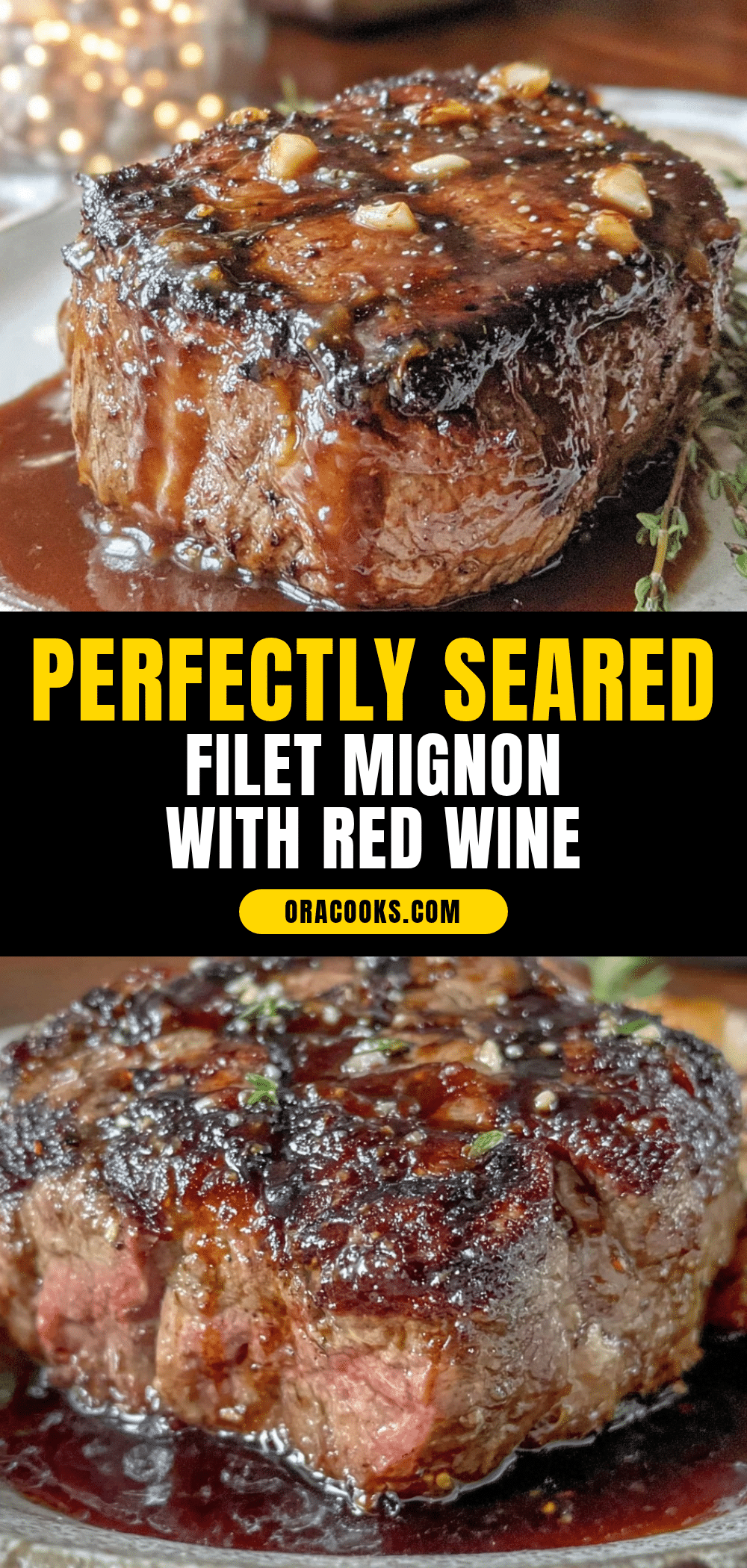
Perfect Filet Mignon Recipe with Easy Red Wine Reduction for Elegant Dining

A simple yet elegant recipe for tender filet mignon paired with a luscious red wine reduction sauce, perfect for special occasions or an impressive dinner at home.
- Prep Time: 30 minutes
- Cook Time: 15 minutes
- Total Time: 45 minutes
- Yield: 2 servings 1x
- Category: Main Course
- Cuisine: American
Ingredients
- 2 filet mignon steaks, about 6 oz (170 g) each, trimmed and patted dry
- Salt and freshly ground black pepper (to taste)
- 2 tablespoons olive oil or avocado oil (for searing)
- 2 tablespoons unsalted butter (for basting)
- 2 cloves garlic, smashed
- 2 sprigs fresh thyme or rosemary
- 1 cup dry red wine (Cabernet Sauvignon or Merlot recommended)
- 1/2 cup beef broth (low sodium)
- 2 tablespoons shallots, finely minced
- 1 teaspoon Dijon mustard
- 1 tablespoon unsalted butter (to finish sauce)
- Freshly ground black pepper (to taste)
Instructions
- Bring the steaks to room temperature about 20–30 minutes before cooking and pat dry with paper towels.
- Season steaks generously with salt and freshly ground black pepper on all sides.
- Preheat a heavy-bottomed skillet or cast-iron pan over medium-high heat for about 3 minutes. Add olive oil or avocado oil and swirl to coat.
- Sear the steaks carefully in the pan for 3–4 minutes on the first side without moving them to develop a deep brown crust.
- Flip the steaks using tongs. Add butter, smashed garlic cloves, and herb sprigs to the pan. Tilt the pan and spoon melted butter over the steaks repeatedly for 3–4 minutes more.
- Check doneness with a meat thermometer: 125°F (52°C) for rare, 130–135°F (54–57°C) for medium-rare. Cook longer if desired.
- Transfer steaks to a warm plate, tent loosely with foil, and let rest for 5–7 minutes.
- While steaks rest, heat a saucepan over medium heat. Sauté minced shallots for 1–2 minutes until translucent.
- Add red wine and beef broth to the saucepan, stir in Dijon mustard, and simmer gently until reduced by half, about 10 minutes.
- Remove from heat and whisk in cold butter until smooth and glossy. Season with freshly ground black pepper to taste.
- Serve the filet mignon topped with the red wine reduction sauce and garnish with fresh herbs if desired.
Notes
If the red wine reduction gets too thick, add a splash of broth or water to loosen it. Avoid overcrowding the pan when searing steaks to ensure a good crust. Use room temperature steaks for even cooking. Rest steaks after cooking to retain juices. Use a good-quality wine you enjoy drinking for best flavor. For dairy-free options, substitute butter with coconut or olive oil and use vegetable broth instead of beef broth.
Nutrition
- Serving Size: One 6 oz filet migno
- Calories: 400
- Sugar: 1
- Sodium: 350
- Fat: 30
- Saturated Fat: 12
- Carbohydrates: 4
- Fiber: 0.5
- Protein: 30
Keywords: filet mignon, red wine reduction, steak recipe, elegant dinner, easy steak sauce, cast iron skillet, date night recipe