Love this? Save it for later!
Share the inspiration with your friends
“The power went out halfway through my dinner party, and honestly, I thought the evening was doomed,” I remember telling my friend as we laughed over the phone. It was a chilly Friday night, and I’d planned to impress with a fancy tomahawk steak I’d picked up from the butcher earlier that day. The oven blackout forced me to get creative, so I tried the reverse-sear method I’d read about but never dared to test on such a showstopper cut. You know that feeling when you’re juggling guests, dim lighting, and a massive steak with a giant bone? Yeah, that was me—fumbling, sweating, but somehow ending up with a steak that tasted like it came straight from a high-end steakhouse.
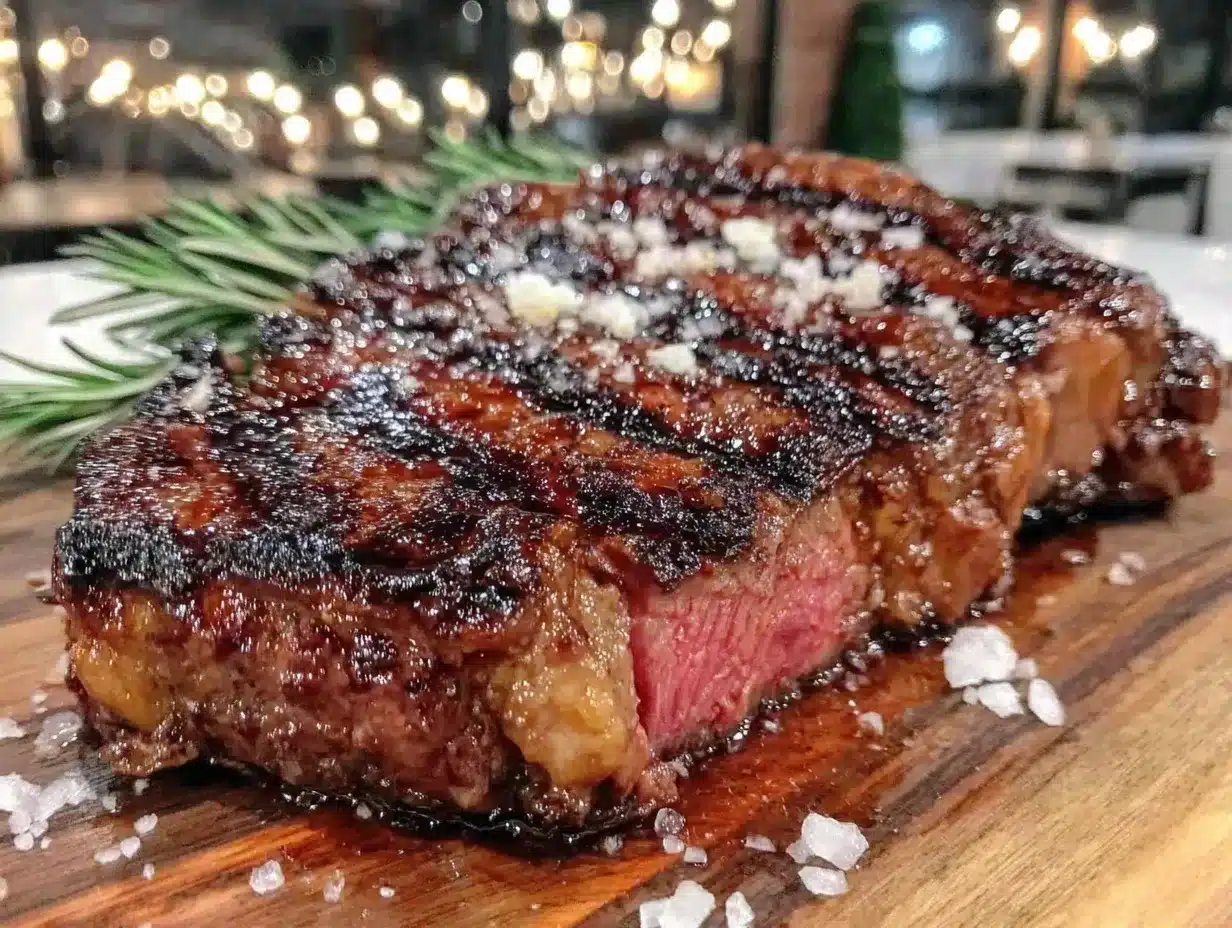
Maybe you’ve been there, staring at a tomahawk steak like it’s a culinary beast, wondering if you’ll butcher it or nail it. This recipe for the perfect reverse-sear tomahawk steak is my go-to now, thanks to that accidental blackout night. It’s all about patience, simple seasoning, and getting that golden crust without overcooking the inside. The beauty? It turns your kitchen into a restaurant, minus the stress (and the bill!). Plus, the method works even if your oven decides to be uncooperative—trust me.
Let me tell you, this isn’t just another steak recipe. It’s a technique that respects the grandeur of the tomahawk while making sure every bite hits that tender, juicy sweet spot. I still chuckle thinking about the cracked bowl I knocked over during prep—classic me—but the steak saved the night. If you’re ready to make a steak that demands attention and delivers every time, keep reading. This reverse-sear tomahawk steak recipe will be your new kitchen legend.
Why You’ll Love This Recipe
After countless trials and a few burned edges (don’t ask), this reverse-sear tomahawk steak recipe has become my secret weapon for restaurant-quality flavor at home. Here’s why it stands out:
- Quick & Easy: While the tomahawk looks intimidating, the reverse-sear approach breaks cooking into manageable steps that fit easily into any dinner prep, typically taking under 90 minutes total.
- Simple Ingredients: No fancy marinades or obscure spices—just salt, pepper, and a touch of butter bring out the steak’s natural richness.
- Perfect for Special Occasions: Whether it’s a weekend dinner for two or a celebratory feast, this steak steals the show effortlessly.
- Crowd-Pleaser: I’ve never met a steak lover who wasn’t impressed by the juicy tenderness and that perfectly seared crust.
- Unbelievably Delicious: The reverse-sear method ensures the meat cooks evenly while getting that mouthwatering caramelized exterior—something you won’t get with traditional methods.
What makes this recipe different? It’s the slow, patient heating of the steak first that guarantees even cooking all the way through, followed by a high-heat sear that locks in flavor and texture. No guessing, no cutting open the steak to check if it’s done—just reliable, juicy perfection every time. Plus, if you’re into other dishes like crispy garlic chicken, you’ll appreciate how mastering this steak cooking technique ups your kitchen game without extra fuss.
Honestly, the first time I nailed this recipe, I closed my eyes at the first bite and felt like I was dining out. It’s comfort food with a touch of class, ready to impress without stress. If you’ve been holding back on cooking tomahawk because it seems too tricky, this is your green light.
What Ingredients You Will Need
This recipe uses simple, high-quality ingredients to bring out the best in your tomahawk steak. Nothing fancy, just good stuff that lets the beef shine through.
- Tomahawk Steak: 1 (about 2-2.5 pounds / 900-1150 grams), well-marbled for the best flavor. Ask your butcher for a steak that’s at least 1.5 inches thick.
- Kosher Salt: About 1 tablespoon (fine or coarse)—the foundation for seasoning to enhance the natural beefy flavor.
- Freshly Ground Black Pepper: 1-2 teaspoons, to taste. Fresh grinding makes all the difference.
- Neutral Oil: 2 tablespoons (like canola or grapeseed oil) for searing—these oils can handle high heat without burning.
- Unsalted Butter: 2 tablespoons, room temperature, for basting during the sear (adds richness and helps develop that golden crust).
- Fresh Herbs (optional): A few sprigs of thyme or rosemary to toss into the pan for aromatic flavor while searing.
- Garlic Cloves (optional): 2-3 smashed cloves, great for infusing flavor during the butter baste.
If you want to keep it classic, just salt, pepper, oil, and butter are enough. For those wondering about substitutions, avocado oil also works well for searing due to its high smoke point. If you’re avoiding dairy, you can skip the butter or use a plant-based alternative, but the flavor won’t be quite the same.
One tip: I recommend picking your tomahawk steak from a trusted butcher or local meat market. The quality of the cut makes a huge difference, and a good butcher can help you select the perfect one. You might want to check out how perfect ribeye steaks are chosen for similar tips.
Equipment Needed
- Oven: For the low-and-slow cooking stage. A reliable oven with good temperature control is ideal.
- Cast Iron Skillet: Perfect for the searing step thanks to its ability to hold and distribute heat evenly.
- Meat Thermometer: A digital instant-read thermometer is a game-changer to monitor internal temperature precisely and avoid guesswork.
- Tongs: For flipping and handling the steak during searing without piercing the meat.
- Basting Spoon: Optional but helpful for spooning melted butter over the steak while searing.
- Wire Rack and Baking Sheet: For roasting the steak in the oven without sitting in its juices, which helps cook it evenly.
If you don’t have a cast iron skillet, a heavy stainless steel pan will work, but avoid non-stick pans for searing because they can’t handle the high heat as well. For budget-friendly options, you can find a decent instant-read thermometer for under $20, which really pays off in cooking confidence. Also, keep your skillet well-seasoned to maintain its non-stick properties and prevent rust—this tip saved me from replacing a pan mid-cook once!
Preparation Method
- Bring the Steak to Room Temperature: Take your tomahawk steak out of the fridge about 45 minutes before cooking. This helps it cook more evenly. Pat dry with paper towels to remove excess moisture—wet steak won’t sear properly.
- Preheat Oven and Prep Rack: Preheat your oven to 225°F (107°C). Place a wire rack on a baking sheet to allow air circulation around the steak during roasting.
- Season the Steak Liberally: Sprinkle kosher salt and freshly ground black pepper all over the steak, pressing the seasoning into the meat gently. Don’t be shy here; seasoning is key for flavor.
- Slow Roast the Steak: Place the steak on the wire rack and roast in the preheated oven until the internal temperature reaches about 110°F (43°C) for rare, 120°F (49°C) for medium-rare. This usually takes around 30-45 minutes depending on thickness. Use a meat thermometer for accuracy.
- Rest Before Sear: Remove the steak from the oven and let it rest for 10 minutes. This lets the juices redistribute and prevents drying out during the sear.
- Heat the Skillet: While the steak rests, heat your cast iron skillet over high heat until it’s smoking hot. Add neutral oil and swirl to coat the pan.
- Sear the Steak: Place the steak in the hot skillet, pressing down slightly to ensure full contact. Sear for about 1.5 to 2 minutes per side, flipping once. Add butter, garlic, and herbs to the pan during the last minute, and spoon the melted butter over the steak continuously for flavor and color.
- Check Final Temperature: After searing, use your thermometer to ensure the steak reaches 125°F (52°C) for rare, 130°F (54°C) for medium-rare, or your preferred doneness. Remember, the steak will continue to cook slightly while resting.
- Let It Rest Again: Transfer the steak to a cutting board and rest for at least 10 minutes before slicing. This is crucial for juicy, tender bites.
- Slice and Serve: Cut the steak against the grain in thick slices and serve immediately. Enjoy that perfect crust and tender center!
Quick tip: If your steak is browning too fast during searing, lower the heat slightly to avoid burning. And if you forget the thermometer like I once did, you can use the finger test method, but honestly, the thermometer is a safer bet for this cut.
Cooking Tips & Techniques
The reverse-sear method is all about control and patience, and here are some tips I learned the hard way:
- Don’t Skip the Resting Steps: Resting before and after searing prevents juice loss and ensures tenderness. I once rushed this and ended up with a dry steak—lesson learned!
- Keep Your Thermometer Handy: An instant-read meat thermometer is the best way to avoid overcooking. Check temps frequently when nearing your target.
- High Heat for Searing Only: The skillet must be smoking hot to get that perfect crust. If the heat is too low, you’ll end up steaming the steak instead of searing.
- Use the Right Fat: Butter adds flavor but burns quickly at high heat, so combine it with a high-smoke-point oil to keep the pan hot without smoking excessively.
- Don’t Overcrowd Your Pan: If you’re cooking more than one steak, sear them one at a time to maintain high heat and even browning.
- Multitasking: While the steak is in the oven, prep your sides or set the table. This downtime is perfect for organizing without stressing.
Remember, the reverse-sear method lets you avoid the dreaded overcooked exterior and undercooked center. It’s like the best of both worlds—slow roast for evenness, sear for flavor and texture. If you’re curious about similar techniques, the perfect ribeye steak recipe uses some of the same principles.
Variations & Adaptations
This recipe is versatile and can be tweaked based on your preferences or dietary needs:
- Herb Butter Twist: Mix softened butter with minced garlic, parsley, and chives, then dollop on top of the steak right after searing for an extra flavor punch.
- Spice Rub Variation: Swap the simple salt and pepper for a dry rub with smoked paprika, cumin, and brown sugar for a smoky, slightly sweet crust.
- Oven-Free Version: If you don’t have an oven, try a sous vide bath to cook the steak evenly before searing. It’s a bit more equipment but yields amazing results.
- Allergen-Friendly: For dairy-free, skip the butter and baste with olive oil and herbs instead. It’s not quite the same richness but still delicious.
- Personal Favorite: I once added a splash of bourbon to the butter baste—crazy, I know—but it gave the crust a subtle caramelized edge that wowed my guests.
Serving & Storage Suggestions
Serve your tomahawk steak warm, sliced thick against the grain to maximize tenderness. It pairs beautifully with roasted vegetables, creamy mashed potatoes, or a crisp arugula salad to balance the richness.
For beverages, a full-bodied red wine like Cabernet Sauvignon or Malbec complements the steak’s bold flavors perfectly. If you prefer beer, a malty amber ale works wonders.
To store leftovers, wrap the steak tightly in foil or airtight containers and refrigerate for up to 3 days. Reheat gently in a low oven (about 250°F / 120°C) to avoid drying out, then finish with a quick sear if needed to refresh the crust.
Flavors tend to deepen overnight, so leftovers often taste even better the next day, making this a great make-ahead option for busy nights.
Nutritional Information & Benefits
An average serving (about 6 ounces / 170 grams) of tomahawk steak provides roughly 450 calories, 35 grams of protein, and 35 grams of fat, depending on the cut’s marbling.
Beef is a fantastic source of high-quality protein, iron, zinc, and B vitamins—all essential for energy and muscle repair. Choosing grass-fed beef can increase omega-3 fatty acid content, adding a slight health boost.
This recipe is naturally gluten-free and can be low-carb if you skip carb-heavy sides. Just watch the butter amount if you’re managing fat intake.
Personally, I find that enjoying a perfectly cooked steak like this in moderation is part of a balanced diet and definitely a mood booster after a long week.
Conclusion
The perfect reverse-sear tomahawk steak recipe takes what seems intimidating and makes it manageable, reliable, and downright delicious. It’s a technique that respects the magnificent cut you’re working with and rewards your patience with juicy, flavorful results every time.
Feel free to tweak the seasoning or sides to suit your taste—this recipe is a framework, not a rulebook. Personally, I keep coming back to it because it makes me feel like I’m serving something special, even on a regular Tuesday.
If you try this recipe, I’d love to hear how it turned out for you or any twists you added! Drop a comment below or share your best steak stories. Here’s to many memorable meals and perfectly cooked tomahawks ahead!
FAQs
What is the reverse-sear method?
The reverse-sear method involves cooking the steak slowly at low heat first (usually in the oven) and then searing it in a hot pan to create a caramelized crust. This ensures even cooking and juicy meat.
How do I know when the tomahawk steak is done?
Using an instant-read meat thermometer is the best way. For medium-rare, aim for an internal temperature of about 130°F (54°C) after searing. The steak will continue to cook slightly while resting.
Can I cook a tomahawk steak on the grill using this method?
Yes! You can do the low-and-slow cooking indirectly on a grill, then sear it over direct high heat. Just monitor temperatures carefully to avoid flare-ups.
How thick should the tomahawk steak be for this recipe?
Ideally, your tomahawk steak should be at least 1.5 inches thick (about 4 cm) to benefit fully from the reverse-sear method and prevent overcooking.
Can I prepare the steak ahead of time?
You can season the steak a few hours ahead and keep it in the fridge uncovered to dry out the surface, which helps with searing. Just bring it to room temperature before cooking.
Pin This Recipe!
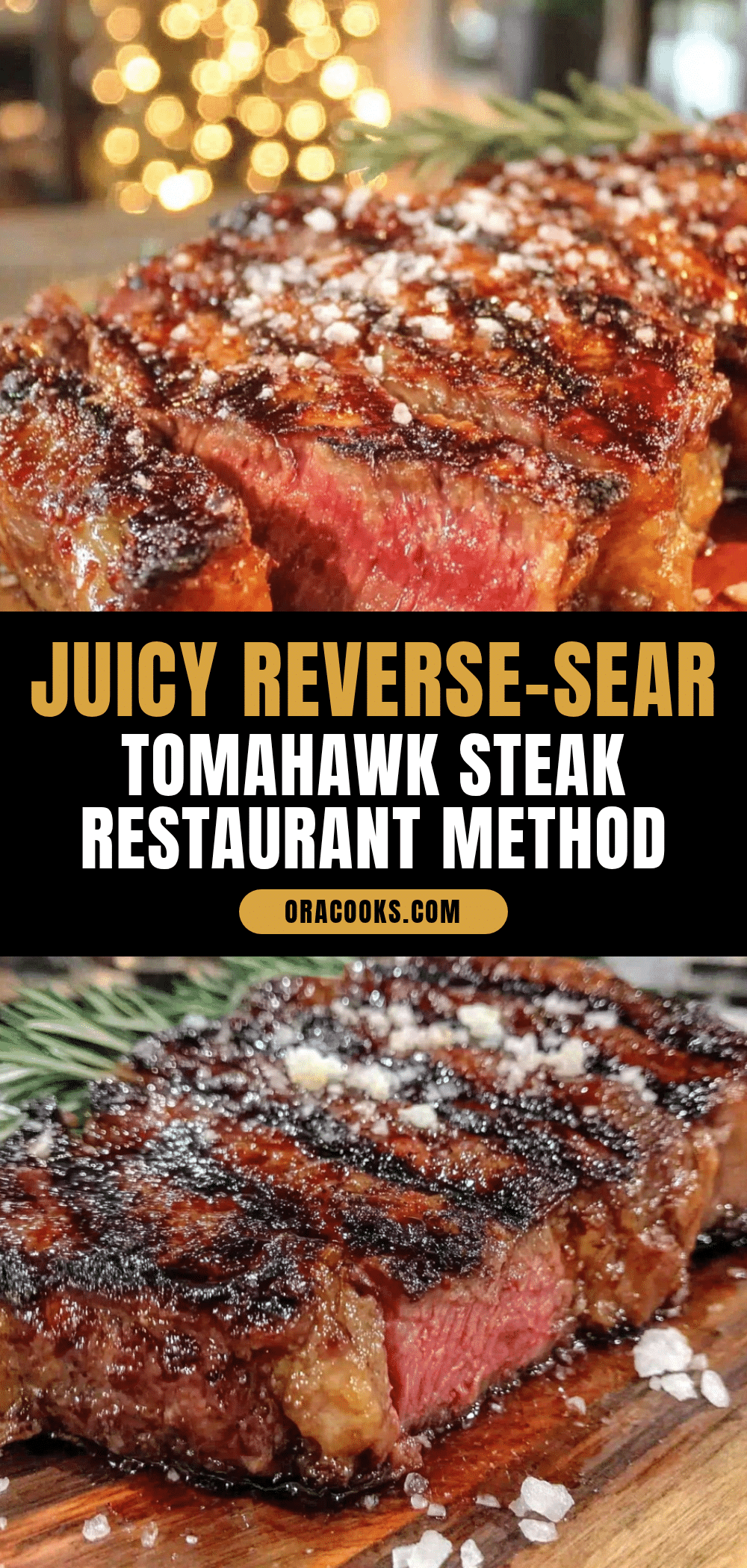
Perfect Reverse-Sear Tomahawk Steak Recipe for Easy Restaurant-Quality Flavor
This reverse-sear tomahawk steak recipe delivers restaurant-quality flavor at home with a simple seasoning and a technique that ensures a juicy, tender steak with a perfect crust.
- Prep Time: 15 minutes
- Cook Time: 45 minutes
- Total Time: 1 hour
- Yield: 2 servings 1x
- Category: Main Course
- Cuisine: American
Ingredients
- 1 tomahawk steak (about 2–2.5 pounds / 900–1150 grams), well-marbled and at least 1.5 inches thick
- 1 tablespoon kosher salt (fine or coarse)
- 1–2 teaspoons freshly ground black pepper, to taste
- 2 tablespoons neutral oil (canola or grapeseed oil)
- 2 tablespoons unsalted butter, room temperature
- A few sprigs of fresh thyme or rosemary (optional)
- 2–3 smashed garlic cloves (optional)
Instructions
- Bring the tomahawk steak to room temperature by taking it out of the fridge about 45 minutes before cooking. Pat dry with paper towels.
- Preheat the oven to 225°F (107°C). Place a wire rack on a baking sheet.
- Season the steak liberally with kosher salt and freshly ground black pepper, pressing the seasoning into the meat gently.
- Place the steak on the wire rack and roast in the oven until the internal temperature reaches about 110°F (43°C) for rare or 120°F (49°C) for medium-rare, about 30-45 minutes depending on thickness. Use a meat thermometer for accuracy.
- Remove the steak from the oven and let it rest for 10 minutes.
- Heat a cast iron skillet over high heat until smoking hot. Add neutral oil and swirl to coat the pan.
- Sear the steak in the hot skillet for 1.5 to 2 minutes per side, flipping once. During the last minute, add butter, garlic, and herbs to the pan and baste the steak continuously with melted butter.
- Check the final internal temperature with a thermometer: 125°F (52°C) for rare, 130°F (54°C) for medium-rare, or your preferred doneness.
- Transfer the steak to a cutting board and rest for at least 10 minutes before slicing.
- Slice the steak against the grain in thick slices and serve immediately.
Notes
Do not skip resting steps before and after searing to retain juices and ensure tenderness. Use a digital instant-read thermometer for best results. If the steak browns too fast during searing, lower the heat slightly. Avoid overcrowding the pan if cooking multiple steaks. Butter adds flavor but burns quickly, so combine with a high-smoke-point oil.
Nutrition
- Serving Size: 6 ounces (170 grams)
- Calories: 450
- Fat: 35
- Protein: 35
Keywords: tomahawk steak, reverse sear, steak recipe, restaurant-quality steak, easy steak recipe, cast iron skillet steak