Love this? Save it for later!
Share the inspiration with your friends
My friend Alex had insisted for years that focaccia was just glorified flatbread, nothing special, especially the sourdough kind. For a solid five years, he would politely decline any offer to try my attempts, always muttering something about preferring “real bread” or just plain old sandwich loaves. Then one Sunday afternoon, I was making this rustic sourdough focaccia with caramelized onion and rosemary for myself—no one else was around, or so I thought. Half an hour later, I caught Alex leaning over the counter, sneaking a piece while I was distracted by a phone call. The way his eyes lit up? That was the moment I knew the recipe had done the impossible: turned a skeptic into a fan.
Honestly, it wasn’t some magic wand moment. It was the slow, sweet tang of caramelized onions mingling with the earthy rosemary, the light but chewy crumb of the sourdough base, and that slightly crisp, golden crust that made it so compelling. I mean, maybe you’ve been there—thinking something’s just “meh” until a particular version surprises you. What makes this rustic sourdough focaccia stick around on my kitchen counter isn’t just its flavor; it’s the quiet satisfaction of proving someone wrong without even trying. Plus, it’s just really great bread.
Despite the mess I made trying to caramelize onions while the dough was rising (I burned one batch and had to start over), this recipe has become a weekend staple. And I keep going back to it, not only because it tastes fantastic but because it’s the kind of bread that feels like home—warm, a little imperfect, and utterly comforting.
Why You’ll Love This Recipe
This rustic sourdough focaccia recipe isn’t just another bread to bake. It’s one I’ve tested countless times, tweaking every detail until it hit that spot where the crust crackles just right, and the crumb stays soft and airy. I’m sharing it because it’s simple, approachable, and honestly, a little addictive.
- Quick & Easy: While sourdough might sound intimidating, this recipe comes together in about 4 hours with mostly hands-off time—perfect for a lazy weekend or a busy weeknight if you prep ahead.
- Simple Ingredients: No scavenger hunts needed. You probably have everything in your pantry: flour, salt, olive oil, and that trusty sourdough starter.
- Perfect for Sharing: Whether it’s a cozy dinner, brunch spread, or an impromptu gathering, this bread always disappears fast.
- Crowd-Pleaser: Even my most discerning friends can’t resist the combination of caramelized onions and fragrant rosemary.
- Unbelievably Delicious: The contrast between the crisp, golden crust and the soft, aromatic interior? Next-level comfort food.
What makes this recipe stand out is the slow caramelization of the onions—taking the time here really pays off with deep, sweet notes that aren’t overpowering. And the rosemary isn’t just sprinkled on; it’s gently pressed into the dough, releasing that piney aroma that lingers in the kitchen long after the focaccia is gone. This isn’t just another focaccia; it’s my best version, the one that quietly converts even the most vocal critics.
What Ingredients You Will Need
This recipe uses simple, wholesome ingredients to deliver bold flavor and satisfying texture without the fuss. Most are pantry staples, and a few fresh touches bring it all together.
- Sourdough starter (active and bubbly, about 100g / 3.5 oz) – The heart of the bread, giving it that signature tang.
- All-purpose flour (500g / 4 cups) – I recommend King Arthur for consistent results.
- Water (350ml / 1.5 cups, lukewarm) – Hydrates the dough; lukewarm to encourage fermentation.
- Olive oil (60ml / 4 tbsp) – Plus extra for drizzling and greasing the pan (use a good-quality extra virgin like Colavita).
- Salt (10g / 2 tsp) – Enhances flavor and strengthens the dough.
- Yellow onions (2 large, thinly sliced) – Slowly caramelized to add sweetness and depth.
- Fresh rosemary (2 tbsp, chopped) – The fragrant herb that pairs beautifully with the onions.
- Coarse sea salt (for sprinkling) – Adds texture and a burst of salty flavor.
You can swap yellow onions for sweet onions in summer for a milder sweetness, or even red onions if you want a slightly sharper bite. If you’re gluten-sensitive, try a blend with almond or oat flour, but expect a denser crumb. For a vegan version, simply omit the honey drizzle (if you add it) and make sure your starter is vegan-friendly.
Equipment Needed
- Mixing bowl: A large, non-reactive bowl for combining ingredients comfortably.
- Dough scraper or spatula: To handle sticky dough without frustration.
- Cast iron skillet or rimmed baking sheet: Cast iron gives a fantastic crust, but a baking sheet works just fine.
- Kitchen scale: For accurate measurement of flour and liquids (highly recommended).
- Sharp knife or mandoline: To slice onions thinly and evenly.
- Clean kitchen towel or plastic wrap: To cover the dough during fermentation.
If you don’t have a kitchen scale, measuring cups and spoons will do, but the dough texture may vary slightly. I’ve tried this recipe with a stand mixer fitted with a dough hook, which saves some elbow grease, but hand mixing gives you a better feel for the dough’s texture. Make sure to keep your cast iron skillet well-seasoned; it helps prevent sticking and adds subtle flavor layers.
Preparation Method
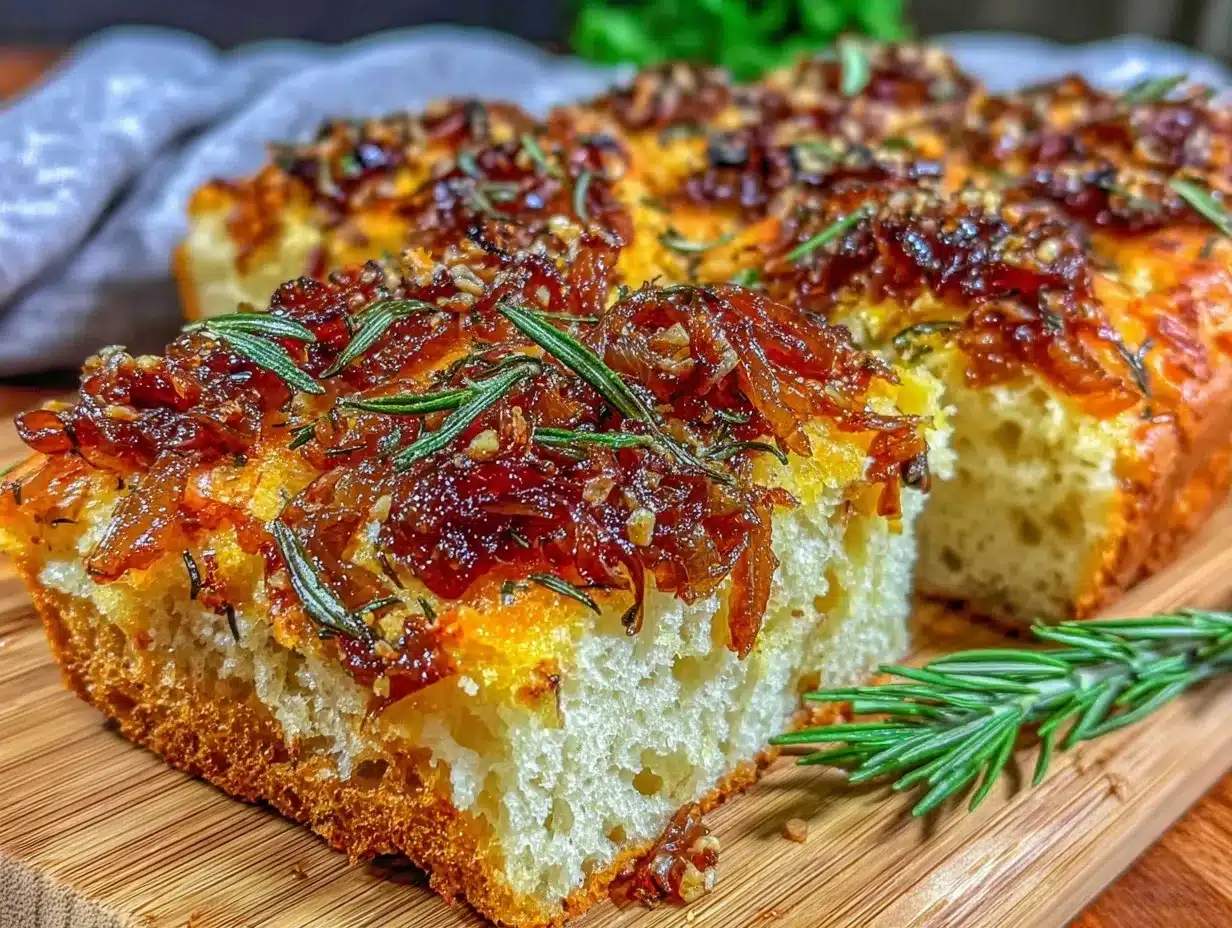
- Caramelize the onions (about 30-40 minutes): Heat 2 tablespoons of olive oil in a skillet over low-medium heat. Add the thinly sliced onions and a pinch of salt. Stir occasionally, letting the onions soften and slowly turn golden brown. Watch carefully toward the end to prevent burning. Once done, set aside to cool.
- Mix the dough (10 minutes): In a large bowl, combine 500g (4 cups) all-purpose flour, 350ml (1.5 cups) lukewarm water, and 100g (3.5 oz) active sourdough starter. Stir with a wooden spoon until just combined—don’t worry if it looks shaggy and sticky.
- Autolyse (30 minutes): Cover the bowl with a towel and let it rest. This hydrates the flour and improves gluten development without kneading.
- Add salt and olive oil (5 minutes): Sprinkle 10g (2 tsp) salt over the dough and add 2 tablespoons of olive oil. Use wet hands to fold and stretch the dough in the bowl until it becomes smoother and a bit elastic.
- Bulk fermentation (3 hours): Cover and leave the dough at room temperature. Every 30 minutes for the first 2 hours, perform stretch and folds: reach under the dough, stretch it up, and fold it over itself. This strengthens the dough structure.
- Prepare the pan: Drizzle 2 tablespoons olive oil into a 12-inch (30cm) cast iron skillet or rimmed baking sheet. Transfer the dough and gently press it out with oiled fingers to fill the pan. Don’t worry if it’s uneven; rustic is the goal.
- Add toppings and final proof (45 minutes): Scatter the caramelized onions evenly over the dough, then sprinkle chopped rosemary on top. Press them lightly into the dough. Cover and let the dough rise until puffy.
- Dimple the dough: Just before baking, press your fingertips all over the dough to create dimples. Drizzle a little more olive oil and sprinkle coarse sea salt on top.
- Bake (25-30 minutes at 220°C / 425°F): Place the pan in the preheated oven. Bake until the focaccia is golden brown and crisp on top, and you can smell that irresistible aroma filling your kitchen.
- Cool and serve: Let the focaccia cool for at least 15 minutes before slicing. This resting time helps the crumb set properly and makes slicing easier.
Pro tip: If your dough feels too sticky at any point, sprinkle a little flour on your hands but avoid adding too much to the dough itself. You want it tacky but manageable. Also, don’t skip the dimpling step—that’s what gives focaccia its signature texture and helps keep the toppings in place.
Cooking Tips & Techniques
Making sourdough focaccia can seem tricky, but a few tips make a world of difference. First, patience is key. The slow fermentation develops flavor and texture that quick yeast breads just can’t match.
One mistake I made early on was rushing the caramelization. High heat burns the onions and ruins the sweetness, so low and slow is the way to go. If you don’t have time, you can make the onions a day ahead—just refrigerate and bring them back to room temp before topping the dough.
During the bulk fermentation, those stretch and folds are your best friend. They build strength in the dough without kneading. You’ll feel it transform from a sticky mess into something elastic and bouncy—that’s your cue it’s ready.
Don’t skimp on olive oil—both in the dough and on top. It keeps the focaccia moist and contributes to that beautiful golden crust. I like to use a fruity, peppery extra virgin olive oil to complement the rosemary and onions.
Lastly, timing your bake is crucial. Too long, and the bread dries out; too short, and it’s doughy inside. The crust should be crisp and golden, and the smell is a dead giveaway you’re good to go.
Variations & Adaptations
This rustic sourdough focaccia recipe is versatile and forgiving, so feel free to customize it!
- Seasonal variation: Swap caramelized onions for sautéed mushrooms or roasted cherry tomatoes in summer for a bright twist.
- Dietary adaptation: Use gluten-free flour blends with xanthan gum for gluten sensitivity, though the texture will be denser.
- Flavor twist: Add olives or sun-dried tomatoes with the rosemary for a Mediterranean flair.
- Cooking method: If you don’t have an oven, try a cast iron skillet on low heat with a lid to mimic baking—though the crust won’t be quite the same.
- Personal variation: Sometimes I sprinkle flaky sea salt mixed with a pinch of smoked paprika on top before baking. It adds a subtle smoky depth that’s surprisingly addictive.
Serving & Storage Suggestions
This focaccia is best served warm, just out of the oven or reheated slightly to bring back the crispness. Slice it into generous squares and enjoy as a side for soups, salads, or just on its own with a drizzle of olive oil.
Pair it with a bright arugula salad or a rich tomato soup for a comforting meal. A glass of crisp white wine or a hoppy beer complements the herbaceous notes beautifully.
To store, wrap leftover focaccia tightly in foil or plastic wrap and keep it at room temperature for up to 2 days. For longer storage, freeze in airtight bags for up to 3 months. Reheat in a toaster oven or conventional oven at 180°C (350°F) for 5–10 minutes to revive the crust.
Flavors actually deepen after a day, so if you can resist, try letting it rest overnight. The rosemary and onions meld together into something even more soulful.
Nutritional Information & Benefits
This rustic sourdough focaccia with caramelized onion and rosemary offers moderate calories and a good balance of carbohydrates and fats, mostly from olive oil, which is rich in heart-healthy monounsaturated fats.
Onions provide antioxidants and anti-inflammatory compounds, while rosemary adds vitamins and improves digestion. Using a natural sourdough starter aids in breaking down gluten and may improve gut health due to fermentation.
While not low-carb, this bread is a wholesome option compared to highly processed varieties. You can adjust portion sizes to fit your dietary needs.
Note: Contains gluten and is not suitable for those with celiac disease unless modified.
Conclusion
If you’ve ever thought sourdough focaccia was just a fancy fad, this rustic version might quietly change your mind. It’s the kind of bread that rewards your patience with incredible texture, deep flavors, and that perfect balance of crisp and soft.
Feel free to tweak the toppings or swap flours to make it your own—after all, rustic bread embraces imperfection. I keep coming back to this recipe because it’s simple, soulful, and the perfect reason to slow down in the kitchen.
Give it a try and let me know how it changes your view of focaccia. Maybe, like Alex, you’ll catch yourself sneaking a second slice before anyone notices.
Frequently Asked Questions
How long does sourdough focaccia keep fresh?
At room temperature, it stays fresh for about 2 days when wrapped properly. For longer storage, freeze it up to 3 months.
Can I use instant yeast instead of sourdough starter?
Yes, but the flavor will be less complex. Use about 2 teaspoons of instant yeast and reduce fermentation time accordingly.
What if my dough is too sticky to handle?
Wet your hands with water or olive oil before handling. Avoid adding too much extra flour, which can make the bread dense.
Can I make this focaccia without caramelized onions?
Absolutely! You can top it with just rosemary and sea salt or try other toppings like olives or cherry tomatoes.
Is it necessary to use a cast iron skillet?
No, a rimmed baking sheet works fine. Cast iron just helps achieve a crispier, more evenly browned crust.
Pin This Recipe!
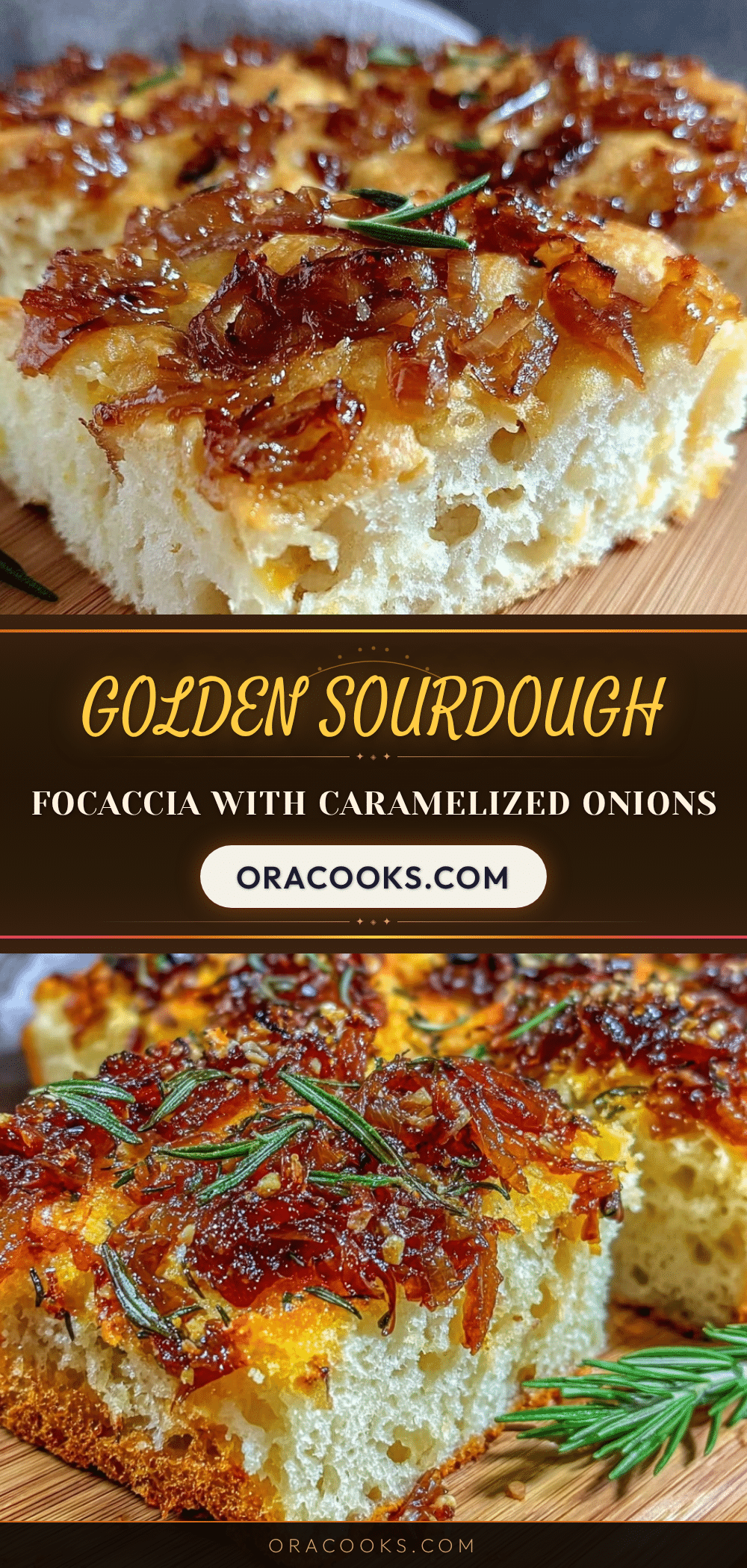
Rustic Sourdough Focaccia Recipe Easy Homemade Caramelized Onion and Rosemary Bread
A rustic sourdough focaccia with caramelized onions and rosemary, featuring a crisp golden crust and soft, airy crumb. This recipe is simple, approachable, and perfect for sharing.
- Prep Time: 45 minutes
- Cook Time: 30 minutes
- Total Time: 4 hours 15 minutes
- Yield: 8 servings 1x
- Category: Bread
- Cuisine: Italian
Ingredients
- 100g (3.5 oz) active sourdough starter
- 500g (4 cups) all-purpose flour
- 350ml (1.5 cups) lukewarm water
- 60ml (4 tbsp) olive oil, plus extra for drizzling and greasing
- 10g (2 tsp) salt
- 2 large yellow onions, thinly sliced
- 2 tbsp fresh rosemary, chopped
- Coarse sea salt for sprinkling
Instructions
- Caramelize the onions (about 30-40 minutes): Heat 2 tablespoons of olive oil in a skillet over low-medium heat. Add the thinly sliced onions and a pinch of salt. Stir occasionally, letting the onions soften and slowly turn golden brown. Watch carefully toward the end to prevent burning. Once done, set aside to cool.
- Mix the dough (10 minutes): In a large bowl, combine 500g (4 cups) all-purpose flour, 350ml (1.5 cups) lukewarm water, and 100g (3.5 oz) active sourdough starter. Stir with a wooden spoon until just combined—don’t worry if it looks shaggy and sticky.
- Autolyse (30 minutes): Cover the bowl with a towel and let it rest. This hydrates the flour and improves gluten development without kneading.
- Add salt and olive oil (5 minutes): Sprinkle 10g (2 tsp) salt over the dough and add 2 tablespoons of olive oil. Use wet hands to fold and stretch the dough in the bowl until it becomes smoother and a bit elastic.
- Bulk fermentation (3 hours): Cover and leave the dough at room temperature. Every 30 minutes for the first 2 hours, perform stretch and folds: reach under the dough, stretch it up, and fold it over itself. This strengthens the dough structure.
- Prepare the pan: Drizzle 2 tablespoons olive oil into a 12-inch (30cm) cast iron skillet or rimmed baking sheet. Transfer the dough and gently press it out with oiled fingers to fill the pan. Don’t worry if it’s uneven; rustic is the goal.
- Add toppings and final proof (45 minutes): Scatter the caramelized onions evenly over the dough, then sprinkle chopped rosemary on top. Press them lightly into the dough. Cover and let the dough rise until puffy.
- Dimple the dough: Just before baking, press your fingertips all over the dough to create dimples. Drizzle a little more olive oil and sprinkle coarse sea salt on top.
- Bake (25-30 minutes at 220°C / 425°F): Place the pan in the preheated oven. Bake until the focaccia is golden brown and crisp on top, and you can smell that irresistible aroma filling your kitchen.
- Cool and serve: Let the focaccia cool for at least 15 minutes before slicing. This resting time helps the crumb set properly and makes slicing easier.
Notes
If dough feels too sticky, sprinkle a little flour on your hands but avoid adding too much to the dough. Don’t skip the dimpling step to achieve signature focaccia texture and keep toppings in place. Use low and slow heat to caramelize onions to avoid burning. Olive oil is essential for moisture and crust quality. Let focaccia cool before slicing to set crumb.
Nutrition
- Serving Size: 1 slice (approx. 1/8
- Calories: 280
- Sugar: 3
- Sodium: 350
- Fat: 10
- Saturated Fat: 1.5
- Carbohydrates: 40
- Fiber: 2
- Protein: 7
Keywords: sourdough focaccia, caramelized onion focaccia, rosemary bread, rustic bread, homemade focaccia, sourdough bread, easy focaccia recipe