Love this? Save it for later!
Share the inspiration with your friends
It was 10:47 PM on a rainy Thursday, and I had a jar of sourdough discard staring at me from the fridge like it knew I was about to give up on it. I also had half a can of pumpkin puree leftover from a pie I made three days prior. Honestly, I was tired. My kitchen was a mess. But the idea just hit me—what if I combined the two? I mean, pumpkin bread is a classic, and sourdough discard bread is my usual go-to for using up starter. But together? That felt like a risk. A weird, probably-not-going-to-work kind of risk.
I grabbed my mixing bowl, didn’t even bother measuring the flour perfectly at first, and just started throwing things together. I forgot to set a timer and guessed the bake time based on smell. Let me tell you, that bread came out of the oven looking like a golden, domed masterpiece. The kitchen smelled like fall and fermentation—two of my favorite things. I cut into it while it was still warm, and the crumb was soft, the crust was chewy, and that subtle tang from the discard paired perfectly with the earthy sweetness of the pumpkin.
Maybe you’ve been there—staring at a jar of discard, feeling guilty about tossing it, but not wanting to make another batch of crackers or pancakes. This Homemade Pumpkin Sourdough Discard Bread became my go-to solution that night, and honestly, I haven’t looked back since. It’s the kind of recipe that turns kitchen scraps into something you actually look forward to eating. And that, my friends, is what keeps me coming back to the bowl.
Why You’ll Love This Recipe
I’ve tested this recipe about seven times now—yes, seven—because I wanted to get the hydration just right and the tang-to-sweetness balance perfect. I even brought a loaf to my neighbor, who is a pastry chef, and she asked for the recipe. That’s when I knew this one was a keeper.
- Quick & Easy: This comes together in about 15 minutes of active prep time. No kneading, no complicated folds. Just mix, let it rise, and bake.
- Simple Ingredients: You probably have most of these in your pantry right now. Flour, pumpkin puree, butter, sugar, and that jar of discard you’ve been avoiding.
- Perfect for Fall Mornings: Great for breakfast with a smear of butter, or as an afternoon snack with a cup of coffee. It also makes fantastic toast.
- Crowd-Pleaser: I’ve brought this to two potlucks and a book club meeting. It disappeared every single time. Even people who “don’t like sourdough” loved it.
- Unbelievably Delicious: The texture is what gets me—it’s moist but not dense, with a tender crumb and a crust that has just the right amount of chew. The pumpkin keeps it soft for days.
What makes this recipe different from the rest? It’s the way the sourdough discard interacts with the pumpkin. The acidity in the discard tenderizes the gluten, giving you a softer bread without any commercial yeast. Plus, the pumpkin adds moisture and a subtle sweetness that balances the tang. It’s not just another pumpkin bread—it’s your new favorite way to use up discard.
This recipe is the kind that makes you close your eyes after the first bite. It’s comfort food reimagined—faster than traditional sourdough, but with the same soul-soothing satisfaction. Perfect for impressing guests without stress, or turning a simple Thursday night into something memorable.
What Ingredients You Will Need
This recipe uses simple, wholesome ingredients to deliver bold flavor and satisfying texture without the fuss. Most of these are pantry staples, so you likely won’t need a special trip to the store.
- All-purpose flour – 2 ½ cups (315g). I use King Arthur Flour for consistent results, but any brand works fine. Spoon and level your flour for accuracy.
- Pumpkin puree – 1 cup (245g). Make sure it’s 100% pure pumpkin, not pumpkin pie filling. Libby’s is my go-to brand.
- Sourdough discard – 1 cup (240g), unfed and straight from the fridge. It doesn’t need to be active or bubbly—that’s the beauty of discard recipes.
- Granulated sugar – ½ cup (100g). Adds sweetness and helps with browning.
- Brown sugar – ¼ cup (50g), packed. Adds depth and a slight molasses flavor that complements the pumpkin.
- Unsalted butter – ¼ cup (57g), melted and slightly cooled. You can substitute with coconut oil for a dairy-free option.
- Eggs – 2 large, room temperature. Let them sit out for 30 minutes before starting.
- Milk – ¼ cup (60ml), room temperature. Whole milk works best, but any milk will do.
- Baking soda – 1 teaspoon. This helps the bread rise since we’re not using commercial yeast.
- Baking powder – ½ teaspoon. Gives an extra lift.
- Salt – ½ teaspoon. Balances the sweetness and enhances the tang.
- Pumpkin pie spice – 2 teaspoons. You can make your own with 1 tsp cinnamon, ½ tsp ginger, ¼ tsp nutmeg, ¼ tsp cloves.
- Cinnamon – 1 teaspoon. I add a little extra because I love the warmth it brings.
- Vanilla extract – 1 teaspoon. Pure vanilla is best, but imitation works in a pinch.
Equipment Needed
You don’t need a fancy bakery setup for this bread. Here’s what I used and what you can substitute if needed.
- 9×5-inch loaf pan – My go-to is a metal pan because it conducts heat evenly. Glass pans work too, but you may need to add 5-10 minutes to the bake time.
- Mixing bowls – One large bowl for dry ingredients and one medium bowl for wet ingredients. I prefer glass or stainless steel.
- Whisk – For mixing dry ingredients. A fork works if you don’t have one.
- Rubber spatula – For folding the batter together. A wooden spoon is a fine substitute.
- Parchment paper – Line your loaf pan for easy removal. I learned this the hard way after my first loaf stuck to the pan.
- Cooling rack – Lets air circulate around the bread so it doesn’t get soggy. A wire rack from a baking sheet works too.
- Kitchen scale – Optional but highly recommended for consistent results. I use a simple OXO scale.
If you don’t have a loaf pan, you can bake this in an 8×8 square pan—just reduce the bake time by about 10 minutes and check for doneness earlier.
Preparation Method
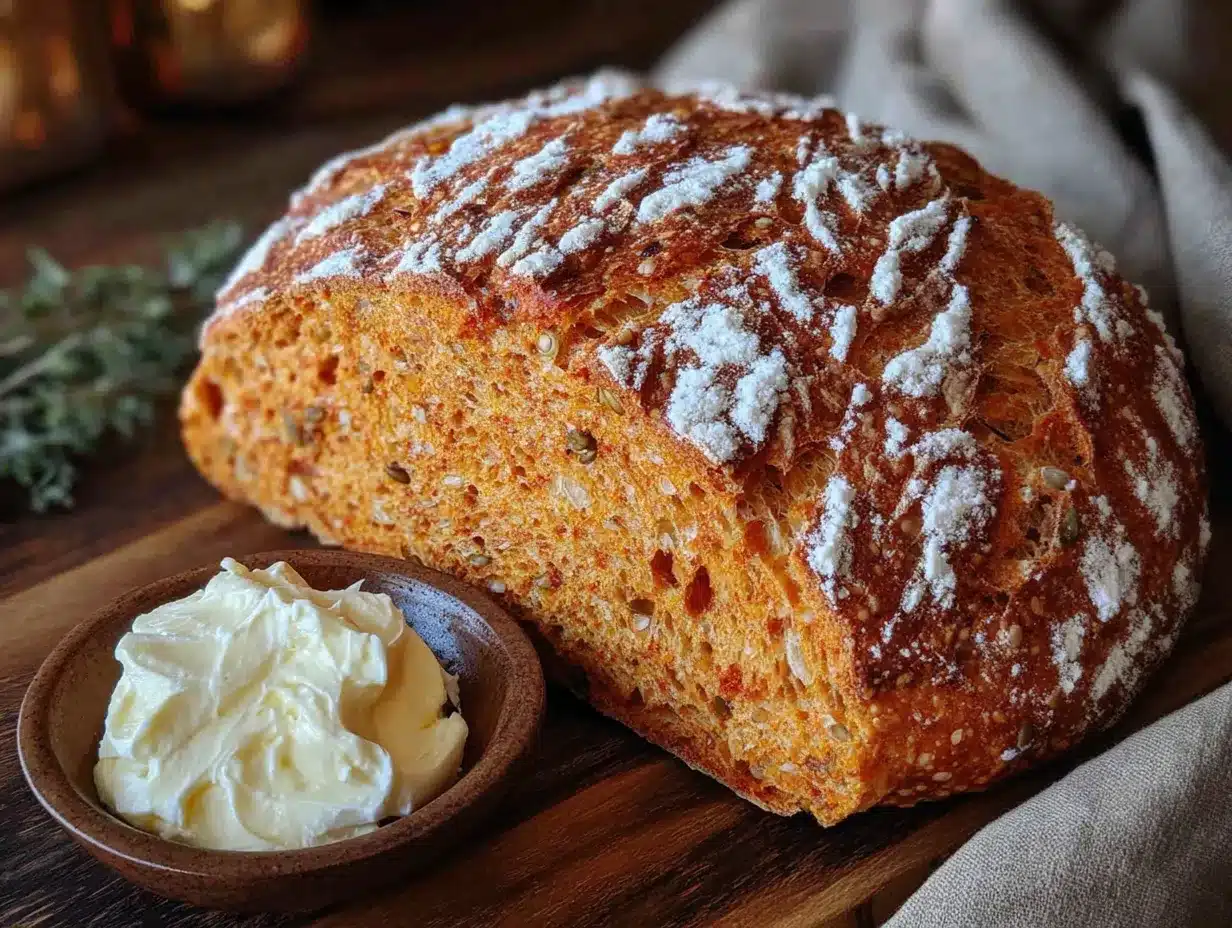
Alright, let’s get to the good part. Here’s how I make this bread, step by step, with all the little details I’ve picked up along the way.
- Preheat and prep. Preheat your oven to 350°F (175°C). Grease your 9×5-inch loaf pan and line it with a strip of parchment paper, leaving some overhang on the long sides. This makes lifting the bread out so much easier.
- Mix the dry ingredients. In a large bowl, whisk together 2 ½ cups (315g) all-purpose flour, 1 teaspoon baking soda, ½ teaspoon baking powder, ½ teaspoon salt, 2 teaspoons pumpkin pie spice, and 1 teaspoon cinnamon. Set this aside.
- Combine the wet ingredients. In a medium bowl, whisk together 1 cup (245g) pumpkin puree, 1 cup (240g) sourdough discard, ½ cup (100g) granulated sugar, ¼ cup (50g) packed brown sugar, ¼ cup (57g) melted butter, 2 large eggs, ¼ cup (60ml) milk, and 1 teaspoon vanilla extract. Whisk until smooth and well combined. The mixture should look like a thick, orange batter.
- Fold everything together. Pour the wet ingredients into the dry ingredients. Use a rubber spatula to fold gently until just combined. Do not overmix—stop as soon as you don’t see any more streaks of flour. A few lumps are totally fine. Overmixing will make the bread tough, and nobody wants that.
- Pour and smooth. Scrape the batter into your prepared loaf pan. Use the spatula to spread it evenly. Give the pan a gentle tap on the counter to release any air bubbles.
- Let it rest. This is the step that makes a difference. Let the batter sit in the pan for 20-30 minutes at room temperature. This allows the sourdough discard to start working and gives the baking soda a head start. You’ll see tiny bubbles forming on the surface—that’s a good sign.
- Bake. Place the pan in the preheated oven and bake for 50-60 minutes. At the 30-minute mark, check the top—if it’s browning too quickly, loosely tent a piece of aluminum foil over the pan. My oven runs hot, so I usually add the foil at 35 minutes.
- Check for doneness. Insert a toothpick into the center of the bread. If it comes out clean or with just a few moist crumbs, it’s done. If it’s wet batter, give it another 5 minutes and check again. The internal temperature should be around 200°F (93°C).
- Cool properly. Let the bread cool in the pan for 10 minutes. Then use the parchment overhang to lift it out and transfer it to a wire rack. Let it cool completely before slicing—about 1-2 hours. I know it’s tempting to cut into it warm, but it will crumble if you do. Trust me, I’ve made that mistake.
Cooking Tips & Techniques
I’ve made this bread enough times to know where things can go wrong. Here are my best tips to help you nail it on the first try.
- Don’t skip the rest time. That 20-30 minute rest before baking is crucial. It gives the sourdough discard time to interact with the baking soda, creating a better rise and a more tender crumb. I once skipped this step because I was in a hurry, and the bread came out dense and flat.
- Use room temperature ingredients. Cold eggs and milk can seize the melted butter and make the batter lumpy. Take them out of the fridge 30 minutes before you start. If you forget, place the eggs in a bowl of warm water for 5 minutes.
- Measure flour correctly. Scooping flour directly with the measuring cup can pack it down, giving you too much flour and a dry bread. Instead, spoon the flour into the cup and level it off with a knife. A kitchen scale is even better—315 grams is your target.
- Watch the hydration. Pumpkin puree varies in water content. If your batter looks too thick (like cookie dough), add a tablespoon of milk. If it looks too thin (like pancake batter), add a tablespoon of flour. The ideal consistency is like a thick muffin batter that slowly drops off the spatula.
- Rotate the pan. Halfway through baking, rotate the pan 180 degrees. This ensures even browning, especially if your oven has hot spots. I learned this after my first loaf came out darker on one side.
One time, I forgot the sugar entirely. Yes, really. I was distracted by my phone ringing and didn’t realize until the bread was in the oven. It came out tasting like a savory pumpkin roll—not terrible, but definitely not what I was going for. So double-check your ingredients before you start mixing!
Variations & Adaptations
This recipe is super flexible. Here are some ways I’ve tweaked it for different cravings and dietary needs.
- Gluten-Free Version: Substitute the all-purpose flour with a 1:1 gluten-free baking flour blend. I’ve used Bob’s Red Mill with good results. The texture will be slightly more crumbly, but the flavor is still spot on. Add an extra tablespoon of milk to compensate for the drier flour.
- Dairy-Free Adaptation: Swap the melted butter with coconut oil or vegan butter. Use oat milk or almond milk instead of dairy milk. The bread will be a touch less rich, but still delicious. I made this version for a friend with lactose intolerance, and she asked for the recipe.
- Chocolate Chip Pumpkin Bread: Fold in ½ cup (90g) of dark chocolate chips before baking. The bitterness of the chocolate balances the sweetness and tang beautifully. I did this on a whim one afternoon, and now it’s my favorite variation.
- Spiced Maple Glaze: Mix ½ cup (60g) powdered sugar with 2 tablespoons maple syrup and a pinch of cinnamon. Drizzle over the cooled bread for an extra layer of flavor. It makes the bread look fancy enough for company.
- Nutty Crunch: Add ½ cup (60g) of chopped pecans or walnuts to the batter. Toast them first in a dry pan for 3-4 minutes to bring out their flavor. The crunch adds a nice contrast to the soft crumb.
My personal favorite variation is the chocolate chip one—it feels like a treat but still has that wholesome sourdough tang. My husband calls it “breakfast dessert,” and honestly, I’m not mad about it.
Serving & Storage Suggestions
This bread is versatile enough for any time of day. Here’s how I like to serve and store it.
Serving: I prefer this bread at room temperature, sliced thick and spread with salted butter. For a special breakfast, toast a slice and top it with a dollop of Greek yogurt and a drizzle of honey. It also pairs wonderfully with a hot cup of chai or a pumpkin spice latte. If you’re feeling indulgent, serve it warm with a scoop of vanilla ice cream—trust me, it works.
Storage: Keep the bread in an airtight container at room temperature for up to 4 days. The pumpkin keeps it moist, so it won’t dry out as quickly as regular bread. If your kitchen is warm, you can store it in the fridge, but bring slices to room temperature before eating for the best texture.
Freezer: This bread freezes beautifully. Wrap the cooled loaf tightly in plastic wrap, then in a layer of aluminum foil. Freeze for up to 3 months. When you’re ready to eat, thaw it overnight in the fridge or on the counter for a few hours. You can also slice it before freezing and grab individual slices as needed—perfect for busy mornings.
Reheating: Pop a slice in the toaster for 2-3 minutes, or warm it in a 300°F (150°C) oven for 5-7 minutes. The crust gets slightly crisp, and the inside stays soft. Avoid the microwave unless you’re in a rush—it tends to make the bread rubbery.
One thing I love about this recipe is that the flavors actually get better on day two. The sourdough tang mellows out and blends with the pumpkin spice, creating a more balanced taste. So don’t be afraid to make it a day ahead.
Nutritional Information & Benefits
Here’s a rough breakdown per slice (based on 10 slices):
- Calories: 220
- Fat: 7g
- Carbohydrates: 36g
- Fiber: 2g
- Sugar: 14g
- Protein: 5g
This bread offers more than just empty calories. Pumpkin is packed with vitamin A, which supports eye health and immune function. The sourdough fermentation process breaks down phytic acid in the flour, making the minerals easier for your body to absorb. Plus, the discard adds beneficial bacteria that support gut health—though most of it is killed during baking, the prebiotic fibers remain.
If you’re watching your sugar intake, you can reduce the granulated sugar to ⅓ cup (66g) without compromising the texture too much. The bread will be less sweet, but the pumpkin and spices will still shine. For a lower-carb option, try substituting ½ cup (60g) of the flour with almond flour—just note that the texture will be denser.
This recipe contains gluten, dairy, and eggs. For allergen-free variations, check the section above. I personally love that this bread feels like a treat but has some nutritional redeeming qualities—it’s not just empty carbs, you know?
Conclusion
This Homemade Pumpkin Sourdough Discard Bread has become a staple in my kitchen, and I have a feeling it will become one in yours too. It’s the perfect solution for using up discard without making another batch of crackers or pancakes. The combination of tangy sourdough and sweet pumpkin is honestly one of the best flavor pairings I’ve stumbled upon.
I encourage you to make this recipe your own—add chocolate chips, swap the spices, or drizzle it with glaze. That’s the beauty of baking; it’s meant to be played with. And if you do try it, I’d love to hear how it turned out. Drop a comment below or tag me in your photos—I mean it. Nothing makes my day like seeing someone else enjoying a recipe I created in my messy kitchen at 11 PM.
So go ahead, grab that jar of discard, and give this bread a try. Your kitchen is about to smell amazing, and your taste buds are in for a treat. Happy baking, friends!
Frequently Asked Questions
Can I use active sourdough starter instead of discard?
Yes, you can use active starter, but you don’t need to. The leavening in this recipe comes from the baking soda and baking powder, not the starter itself. Using active starter won’t hurt, but it’s a waste of your bubbly, active starter—save that for your artisan loaves and use your discard here.
Why did my bread sink in the middle?
This usually happens when the bread is underbaked or the oven temperature is too low. Make sure your oven is fully preheated to 350°F (175°C) and that you bake the bread until a toothpick comes out clean. Another culprit could be opening the oven door too often during baking, which lets out heat and causes the bread to collapse.
Can I make this recipe without a loaf pan?
Absolutely. You can bake the batter in an 8×8-inch square pan or even as muffins. For muffins, fill the cups about ¾ full and bake at 350°F (175°C) for 18-22 minutes. For a square pan, reduce the bake time to 35-40 minutes. Just keep an eye on it and test for doneness with a toothpick.
How do I know when the bread is done without a toothpick?
If you don’t have a toothpick, use a thin skewer or a knife. Insert it into the center—if it comes out clean, it’s done. You can also check the internal temperature with an instant-read thermometer; it should read 200°F (93°C). The top should be golden brown and spring back when lightly pressed.
Can I add fresh pumpkin instead of canned puree?
Yes, but you’ll need to cook and puree the pumpkin first. Roast a small sugar pumpkin at 400°F (200°C) for 45 minutes, scoop out the flesh, and blend until smooth. Fresh pumpkin has more water than canned, so you may need to drain it by pressing it through a fine-mesh sieve or paper towels. Otherwise, your bread could turn out too wet.
Pin This Recipe!
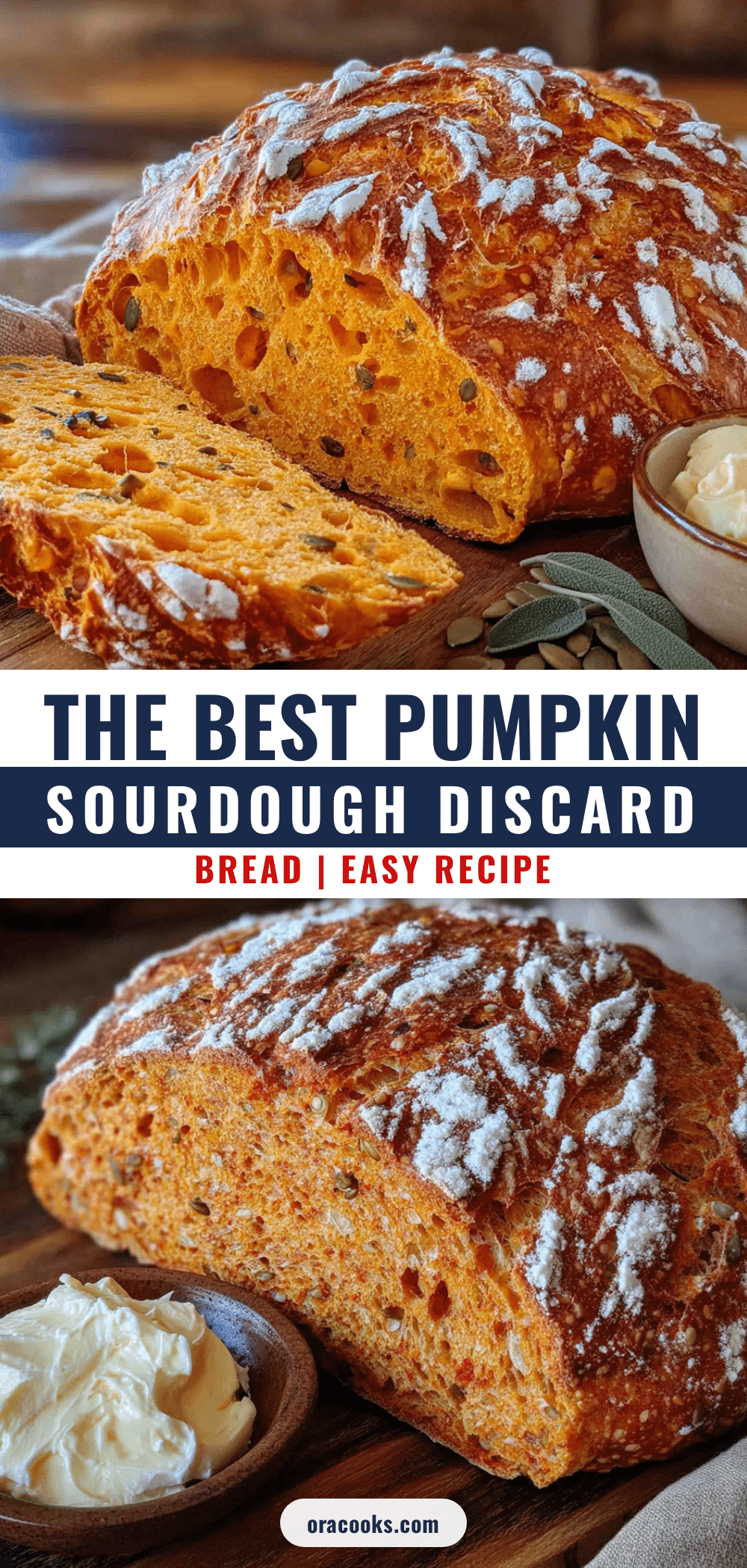
Best Easy Homemade Pumpkin Sourdough Discard Bread
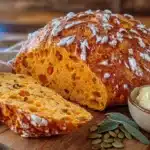
This Homemade Pumpkin Sourdough Discard Bread is the perfect solution for using up sourdough discard and leftover pumpkin puree. It’s a quick, easy, and delicious quick bread with a tender crumb, chewy crust, and a subtle tang that pairs beautifully with the earthy sweetness of pumpkin.
- Prep Time: 15 minutes
- Cook Time: 50-60 minutes
- Total Time: 1 hour 15 minutes to 1 hour 30 minutes
- Yield: 10 servings 1x
- Category: Quick Bread
- Cuisine: American
Ingredients
- 2 ½ cups (315g) all-purpose flour
- 1 cup (245g) pumpkin puree (100% pure pumpkin, not pie filling)
- 1 cup (240g) sourdough discard (unfed, straight from the fridge)
- ½ cup (100g) granulated sugar
- ¼ cup (50g) packed brown sugar
- ¼ cup (57g) unsalted butter, melted and slightly cooled
- 2 large eggs, room temperature
- ¼ cup (60ml) milk, room temperature
- 1 teaspoon baking soda
- ½ teaspoon baking powder
- ½ teaspoon salt
- 2 teaspoons pumpkin pie spice
- 1 teaspoon cinnamon
- 1 teaspoon vanilla extract
Instructions
- Preheat your oven to 350°F (175°C). Grease a 9×5-inch loaf pan and line it with a strip of parchment paper, leaving overhang on the long sides.
- In a large bowl, whisk together the all-purpose flour, baking soda, baking powder, salt, pumpkin pie spice, and cinnamon. Set aside.
- In a medium bowl, whisk together the pumpkin puree, sourdough discard, granulated sugar, brown sugar, melted butter, eggs, milk, and vanilla extract until smooth and well combined.
- Pour the wet ingredients into the dry ingredients. Use a rubber spatula to fold gently until just combined. Do not overmix; a few lumps are fine.
- Scrape the batter into the prepared loaf pan and spread it evenly. Gently tap the pan on the counter to release air bubbles.
- Let the batter rest at room temperature for 20-30 minutes. You should see tiny bubbles forming on the surface.
- Bake for 50-60 minutes. At the 30-minute mark, check the top; if it’s browning too quickly, loosely tent with aluminum foil.
- Insert a toothpick into the center of the bread. If it comes out clean or with a few moist crumbs, it’s done. The internal temperature should be around 200°F (93°C).
- Let the bread cool in the pan for 10 minutes, then use the parchment overhang to lift it out and transfer to a wire rack. Cool completely before slicing (about 1-2 hours).
Notes
Don’t skip the 20-30 minute rest before baking; it helps the sourdough discard interact with the baking soda for a better rise. Use room temperature ingredients for best results. Measure flour correctly by spooning and leveling, or use a kitchen scale. If the batter is too thick, add a tablespoon of milk; if too thin, add a tablespoon of flour. Rotate the pan halfway through baking for even browning. The bread can be stored in an airtight container at room temperature for up to 4 days, or frozen for up to 3 months.
Nutrition
- Serving Size: 1 slice (based on 10
- Calories: 220
- Sugar: 14
- Sodium: 280
- Fat: 7
- Saturated Fat: 4
- Carbohydrates: 36
- Fiber: 2
- Protein: 5
Keywords: pumpkin sourdough discard bread, easy pumpkin bread, sourdough discard recipe, fall baking, pumpkin bread with sourdough discard