Love this? Save it for later!
Share the inspiration with your friends
There used to be a tiny bakery tucked behind a laundromat in Portland’s southeast district that made the most incredible focaccia. I’m talking about the kind of bread that makes you close your eyes mid-chew and forget where you are. When they closed suddenly in 2019 — a “For Lease” sign appeared overnight — I genuinely mourned that bread. For weeks, I’d catch myself driving past the empty storefront, hoping maybe they’d just been on vacation.
After twelve attempts — some so dense they could’ve doubled as doorstops, others burnt on the bottom and raw in the middle — I finally cracked the code. The secret wasn’t some fancy Italian flour or a 50-year-old starter. It was sourdough discard, the stuff most people throw away without a second thought. Honestly, I almost didn’t try it. My first few batches of discard focaccia were sad, flat disks that tasted more like sour than anything else. But I kept tweaking, kept taking notes, kept eating my failures until something clicked.
This sourdough discard focaccia with rosemary and sea salt is that clicked moment. It’s the one I make for neighbors who’ve had a rough week, for Sunday dinners when I want the house to smell like comfort, and for myself on Tuesday afternoons when I need a win. The crumb is open and airy, the crust is shatteringly crisp, and that top layer of olive oil, fresh rosemary, and flaky salt? Pure magic. Maybe you’ve been there — chasing a recipe that feels just out of reach. This one is worth the hunt.
Why You’ll Love This Recipe
This isn’t just another focaccia recipe floating around the internet. After years of testing (and yes, plenty of disappointing batches), I can confidently say this version delivers on every level. Here’s what makes it special:
- Uses Up Your Discard: Instead of pouring that sourdough discard down the drain, you’re turning it into something gorgeous. No more guilt about feeding your starter.
- No Long Ferment Required: Most sourdough recipes demand an overnight rise. This one comes together in about 4 hours from start to finish. Perfect for same-day baking.
- Simple Pantry Ingredients: Flour, water, olive oil, salt, rosemary, and your discard. That’s it. No trips to specialty stores needed.
- Beginner-Friendly Dough: Focaccia is the most forgiving bread you’ll ever make. Wet dough? Great, that’s exactly what we want. No kneading required either.
- Restaurant-Quality Results: That crispy, golden crust with soft, airy interior? You’re getting it at home without the $8 price tag per slice.
I’ve tested this recipe with young starters, mature starters, whole wheat discard, and even a batch where I forgot the salt (don’t do that). Every variation taught me something, and this version is the culmination of all those lessons. It’s the kind of bread that makes you want to invite people over just so you can watch their faces when they take that first bite.
What Ingredients You Will Need
This sourdough discard focaccia relies on simple, everyday ingredients working together to create something greater than the sum of their parts. Each component plays a specific role in building flavor and texture.
For the Dough
- 500 grams (4 cups) bread flour — I prefer King Arthur for consistent results, but any brand with at least 12% protein works. The higher protein content builds that chewy, open crumb structure.
- 400 grams (1 ¾ cups) lukewarm water — Around 90°F is ideal. Too hot will kill the yeast activity in your discard; too cold slows fermentation.
- 150 grams (¾ cup) sourdough discard — Straight from the fridge is fine. Unfed discard works perfectly here. If yours has been sitting for more than two weeks, taste it first — overly sour discard can overpower the bread.
- 10 grams (2 teaspoons) fine sea salt — I use Redmond Real Salt. Table salt works but reduce to 8 grams since it’s more concentrated.
- 7 grams (1 packet) active dry yeast — Yes, we’re using commercial yeast alongside the discard. This gives us reliable rise while the discard adds flavor.
- 60 grams (¼ cup) extra-virgin olive oil — Divided between the dough and pan. Use good quality oil here — it’s a major flavor component, not just a cooking fat.
For the Topping
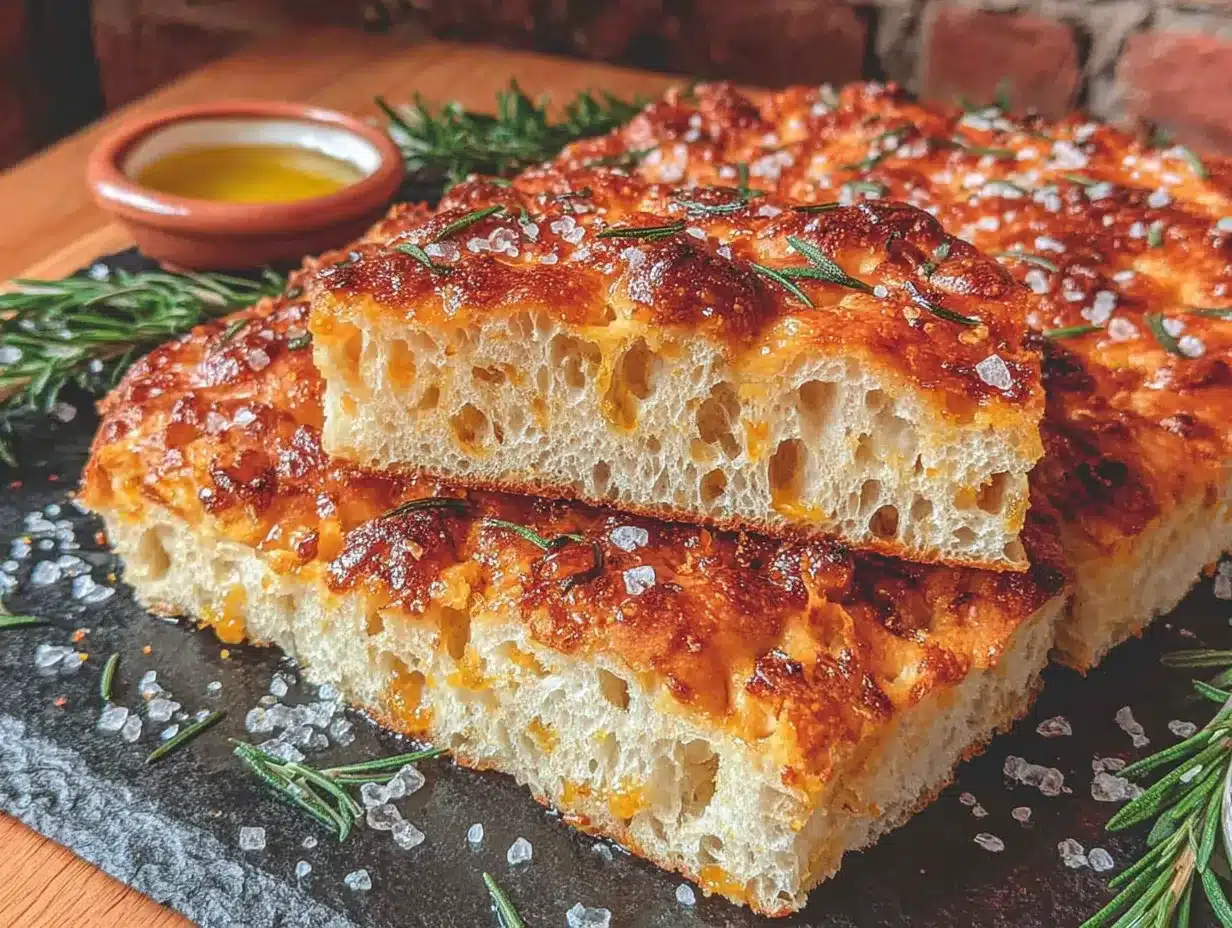
- 3 tablespoons fresh rosemary — Finely chopped. Dried rosemary works in a pinch but use half the amount. Fresh really shines here.
- 1 ½ teaspoons flaky sea salt — Maldon is my go-to. The big, delicate crystals create those perfect salty bursts on top.
- 2 tablespoons extra-virgin olive oil — For drizzling before and after baking.
Ingredient Tip: If you don’t have bread flour, all-purpose works but your crumb will be slightly tighter. Add 2 tablespoons of vital wheat gluten to mimic bread flour’s protein content. For a gluten-free version, I’ve had decent success with Cup4Cup’s gluten-free flour blend, though the texture is more cake-like than traditional focaccia.
Equipment Needed
- 10×15-inch baking sheet — A half-sheet pan is perfect. If you only have a 9×13, your focaccia will be thicker and need about 5 extra minutes of baking time.
- Stand mixer with dough hook — Optional but helpful. You can absolutely mix this by hand with a wooden spoon. I actually prefer hand-mixing for the first few minutes — it helps me feel the dough’s hydration.
- Digital kitchen scale — Not negotiable for this recipe. Measuring flour by volume leads to inconsistent hydration. A $15 scale will transform your baking.
- Bench scraper — Great for handling the sticky dough without adding too much flour. A flexible spatula works too.
- Plastic wrap or shower cap — For covering the dough during rises. Reusable bowl covers are my favorite splurge.
- Instant-read thermometer — Helps check water temperature and confirms the focaccia is fully baked (internal temp should reach 200°F).
Budget-Friendly Tip: Don’t have a stand mixer? No problem. This dough is actually better when mixed by hand — you’re less likely to overmix, and you develop a better feel for the hydration. Use a bowl and a sturdy spatula. Your arm might get a little workout, but the bread will thank you.
Preparation Method
- Combine the dry ingredients. In a large mixing bowl or the bowl of your stand mixer, whisk together the bread flour and active dry yeast. Make sure there are no clumps. If you’re using instant yeast, you can mix it directly with the flour without proofing first.
- Add the wet ingredients. Pour in the lukewarm water, sourdough discard, and ¼ cup of the olive oil. If mixing by hand, stir with a wooden spoon until a shaggy, sticky dough forms. It will look messy and wet — that’s exactly right. In a stand mixer, use the dough hook on low speed for about 2 minutes until combined.
- Incorporate the salt. Sprinkle the fine sea salt over the dough. Mix on low speed for another 3 minutes, or fold it in by hand with a wet spatula. The dough should be smooth but still very sticky. Don’t be tempted to add more flour. Trust the hydration.
- First rise (bulk fermentation). Drizzle a clean bowl with a teaspoon of olive oil. Transfer the dough to the bowl, turning it once to coat. Cover tightly with plastic wrap and let it rise in a warm spot for 1 ½ to 2 hours. It should double in size and look bubbly on top. I like placing mine near the stove while I’m cooking dinner — the residual warmth speeds things along.
- Fold the dough. After the first rise, wet your hands and perform one set of folds. Gently lift one side of the dough and fold it over the center. Rotate the bowl and repeat on all four sides. This strengthens the dough without deflating it too much. Cover and let rise another 30 minutes.
- Prepare the pan. Pour 2 tablespoons of olive oil into your baking sheet. Use your fingers to spread it evenly across the bottom and up the sides. The oil should pool slightly — this is what creates that crispy, golden bottom crust.
- Transfer and stretch. Gently tip the dough into the oiled pan. Don’t punch it down. Let it rest for 10 minutes, then use your fingertips to gently stretch it toward the edges of the pan. If it resists, let it rest another 10 minutes and try again. Patience here prevents tearing.
- Second rise. Cover the pan loosely with plastic wrap and let the dough rise for 45 minutes to 1 hour. It should puff up and look pillowy. About 20 minutes before the rise ends, preheat your oven to 425°F with a rack in the middle position.
- Create the dimples. This is my favorite part. Lightly oil your fingertips and press deep dimples all over the surface of the dough. Go all the way down to the bottom of the pan. Don’t be shy — those dimples catch the oil and create those irresistible crispy pockets.
- Add the toppings. Drizzle the remaining 2 tablespoons of olive oil over the top. Sprinkle the chopped rosemary evenly across the surface, then finish with the flaky sea salt. The salt should look scattered, not clumped together.
- Bake. Place the pan in the preheated oven and bake for 25 to 30 minutes. At 20 minutes, check the focaccia. If the top is browning too quickly, tent loosely with foil. The finished focaccia should be deep golden brown on top and sound hollow when tapped on the bottom.
- Cool and rest. Let the focaccia cool in the pan for 5 minutes, then transfer to a wire rack. Wait at least 20 minutes before slicing. I know it’s hard, but cutting into hot bread compresses the crumb. Let it set up for that perfect texture.
Cooking Tips & Techniques
Don’t skimp on the oil. I learned this lesson the hard way after making a dry, sad focaccia that tasted more like cardboard than bread. Focaccia is supposed to be generous with olive oil — it’s not just a cooking fat, it’s an ingredient. That oil in the pan creates the fried, crispy bottom that makes focaccia so addictive.
Wet hands are your best friend. This dough is wet — around 80% hydration. If you try to handle it with dry hands, you’ll end up with dough glued to your fingers and frustration in your heart. Keep a small bowl of water nearby and dip your hands before touching the dough. It’s a game changer.
Watch your water temperature. If your kitchen is cold (below 68°F), use slightly warmer water — around 95°F. If your kitchen is warm (above 78°F), use cooler water around 80°F. The yeast in your discard and the commercial yeast are sensitive to temperature. I once made this in a drafty apartment in January and wondered why it took four hours to rise. Warmth matters.
The dimple technique matters. Press firmly and deeply. I’ve seen recipes that say “gently poke” and that’s wrong. You want to press until your fingers hit the pan. Those deep wells fill with oil during baking and create the signature focaccia texture. Shallow dimples disappear during the oven spring.
Let it cool properly. This was my hardest lesson. I wanted to tear into that warm bread immediately, and every time I did, the inside was gummy and dense. The starches need time to set. Twenty minutes of patience transforms good focaccia into great focaccia.
Variations & Adaptations
Herb Garden Focaccia: Swap the rosemary for a mix of fresh thyme, oregano, and chives. I made this version last summer when my herb garden was overflowing, and it was incredible alongside grilled vegetables. Use about 3 tablespoons total of mixed herbs.
Garlic and Parmesan: Before the second rise, press 4 minced garlic cloves into the dough along with ¼ cup of grated Parmesan. The garlic roasts into sweet, mellow pockets, and the Parmesan creates a crispy, cheesy crust. My neighbor requests this version every time I bake.
Everything Bagel Focaccia: After adding the olive oil and salt, sprinkle 2 tablespoons of everything bagel seasoning over the top. The sesame seeds, poppy seeds, and dried garlic create an amazing crunch. This version makes the best sandwich bread — try it with turkey and provolone.
Sun-Dried Tomato and Olive: Press ⅓ cup of chopped sun-dried tomatoes and ¼ cup of halved Kalamata olives into the dimpled dough before baking. The salty, tangy pops of flavor are incredible. Drizzle a little of the sun-dried tomato oil on top for extra richness.
Sweet Focaccia: Reduce the salt to 5 grams, skip the rosemary, and after baking, brush with melted butter and sprinkle with cinnamon sugar. It sounds weird, but trust me — it’s basically the best cinnamon roll you’ve ever had in bread form. Serve it warm with coffee.
Serving & Storage Suggestions
This sourdough discard focaccia is best served warm, within an hour of baking. The crust is at its crispiest, the interior is pillowy, and the olive oil and salt are at their most vibrant. I love serving it alongside a bowl of tomato soup or a big Italian salad for a simple dinner that feels special.
For breakfast, slice it in half horizontally, toast it in a skillet with a little butter, and top with a fried egg. The crispy, oily bread soaks up the yolk in the most satisfying way. Or just tear off pieces and dip them in good balsamic vinegar and olive oil — a classic for a reason.
Storage: Keep leftover focaccia in an airtight container at room temperature for up to 2 days. Do not refrigerate — the fridge will dry it out and make the crust tough. If you need to keep it longer, slice and freeze it in a zip-top bag for up to 3 months.
Reheating: The toaster oven is your best friend here. Toast slices at 350°F for 5 to 7 minutes until the crust crisps up again. A regular oven works too — just wrap in foil for the first few minutes to prevent over-browning. Avoid the microwave unless you enjoy rubbery bread.
Flavor Development: Here’s a secret — day-old focaccia makes the best croutons and breadcrumbs. Cube it, toss with olive oil and herbs, and bake at 375°F for 10 minutes. You’ll never buy store-bought croutons again.
Nutritional Information & Benefits
One serving (roughly 1/8 of the full recipe) contains approximately:
- Calories: 285
- Carbohydrates: 38g
- Protein: 7g
- Fat: 12g
- Fiber: 1.5g
- Sodium: 480mg
While focaccia isn’t health food, the sourdough fermentation process offers some benefits. The natural fermentation breaks down phytic acid, making the minerals in the flour more bioavailable. Some people with mild gluten sensitivities find sourdough bread easier to digest than bread made with commercial yeast alone.
The olive oil provides heart-healthy monounsaturated fats and antioxidants, while the rosemary adds a small dose of anti-inflammatory compounds. If you’re watching your sodium, reduce the flaky salt on top by half — the dough itself has plenty of salt for flavor.
For a lower-carb option, try substituting 100 grams of the bread flour with almond flour. The texture will be denser and more cake-like, but the flavor is still lovely. Just note that almond flour doesn’t develop gluten, so the rise will be less dramatic.
Frequently Asked Questions
Can I use sourdough discard straight from the fridge?
Absolutely. In fact, cold discard works perfectly here because it slows down the initial fermentation slightly, giving the dough more time to develop flavor. Just make sure your water is lukewarm to compensate for the cold discard.
Why is my dough so sticky? Did I do something wrong?
Nope, you did everything right. Focaccia dough is intentionally wet — around 80% hydration. That high water content is what creates the open, airy crumb and crispy crust. Resist the urge to add more flour. Use wet hands to handle it, and trust the process.
Can I skip the commercial yeast and rely only on the discard?
You can, but the rise will take significantly longer — think 8 to 12 hours instead of 2 to 3. The flavor will be more sour and complex, which some people love. If you go this route, use a very active, recently fed discard for best results.
My focaccia came out dense and flat. What went wrong?
Several things could be at play. Your yeast might be expired, your water might have been too hot (killing the yeast), or your dough didn’t rise long enough. Also check that your discard isn’t too old and acidic — discard older than two weeks can inhibit yeast activity. Try again with fresh ingredients and a warm rising spot.
How do I get those big, beautiful bubbles on top?
The bubbles come from proper fermentation and gentle handling. Don’t deflate the dough when transferring it to the pan. Let it relax before stretching. And those deep dimples you press? They encourage the dough to puff up around them during baking, creating those signature bubbles. A little extra olive oil on top helps too.
Conclusion
This sourdough discard focaccia with rosemary and sea salt has become my go-to recipe for so many reasons. It uses up discard that would otherwise go to waste, it comes together in a single afternoon, and it delivers that bakery-quality taste that makes people think you spent hours slaving away. The truth is, this bread is forgiving, adaptable, and almost impossible to mess up once you understand the rhythm of wet dough and patient rising.
I still think about that little bakery in Portland sometimes. But now, when I pull a golden, fragrant sheet of focaccia out of my own oven, I realize I don’t miss their bread as much anymore. I’ve made something that’s mine — something that fills my kitchen with warmth and my table with happy people. That’s the kind of recipe worth keeping close.
Try this recipe this weekend. Play with the toppings, make it your own, and let me know how it turns out. Drop a comment below with your favorite variation — I’m always looking for new ideas. And if you share it on social media, tag me so I can see your beautiful bread. Happy baking, friends.
Pin This Recipe!

Easy Sourdough Discard Focaccia with Rosemary & Sea Salt

This sourdough discard focaccia with rosemary and sea salt is the perfect way to use up your starter discard. With a crispy, golden crust and soft, airy interior, it delivers bakery-quality results in about 4 hours using simple pantry ingredients.
- Prep Time: 20 minutes
- Cook Time: 30 minutes
- Total Time: 4 hours (including rising time)
- Yield: 8 servings 1x
- Category: Bread
- Cuisine: Italian
Ingredients
- 500 grams (4 cups) bread flour
- 400 grams (1 ¾ cups) lukewarm water (around 90°F)
- 150 grams (¾ cup) sourdough discard (unfed, straight from fridge)
- 10 grams (2 teaspoons) fine sea salt
- 7 grams (1 packet) active dry yeast
- 60 grams (¼ cup) extra-virgin olive oil (divided)
- 3 tablespoons fresh rosemary (finely chopped)
- 1 ½ teaspoons flaky sea salt (such as Maldon)
- 2 tablespoons extra-virgin olive oil (for topping)
Instructions
- Combine the dry ingredients: In a large mixing bowl or the bowl of your stand mixer, whisk together the bread flour and active dry yeast until no clumps remain.
- Add the wet ingredients: Pour in the lukewarm water, sourdough discard, and ¼ cup of the olive oil. Stir with a wooden spoon until a shaggy, sticky dough forms (or use a dough hook on low speed for 2 minutes).
- Incorporate the salt: Sprinkle the fine sea salt over the dough. Mix on low speed for another 3 minutes, or fold in by hand with a wet spatula. The dough should be smooth but very sticky.
- First rise (bulk fermentation): Drizzle a clean bowl with a teaspoon of olive oil. Transfer the dough to the bowl, turning once to coat. Cover tightly with plastic wrap and let rise in a warm spot for 1 ½ to 2 hours until doubled in size and bubbly on top.
- Fold the dough: After the first rise, wet your hands and perform one set of folds. Gently lift one side of the dough and fold it over the center. Rotate the bowl and repeat on all four sides. Cover and let rise another 30 minutes.
- Prepare the pan: Pour 2 tablespoons of olive oil into a 10×15-inch baking sheet. Use your fingers to spread it evenly across the bottom and up the sides.
- Transfer and stretch: Gently tip the dough into the oiled pan without punching it down. Let rest for 10 minutes, then use your fingertips to gently stretch it toward the edges. If it resists, let rest another 10 minutes and try again.
- Second rise: Cover the pan loosely with plastic wrap and let rise for 45 minutes to 1 hour until puffy and pillowy. About 20 minutes before the rise ends, preheat oven to 425°F with a rack in the middle position.
- Create the dimples: Lightly oil your fingertips and press deep dimples all over the surface of the dough, all the way down to the bottom of the pan.
- Add the toppings: Drizzle the remaining 2 tablespoons of olive oil over the top. Sprinkle the chopped rosemary evenly, then finish with the flaky sea salt.
- Bake: Place the pan in the preheated oven and bake for 25 to 30 minutes until deep golden brown on top and sounds hollow when tapped on the bottom. If browning too quickly at 20 minutes, tent loosely with foil.
- Cool and rest: Let the focaccia cool in the pan for 5 minutes, then transfer to a wire rack. Wait at least 20 minutes before slicing to allow the crumb to set.
Notes
Don’t skimp on the olive oil—it creates the crispy bottom crust. Use wet hands to handle the sticky dough (80% hydration). Press deep dimples firmly to the bottom of the pan for signature texture. Let cool at least 20 minutes before slicing to avoid gummy crumb. For best results, use bread flour with at least 12% protein. If using all-purpose flour, add 2 tablespoons vital wheat gluten. Store at room temperature in an airtight container for up to 2 days; do not refrigerate. Reheat in a toaster oven at 350°F for 5-7 minutes.
Nutrition
- Serving Size: 1/8 of recipe
- Calories: 285
- Sodium: 480
- Fat: 12
- Saturated Fat: 2
- Carbohydrates: 38
- Fiber: 1.5
- Protein: 7
Keywords: sourdough discard focaccia, easy focaccia recipe, sourdough discard bread, rosemary focaccia, homemade focaccia, discard recipe, no-knead focaccia