Love this? Save it for later!
Share the inspiration with your friends
This was supposed to be a proper Oktoberfest feast. I had grand plans—bratwurst on the grill, homemade potato salad, pretzels from the bakery, and maybe even a stein or two of something dark and malty. But Tuesday happened. You know the kind of Tuesday I mean. The one where you walk through the door at 6:45 PM, already thinking about the ten things you still need to do before bed, and the last thing you want to do is fire up a grill and juggle four different pots on the stove.
I grabbed the wrong package of brats from the freezer—the ones I’d meant to save for the weekend—and the sauerkraut jar was already open in the fridge, half-forgotten from a Reuben phase I went through last spring. The grill was covered in rain, the kids were asking for dinner right this second, and honestly? I almost just ordered pizza. But I had this one big skillet, the one my mom gave me years ago, and I figured I could at least throw everything in there and see what happened. What came out was nothing like the plan—and better.
The beer I poured in instead of water, the way the brats browned up right in the pan, the smell of caraway and mustard filling the kitchen while I barely moved from the stove—it felt like a cheat code. I mean, a proper Oktoberfest dinner in one pan in under thirty minutes? I couldn’t quite believe it either. That first bite, sitting at a slightly messy table with paper towels instead of napkins, I just looked at my husband and said, “I’m not telling anyone how easy this was.” But here I am, telling you. Maybe you’ve been there—staring at a half-empty fridge and a hungry family, convinced you can’t pull off something special. Trust me, you can.
Why You’ll Love This Recipe
Let me be honest with you. I’ve tested this easy Oktoberfest bratwurst and sauerkraut skillet about seven times now, tweaking the liquid ratio, trying different mustards, even testing it with turkey brats for a lighter version. This is the one that works. Every single time. Here is why I keep coming back to it, and why I think you will too:
- Quick & Easy: From fridge to table in under 30 minutes. No grill, no complicated steps, no waiting around. This is a true weeknight hero.
- One-Pan Wonder: One skillet, minimal dishes. I don’t know about you, but anything that cuts down on cleanup is a win in my book.
- Simple Ingredients: You likely have most of these in your kitchen right now. No special trips to the deli or specialty store required.
- Perfect for Oktoberfest at Home: Whether you are hosting a small gathering or just want to celebrate the season without the crowd, this skillet delivers all the flavor.
- Crowd-Pleaser: My kids, who swear they don’t like sauerkraut, cleaned their plates. My neighbor, who stopped by to borrow an egg, ended up staying for dinner.
- Unbelievably Delicious: The brats get perfectly browned, the sauerkraut softens and soaks up all that beer and mustard goodness, and the whole thing tastes like something you worked on for hours.
What makes this different from every other bratwurst recipe out there? It’s the technique. By browning the brats first and then simmering them in a mix of beer and broth, you get that crispy exterior and juicy interior without any fuss. Plus, the sauerkraut isn’t just a side—it cooks right in the pan with the brats, absorbing all those savory flavors. This isn’t just another version of Oktoberfest dinner. It is your new go-to for busy nights when you want something that feels special without the stress.
What Ingredients You Will Need
This recipe uses simple, hearty ingredients to deliver that classic Oktoberfest flavor without the fuss. Most of these are pantry staples or easy to find at any grocery store. Here is what you need and why each one matters:
- Bratwurst (4-6 links): Fresh or fully cooked bratwurst works here. I prefer fresh brats from the butcher counter at my local grocery store—they have a better texture and flavor. If using frozen, just thaw them in the fridge overnight. For a lighter option, turkey or chicken brats are great too.
- Sauerkraut (1 jar or bag, about 16 ounces): Look for sauerkraut in the refrigerated section near the deli for the best texture. I like the brand Frank’s for its balanced tanginess. If you are not a huge sauerkraut fan, rinse it briefly in a colander to mellow the flavor.
- Beer (1 cup): Use a light lager or Oktoberfest-style beer. I usually grab whatever is in the fridge—a pilsner or pale ale works perfectly. The alcohol cooks off, leaving behind a rich, malty depth. No beer on hand? Swap in chicken or beef broth.
- Chicken or Beef Broth (1/2 cup): This adds extra moisture and helps create the cooking liquid. I use low-sodium broth so I can control the salt level myself.
- Yellow Onion (1 medium, sliced): Onions add sweetness and body to the dish. They soften as they cook and practically melt into the sauerkraut. You can use a red onion for a slightly sharper flavor.
- Apple (1 medium, peeled and diced, optional): This is my little secret. A diced apple adds a subtle sweetness that balances the tangy sauerkraut beautifully. Granny Smith or Honeycrisp both work well. Leave it out if you prefer a more traditional flavor.
- Caraway Seeds (1 teaspoon): This is the spice that makes it taste like Oktoberfest. Caraway has a slightly earthy, anise-like flavor that pairs perfectly with bratwurst and sauerkraut. If you don’t have it, you can skip it—but it really adds something special.
- Whole Grain Mustard (2 tablespoons): Stirred in at the end, this adds a pop of tang and a little texture. I love the brand Grey Poupon for its bold flavor. You can use Dijon if that is what you have.
- Olive Oil or Butter (1 tablespoon): For browning the brats and sautéing the onions. Butter adds richness, but olive oil works perfectly too.
- Salt and Black Pepper (to taste): Go easy on the salt since the sauerkraut and brats are already salty. A few cracks of fresh black pepper at the end is all you need.
- Fresh Parsley (for garnish, optional): A sprinkle of fresh parsley adds a pop of color and a fresh finish. Totally optional but pretty.
That is it. Seven main ingredients plus a few pantry staples. No long list, no complicated prep. Just honest, hearty food that comes together fast.
Equipment Needed
You don’t need a lot of fancy gear for this one, which is exactly how I like it on a busy weeknight. Here is what you will need:
- Large Skillet or Dutch Oven (12-inch): This is your main vessel. A deep, heavy-bottomed skillet works best because it holds heat evenly and gives you room to brown the brats without crowding them. I use my trusty cast iron skillet for this—it distributes heat beautifully and adds a little extra flavor. A stainless steel or non-stick pan works just fine too.
- Sharp Knife and Cutting Board: For slicing the onion and dicing the apple (if using). A good chef’s knife makes prep quick and painless.
- Wooden Spoon or Spatula: For stirring the sauerkraut and scraping up any browned bits from the bottom of the pan. Those bits are pure flavor.
- Tongs: For turning the brats as they brown. Tongs give you better control than a fork, which can pierce the brats and let the juices escape.
- Measuring Cups and Spoons: For the beer, broth, mustard, and caraway seeds. Nothing fancy needed.
- Lid (for the skillet): You will need a lid to cover the skillet during the simmering step. If your skillet doesn’t have one, a sheet of aluminum foil works as a temporary lid.
That is literally it. If you have a skillet and a knife, you are ready to go. No grill, no slow cooker, no special gadgets. Just one pan and about twenty minutes of your time.
Preparation Method

Alright, let’s get cooking. This is the part where it all comes together. Follow these steps, and you will have a skillet full of Oktoberfest magic in no time.
- Prep your ingredients (5 minutes): Start by slicing your onion into thin half-moons. Peel and dice the apple if you are using it. Measure out your beer, broth, caraway seeds, and mustard. Having everything ready before you start cooking makes the whole process smoother—trust me, I learned this the hard way after burning onions while scrambling for the beer.
- Brown the bratwurst (6-8 minutes): Place your large skillet over medium-high heat and add the olive oil or butter. Once it shimmers, carefully add the bratwurst links. Let them cook without moving them for about 3-4 minutes, until the bottoms are deeply browned. Use your tongs to turn them and brown the other sides. You are not trying to cook them through here—just get a nice golden-brown crust. If the pan starts to smoke, lower the heat slightly. Once browned, transfer the brats to a plate and set them aside.
- Sauté the onions (3-4 minutes): Reduce the heat to medium. Add the sliced onions to the same skillet (don’t wipe it out—all those browned bits are flavor). Cook, stirring occasionally, until the onions soften and start to turn golden, about 3-4 minutes. If they start to stick, add a splash of the beer or broth to deglaze the pan.
- Add the sauerkraut and apple (2 minutes): Stir in the sauerkraut (drained but not rinsed, unless you want a milder flavor) and the diced apple if using. Cook for about 2 minutes, stirring to combine everything. Sprinkle the caraway seeds over the top and give it another stir.
- Pour in the liquids: Pour the beer and broth into the skillet. Use your wooden spoon to scrape up any browned bits from the bottom—this is where so much of the flavor lives. Bring the liquid to a gentle simmer.
- Return the brats to the pan: Nestle the browned bratwurst back into the skillet, pushing them down into the sauerkraut mixture. They should be partially submerged. Cover the skillet with a lid (or foil) and reduce the heat to low. Let everything simmer together for 15-20 minutes. The brats will cook through, and the sauerkraut will soak up all that beer and mustard goodness.
- Finish with mustard (2 minutes): After the simmering time, remove the lid. Stir in the whole grain mustard. Let everything cook uncovered for another 2 minutes to thicken the liquid slightly. Taste the sauerkraut and adjust with salt and pepper if needed—remember, the brats and sauerkraut are already salty, so go easy.
- Serve and garnish: Transfer the brats and sauerkraut to a serving platter or straight into bowls. Spoon some of the cooking liquid over the top. Sprinkle with fresh parsley if you are feeling fancy. Serve immediately.
A few notes from my kitchen to yours: If the liquid evaporates too quickly during simmering, add a splash more broth or beer. The brats should be gently simmering, not boiling—too high a heat can make them tough. And here is the sensory cue you are looking for: the kitchen should smell like a cozy beer hall, with that warm, malty, slightly tangy aroma filling the air. That is how you know it is working.
Cooking Tips & Techniques
I have made this easy Oktoberfest bratwurst and sauerkraut skillet enough times to learn a few tricks the hard way. Here is what I wish someone had told me the first time:
Don’t skip the browning step. I know, it adds a few extra minutes, but that golden crust on the brats is non-negotiable. It locks in flavor and gives the final dish that deep, savory richness. One time I was in a hurry and just threw raw brats into the sauerkraut—they came out pale and sad. Never again.
Watch your heat. Browning the brats over medium-high heat is perfect, but once you add the liquids and cover the pan, drop it to low. A gentle simmer is what you want. Boiling the brats will make them tough and rubbery. I learned this when I got distracted folding laundry and came back to a rolling boil. The brats were fine, but not as juicy as they could have been.
Let the sauerkraut shine. If you are new to sauerkraut, or if you have a picky eater at the table, try rinsing it briefly under cold water before adding it to the pan. This removes some of the sharp tang without losing all the flavor. My kids went from “what is that smell” to “can I have more” with this one simple trick.
Multitask like a pro. While the brats are simmering, you have about 15 minutes of hands-off time. Use it to set the table, make a quick side salad, or pour yourself a drink. I like to slice some rye bread and warm it in the oven during those last few minutes—perfect for sopping up the juices.
The mustard matters. Stirring in the mustard at the end, not the beginning, keeps its flavor bright and punchy. If you add it too early, the heat will mellow it out. A little tang at the end makes all the difference.
Variations & Adaptations
One of the best things about this recipe is how flexible it is. Here are some variations I have tried and loved:
Dietary Swaps: For a lighter version, use turkey or chicken bratwurst. They cook the same way and taste great with the sauerkraut. For a gluten-free option, swap the beer for a gluten-free lager or use all broth. Most bratwurst is gluten-free, but check the label to be sure. For a dairy-free version, use olive oil instead of butter—it works perfectly.
Flavor Twists: Try adding a sliced bell pepper along with the onions for extra color and sweetness. Or throw in a few cloves of minced garlic after the onions soften—garlic makes everything better. If you like heat, add a pinch of red pepper flakes or a drizzle of hot honey at the end. I tried this once on a whim and it was surprisingly good.
Cooking Method Variations: This recipe is designed for the stovetop, but you can adapt it. For a slow cooker version, brown the brats and sauté the onions first, then transfer everything to the slow cooker and cook on low for 4-6 hours. For an Instant Pot version, use the sauté function for browning and then pressure cook on high for 10 minutes with a quick release.
Seasonal Adjustments: In the fall, add diced apples and a sprinkle of cinnamon for a warm, cozy twist. In the summer, serve the brats and sauerkraut on toasted buns with mustard for a quick weeknight dinner that feels like a cookout.
What I Tried Last Weekend: I swapped the beer for hard apple cider on a whim, and it was fantastic. The cider added a subtle sweetness that paired beautifully with the caraway and mustard. My husband declared it his new favorite version. Sometimes the best variations come from a “what if” moment in the kitchen.
Serving & Storage Suggestions
This skillet is a meal in itself, but a few simple sides take it over the top. Here is how I like to serve it:
What to Serve With It: Warm rye bread or crusty rolls are essential for sopping up the juices. A simple green salad with a tangy vinaigrette cuts through the richness. For a truly authentic touch, serve with German potato salad or soft pretzels with mustard. On busy nights, I just microwave some frozen green beans—it works.
Presentation Tips: Serve the brats and sauerkraut straight from the skillet for a rustic, family-style feel. Sprinkle with fresh parsley and a few extra caraway seeds on top. A dollop of extra mustard on the side lets everyone customize their plate.
Storing Leftovers: Let the skillet cool completely, then transfer the brats and sauerkraut to an airtight container. They will keep in the refrigerator for up to 4 days. The flavors actually get better overnight as they meld together—I love leftovers of this dish.
Reheating: The best way to reheat is in a skillet over medium-low heat with a splash of broth or beer to restore moisture. Cover and heat for 5-7 minutes, stirring occasionally. You can also microwave individual portions in 30-second bursts, but the stovetop method keeps the texture better.
Freezer Instructions: This dish freezes surprisingly well. Cool completely, then transfer to a freezer-safe container. It will keep for up to 3 months. Thaw overnight in the refrigerator and reheat as directed above. I like to make a double batch and freeze half for those nights when I need dinner in a hurry.
How Flavors Develop: Here is a little secret—this dish tastes even better the next day. The brats continue to absorb the beer and mustard flavors, and the sauerkraut softens into something truly special. Don’t be afraid to make it a day ahead if you are planning a gathering.
Nutritional Information & Benefits
Here are the approximate nutritional values for one serving (one bratwurst with about 1/2 cup of sauerkraut mixture), based on using traditional pork bratwurst and olive oil:
- Calories: 380-420
- Protein: 18-22g
- Fat: 28-32g
- Carbohydrates: 12-15g
- Fiber: 4-6g
- Sugar: 6-8g
- Sodium: 900-1100mg
Health Benefits: Sauerkraut is a fermented food, which means it is packed with probiotics that support gut health. It is also a good source of vitamin C and fiber. The caraway seeds in this recipe are known for aiding digestion—how fitting for a hearty Oktoberfest meal. If you use turkey brats, you will cut the fat and calories significantly while still getting plenty of protein.
Dietary Considerations: This recipe can be made gluten-free by using a gluten-free beer or all broth. It is naturally dairy-free if you use oil instead of butter. For a lower-sodium option, use low-sodium broth and look for reduced-sodium bratwurst. As always, check labels if you have specific dietary needs or allergies.
I am not a nutritionist, but I do believe in balance. This dish is hearty and satisfying, and when I pair it with a simple salad or some roasted vegetables, I feel good about what is on the table. For me, that is what matters most.
Conclusion
This easy Oktoberfest bratwurst and sauerkraut skillet started as a happy accident on a chaotic Tuesday night, and now it is one of my most-requested recipes. It is proof that you don’t need a grill, a crowd, or hours of prep to enjoy the flavors of Oktoberfest at home. One pan, a handful of ingredients, and about 30 minutes—that is all it takes.
I hope you give this recipe a try, and I hope you make it your own. Add more mustard if you like it tangy. Throw in some extra onions. Serve it on a bun or straight from the skillet with a fork. However you make it, I think you will love how something so simple can feel so special. And if you do make it, I would love to hear how it turned out. Drop a comment below and let me know your favorite variation, or tag me in your photos—I am always looking for new ideas from this amazing community of home cooks.
Until next time, happy cooking. And remember: sometimes the best meals come from the moments when everything goes wrong.
Frequently Asked Questions
Can I use pre-cooked bratwurst for this recipe?
Absolutely. If you are using pre-cooked bratwurst, you can skip the initial browning step if you are short on time, but I still recommend browning them briefly for better flavor and texture. Just reduce the simmering time to about 10 minutes since they are already cooked through.
What if I don’t drink beer? Can I use something else?
Yes! You can substitute the beer with an equal amount of chicken or beef broth. For a non-alcoholic option, try non-alcoholic beer or apple cider. The beer adds a malty depth, but the dish is still delicious without it.
How do I make this less tangy for picky eaters?
Rinse the sauerkraut in a colander under cold water before adding it to the skillet. This removes some of the acidity and tanginess. You can also add an extra diced apple for sweetness, which helps balance the flavors beautifully.
Can I make this in a slow cooker?
Yes, with one small adjustment. Brown the brats and sauté the onions in a skillet first, then transfer everything to the slow cooker. Cook on low for 4-6 hours or on high for 2-3 hours. Stir in the mustard at the end, just like the stovetop version.
How long do leftovers last, and what is the best way to reheat them?
Leftovers will keep in the refrigerator for up to 4 days in an airtight container. The best way to reheat is in a skillet over medium-low heat with a splash of broth or beer, covered, for about 5-7 minutes. The flavors actually improve overnight, so do not hesitate to make this a day ahead.
Pin This Recipe!
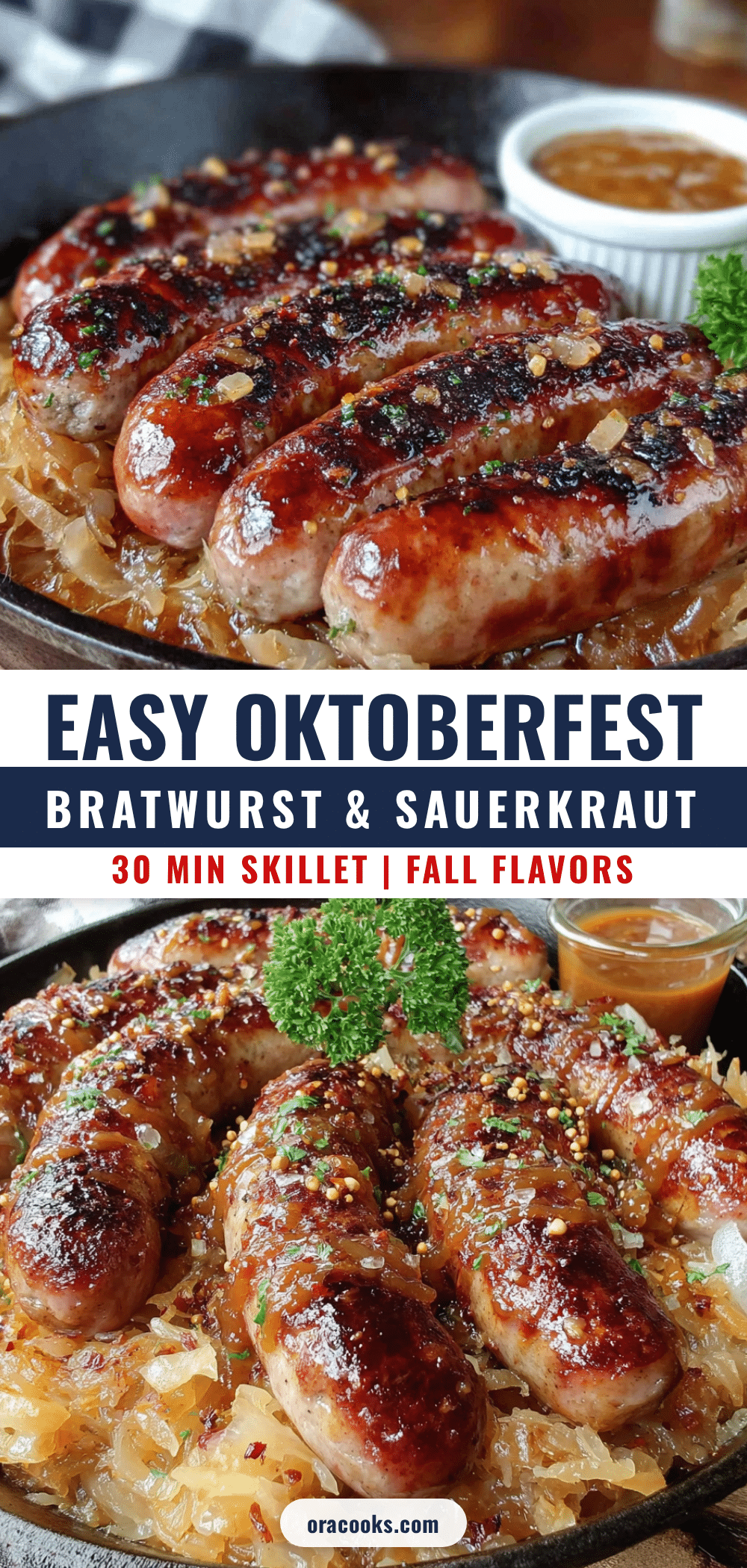
Easy Oktoberfest Bratwurst and Sauerkraut Skillet
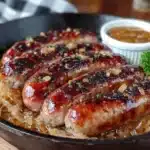
A quick and easy one-pan Oktoberfest dinner with perfectly browned bratwurst, tangy sauerkraut, and a rich beer-mustard sauce. Ready in under 30 minutes, this weeknight hero delivers all the flavor of a festive feast without the fuss.
- Prep Time: 5 minutes
- Cook Time: 25 minutes
- Total Time: 30 minutes
- Yield: 4 servings 1x
- Category: Main Course
- Cuisine: German
Ingredients
- 4–6 bratwurst links (fresh or fully cooked)
- 1 jar or bag sauerkraut (about 16 ounces)
- 1 cup light lager or Oktoberfest-style beer
- 1/2 cup low-sodium chicken or beef broth
- 1 medium yellow onion, sliced into thin half-moons
- 1 medium apple (Granny Smith or Honeycrisp), peeled and diced (optional)
- 1 teaspoon caraway seeds
- 2 tablespoons whole grain mustard (e.g., Grey Poupon)
- 1 tablespoon olive oil or butter
- Salt and black pepper to taste
- Fresh parsley for garnish (optional)
Instructions
- Prep your ingredients: Slice the onion into thin half-moons. Peel and dice the apple if using. Measure out the beer, broth, caraway seeds, and mustard.
- Brown the bratwurst: Heat olive oil or butter in a large skillet over medium-high heat. Add the bratwurst links and cook without moving for 3-4 minutes until deeply browned. Turn and brown the other sides. Transfer to a plate and set aside.
- Sauté the onions: Reduce heat to medium. Add sliced onions to the same skillet and cook, stirring occasionally, for 3-4 minutes until softened and golden. Add a splash of beer or broth if they start to stick.
- Add sauerkraut and apple: Stir in the drained sauerkraut and diced apple (if using). Cook for 2 minutes. Sprinkle caraway seeds over the top and stir.
- Pour in liquids: Add the beer and broth to the skillet. Use a wooden spoon to scrape up any browned bits from the bottom. Bring to a gentle simmer.
- Return brats to pan: Nestle the browned bratwurst back into the skillet, partially submerged in the sauerkraut mixture. Cover with a lid or foil, reduce heat to low, and simmer for 15-20 minutes.
- Finish with mustard: Remove the lid. Stir in the whole grain mustard. Cook uncovered for 2 minutes to thicken the liquid slightly. Taste and adjust salt and pepper as needed.
- Serve and garnish: Transfer to a serving platter or bowls. Spoon cooking liquid over the top. Garnish with fresh parsley if desired. Serve immediately.
Notes
Don’t skip browning the brats—it locks in flavor. Simmer gently, not boil, to keep brats juicy. For milder sauerkraut, rinse briefly under cold water. Stir in mustard at the end for bright flavor. Leftovers taste even better the next day.
Nutrition
- Serving Size: 1 bratwurst with abo
- Calories: 380420
- Sugar: 68
- Sodium: 9001100
- Fat: 2832
- Saturated Fat: 1012
- Carbohydrates: 1215
- Fiber: 46
- Protein: 1822
Keywords: Oktoberfest, bratwurst, sauerkraut, one-pan, quick dinner, German recipe, weeknight meal