Love this? Save it for later!
Share the inspiration with your friends
My neighbor, an older man named Leo who keeps to himself mostly, watched me hauling groceries up the porch steps last November. I was juggling a bag of potatoes, a bunch of carrots, and a heavy hunk of chuck roast that was threatening to slip right out of the paper wrapping. He didn’t say anything at first, just kind of squinted at me from his garden hose. Then, he walked over, took the bag of potatoes out of my arms, and said, “You’re making stew the hard way, aren’t you?” I laughed because, honestly, I was just planning to throw everything in a pot and hope for the best. He didn’t offer a recipe, not then. He just told me to come over the next afternoon.
The next day, standing in his tiny, immaculate kitchen, I watched him work. He didn’t measure anything, of course. He just talked about his mother, about the farm he grew up on in Wisconsin, about how a good stew isn’t cooked, it’s “built.” He seared the meat in a cast iron pan that looked a hundred years old, and the sound—that deep, aggressive sizzle—filled the whole room. He talked about patience, about letting the onions get “sweet and sorry” before you add anything else. I just stood there, taking notes in my head. I didn’t write anything down because that would have felt weird. The recipe for this cozy beef stew with root vegetables came from that afternoon, from a conversation that had nothing to do with cooking and everything to do with it.
I’ve made his stew my own since then, tweaking the herbs and swapping in different root vegetables depending on the season. But the soul of it—the cozy beef stew with root vegetables that tastes like a Sunday afternoon in a bowl—is all Leo. It’s the kind of meal that makes you slow down. The kind you make when you need a hug from the inside out. Maybe you’ve been there, standing in your kitchen on a cold day, wanting something that feels like a warm blanket. This is that recipe. It stayed with me because it wasn’t just about the food; it was about the quiet generosity of someone sharing a piece of their history with you.
Why You’ll Love This Recipe
Let’s be real—there are a million beef stew recipes out there. But this one? This one is different. It’s the one I come back to again and again, and I think you will too. Here’s why this cozy beef stew with root vegetables earns a permanent spot in your dinner rotation.
- Quick & Easy : Don’t let the “stew” label fool you. While it simmers for a while to get that incredible flavor, the active prep time is only about 20 minutes. It’s perfect for a lazy Sunday or a meal prep session.
- Simple Ingredients : You probably have most of these in your kitchen right now. No weird, hard-to-find ingredients. Just honest, wholesome food.
- Perfect for Cozy Nights : This is the ultimate comfort food for chilly evenings, rainy afternoons, or any time you need a little warmth. It’s a hug in a bowl.
- Crowd-Pleaser : I’ve served this to picky kids, in-laws, and friends who “don’t really like stew,” and it always gets rave reviews. It’s hearty, satisfying, and just plain delicious.
- Unbelievably Delicious : The secret is in the sear and the slow simmer. The meat becomes so tender it falls apart, and the vegetables soak up all that rich, savory broth. It’s next-level comfort food.
What makes this version different? It’s the technique. Most recipes rush the browning step, but Leo taught me that’s where all the flavor lives. We’re taking the time to get a deep, dark sear on the beef, which builds a foundation of flavor that no amount of seasoning can fake. Plus, we’re using a mix of root vegetables that hold their shape and add natural sweetness. This isn’t just another stew—it’s the best version. It’s comfort food reimagined: healthier, more flavorful, but with the same soul-soothing satisfaction that makes you close your eyes after the first bite.
What Ingredients You Will Need
This recipe uses simple, wholesome ingredients that work together to create something truly special. The magic is in the quality of the ingredients and how they’re handled. Here’s what you’ll need to gather.
For the Stew Base
- 2 lbs (900g) beef chuck roast, cut into 1.5-inch cubes (look for well-marbled meat; it gets so tender)
- 2 tablespoons (30ml) olive oil, divided (use a good quality one for searing)
- 1 large yellow onion, diced (about 1.5 cups)
- 3 cloves garlic, minced (fresh is best, don’t use the jarred stuff here)
- 2 tablespoons (16g) all-purpose flour (or use gluten-free flour blend if needed)
- 2 tablespoons (32g) tomato paste (this adds depth and richness)
- 1 cup (240ml) dry red wine (like a Cabernet or Merlot—cook with something you’d drink)
- 4 cups (960ml) low-sodium beef broth (I prefer Better Than Bouillon for the best flavor)
- 2 bay leaves (fresh or dried, just remember to fish them out later)
- 1 teaspoon (2g) dried thyme
- 1 teaspoon (2g) dried rosemary
- Salt and freshly ground black pepper, to taste
For the Root Vegetables
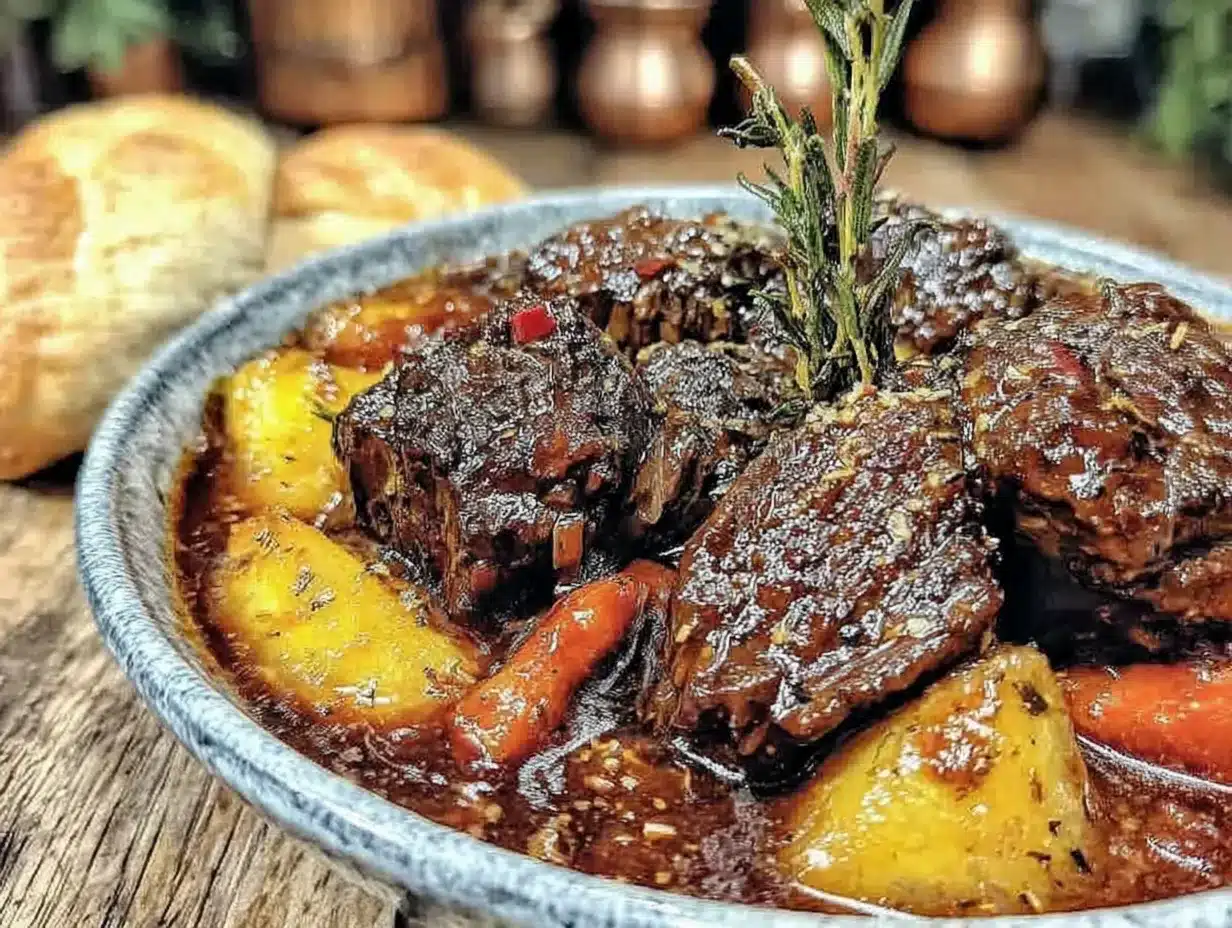
- 3 large carrots, peeled and cut into 1-inch chunks (about 2 cups)
- 3 large parsnips, peeled and cut into 1-inch chunks (about 2 cups—they add a subtle sweetness)
- 1 lb (450g) Yukon Gold potatoes, peeled and cut into 1-inch cubes (about 3 cups—they hold their shape beautifully)
- 2 celery stalks, cut into 1-inch pieces (about 1 cup)
- 1 cup (150g) frozen peas (add these at the very end for a pop of color and sweetness)
Ingredient Tips: For the beef, I always look for chuck roast that has good marbling—those little streaks of fat are what make the meat so tender after a long simmer. If you can’t find Yukon Gold potatoes, any waxy potato will work. Russets might get a bit mushy. For the wine, don’t use anything labeled “cooking wine”—it’s full of salt and preservatives. A decent $10 bottle of red will do the trick. And if you’re avoiding alcohol, you can substitute the wine with an extra cup of beef broth and a tablespoon of balsamic vinegar for acidity.
Equipment Needed
You don’t need a lot of fancy equipment for this recipe, which is part of its charm. Here’s what you’ll need:
- Large Dutch Oven or Heavy-Bottomed Pot (5-6 quart capacity) – This is your workhorse. The heavy bottom distributes heat evenly and retains it well for that perfect sear. I use my Le Creuset for this, but any heavy pot will work.
- Sharp Chef’s Knife – A good knife makes cutting the beef and vegetables so much easier and safer. Trust me on this one.
- Cutting Board – Preferably a large one to give you room to work.
- Wooden Spoon or Spatula – For stirring and scraping up those delicious browned bits from the bottom of the pot.
- Measuring Cups and Spoons – For accuracy, especially with the broth and wine.
- Tongs – For turning the beef cubes while searing.
Budget-Friendly Tip: If you don’t have a Dutch oven, a large stainless steel pot with a heavy bottom works just fine. You can also use a slow cooker for the simmering part (just sear the meat on the stovetop first in a skillet). I’ve done it both ways, and honestly, the stovetop-to-oven Dutch oven method gives the best results, but don’t let equipment hold you back.
Preparation Method
Alright, let’s get cooking! This cozy beef stew with root vegetables comes together in a few simple steps. Take your time, especially with the searing—it’s where the magic happens.
- Prep the Beef (10 minutes): Pat the beef cubes dry with paper towels. This is crucial! Wet meat won’t sear properly. Season generously with salt and pepper on all sides. Let it sit at room temperature for about 15 minutes while you prep the vegetables.
- Sear the Beef (15 minutes): Heat 1 tablespoon of olive oil in your Dutch oven over medium-high heat until it’s shimmering. Working in batches (don’t crowd the pot!), add the beef cubes in a single layer. Sear for 3-4 minutes per side until deeply browned. You’re looking for a dark, crusty exterior—this is flavor gold. Transfer the seared beef to a plate and set aside. Pro tip: If the bottom of the pot looks too dark, don’t worry. That’s called “fond” and it’s going to make your stew amazing.
- Sauté the Aromatics (8 minutes): Reduce the heat to medium. Add the remaining 1 tablespoon of olive oil. Add the diced onion and cook, stirring occasionally, for 5-6 minutes until softened and translucent. Add the minced garlic and cook for another minute until fragrant. Your kitchen should smell incredible right about now.
- Build the Base (5 minutes): Sprinkle the flour over the onions and garlic, stirring constantly for about 1 minute to cook out the raw flour taste. Add the tomato paste and stir for another minute until it darkens slightly. This deepens the flavor.
- Deglaze the Pot (2 minutes): Pour in the red wine, scraping the bottom of the pot with your wooden spoon to release all those browned bits. Let it simmer for 2 minutes, reducing slightly. This is where all that flavor from the searing gets incorporated into the sauce.
- Return the Beef and Add Broth (5 minutes): Add the seared beef back to the pot, along with any juices that accumulated on the plate. Pour in the beef broth, add the bay leaves, thyme, and rosemary. Bring the whole thing to a gentle boil, then reduce the heat to low, cover, and let it simmer.
- Simmer the Stew (1.5 hours): Let the stew simmer gently for 1.5 hours. Don’t rush this! The meat needs time to break down and become tender. You’ll know it’s ready when you can easily pierce a piece of beef with a fork. Check the pot occasionally to make sure it’s at a gentle simmer, not a rolling boil.
- Add the Root Vegetables (45 minutes): After 1.5 hours, add the carrots, parsnips, potatoes, and celery to the pot. Stir everything together, cover, and continue simmering for another 40-45 minutes, or until the vegetables are tender when pierced with a fork.
- Finish and Serve (5 minutes): Remove the bay leaves and discard them. Stir in the frozen peas and let them heat through for about 2 minutes. Taste the stew and adjust the seasoning with salt and pepper. This is the moment of truth!
Sensory Cue: At the end, you should have a rich, thick broth that coats the back of a spoon. The meat should be so tender it almost falls apart when you stir it. The vegetables should be tender but still hold their shape. The smell? It’ll fill your whole house with the kind of warmth that makes you want to curl up on the couch.
Cooking Tips & Techniques
I’ve made this stew more times than I can count, and I’ve learned a few things along the way. Here are my best tips to make sure your cozy beef stew with root vegetables turns out perfect every time.
- Don’t Skip the Searing: I know it’s tempting to just throw everything in the pot and walk away, but trust me—the searing is non-negotiable. It creates a deep, savory flavor that you just can’t get any other way. I once tried to save time by skipping this step, and the stew was bland and watery. Never again.
- Pat the Meat Dry: Wet meat won’t brown. It’ll steam instead. Take the extra 30 seconds to pat those beef cubes dry with paper towels. Your future self will thank you.
- Low and Slow is the Way to Go: A gentle simmer is key. If you boil the stew, the meat will become tough and chewy. You want those little bubbles just barely breaking the surface. It takes patience, but it’s worth it.
- Season in Layers: Don’t just add all the salt at the end. Season the beef before searing, add a pinch to the onions, and taste and adjust at the end. Layering the seasoning builds complexity.
- Make It Ahead: This stew is actually better the next day. The flavors meld and deepen overnight. I often make it a day ahead, let it cool, and refrigerate it. Then I just reheat it gently on the stovetop before serving. It’s a lifesaver for entertaining.
Common Mistake: Adding all the vegetables at the beginning. I did this once, and the potatoes turned to mush while the carrots were still hard. Root vegetables have different cooking times, so adding them later ensures they’re perfectly tender without falling apart.
Variations & Adaptations
One of the best things about this cozy beef stew with root vegetables is how adaptable it is. Here are some ways to make it your own.
- Dietary Adaptations: To make this gluten-free, simply swap the all-purpose flour for a gluten-free blend or cornstarch slurry (mix 2 tablespoons cornstarch with 2 tablespoons cold water and stir it in at the end). For a dairy-free version, just skip the butter (we’re using oil anyway) and serve it as is.
- Seasonal Swaps: In the fall, swap the parsnips for sweet potatoes or turnips. In the spring, add some asparagus tips or fresh peas instead of frozen. In the summer, you can even add some zucchini or bell peppers in the last 20 minutes of cooking.
- Flavor Variations: Try adding a tablespoon of smoked paprika for a deeper, smokier flavor. Or add a pinch of cayenne pepper for a little heat. For a more herby version, add a handful of fresh parsley or thyme at the end.
- Different Cooking Methods: This recipe works beautifully in a slow cooker. After searing the beef and sautéing the aromatics, transfer everything to a slow cooker. Cook on low for 8 hours, adding the root vegetables in the last 2 hours. You can also make it in an Instant Pot—sear using the sauté function, then pressure cook on high for 35 minutes with a natural release.
Personal Variation: I once tried adding a parsnip and pear puree to the broth for extra sweetness and body. It was a little weird, honestly, but the sweetness was lovely. Stick with the original for the classic version.
Serving & Storage Suggestions
This stew is a meal in itself, but the right accompaniments can make it even better. Here’s how to serve and store it.
- Serving Temperature: Serve this stew piping hot, straight from the pot. It’s best on a cold day, when you can feel the warmth radiating from the bowl.
- Presentation: Ladle the stew into wide, shallow bowls. Garnish with a sprinkle of fresh parsley or thyme for a pop of color. A slice of crusty bread is non-negotiable for sopping up that incredible broth.
- Complementary Dishes: Serve with a simple green salad with a tangy vinaigrette to cut through the richness. A glass of the same red wine you used in the stew is a perfect pairing.
- Storage Instructions: Let the stew cool completely before storing. Transfer it to an airtight container and refrigerate for up to 5 days. The flavors actually get better as they sit!
- Freezing: This stew freezes beautifully. Portion it into freezer-safe containers or zip-top bags, leaving a little headroom for expansion. Freeze for up to 3 months. Thaw overnight in the refrigerator before reheating.
- Reheating: Reheat gently on the stovetop over medium-low heat, stirring occasionally. Add a splash of beef broth or water if the stew has thickened too much. You can also reheat individual portions in the microwave.
Flavor Development: As I mentioned, this stew is even better the next day. The flavors meld and deepen overnight, making it a perfect make-ahead meal. I often make it on a Sunday and enjoy it for lunches all week.
Nutritional Information & Benefits
This cozy beef stew with root vegetables is not just delicious—it’s also packed with nutrients. Here’s a rough estimate per serving (based on 6 servings):
| Nutrient | Amount per Serving |
|---|---|
| Calories | ~450 |
| Protein | ~35g |
| Fat | ~18g |
| Carbohydrates | ~35g |
| Fiber | ~8g |
| Iron | ~25% DV |
| Vitamin A | ~150% DV |
| Vitamin C | ~20% DV |
Pin This Recipe!
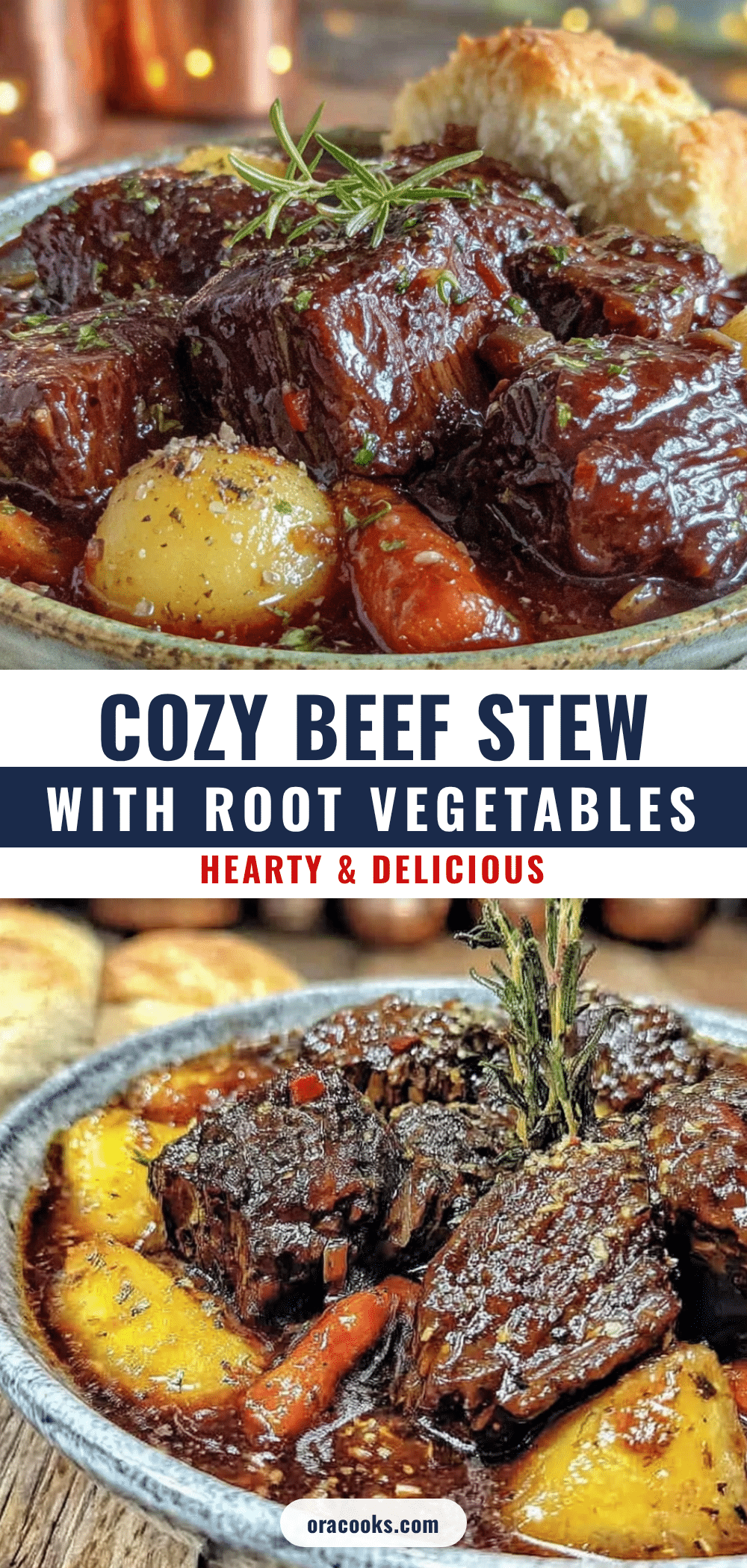
Cozy Beef Stew with Root Vegetables: Easy One-Pot Meal
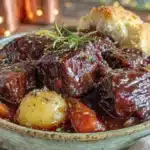
A hearty, comforting beef stew with tender root vegetables, slow-simmered to perfection. This one-pot meal is perfect for cozy nights and is packed with rich, savory flavor.
- Prep Time: 20 minutes
- Cook Time: 2 hours 15 minutes
- Total Time: 2 hours 35 minutes
- Yield: 6 servings 1x
- Category: Main Course
- Cuisine: American
Ingredients
- 2 lbs (900g) beef chuck roast, cut into 1.5-inch cubes
- 2 tablespoons (30ml) olive oil, divided
- 1 large yellow onion, diced (about 1.5 cups)
- 3 cloves garlic, minced
- 2 tablespoons (16g) all-purpose flour (or gluten-free flour blend)
- 2 tablespoons (32g) tomato paste
- 1 cup (240ml) dry red wine (e.g., Cabernet or Merlot)
- 4 cups (960ml) low-sodium beef broth
- 2 bay leaves
- 1 teaspoon (2g) dried thyme
- 1 teaspoon (2g) dried rosemary
- Salt and freshly ground black pepper, to taste
- 3 large carrots, peeled and cut into 1-inch chunks (about 2 cups)
- 3 large parsnips, peeled and cut into 1-inch chunks (about 2 cups)
- 1 lb (450g) Yukon Gold potatoes, peeled and cut into 1-inch cubes (about 3 cups)
- 2 celery stalks, cut into 1-inch pieces (about 1 cup)
- 1 cup (150g) frozen peas
Instructions
- Prep the Beef: Pat the beef cubes dry with paper towels. Season generously with salt and pepper on all sides. Let sit at room temperature for about 15 minutes while you prep the vegetables.
- Sear the Beef: Heat 1 tablespoon of olive oil in a Dutch oven over medium-high heat until shimmering. Working in batches, add the beef cubes in a single layer. Sear for 3-4 minutes per side until deeply browned. Transfer seared beef to a plate and set aside.
- Sauté the Aromatics: Reduce heat to medium. Add remaining 1 tablespoon of olive oil. Add diced onion and cook, stirring occasionally, for 5-6 minutes until softened and translucent. Add minced garlic and cook for another minute until fragrant.
- Build the Base: Sprinkle flour over the onions and garlic, stirring constantly for about 1 minute. Add tomato paste and stir for another minute until it darkens slightly.
- Deglaze the Pot: Pour in the red wine, scraping the bottom of the pot with a wooden spoon to release browned bits. Let simmer for 2 minutes, reducing slightly.
- Return the Beef and Add Broth: Add seared beef back to the pot along with any accumulated juices. Pour in beef broth, add bay leaves, thyme, and rosemary. Bring to a gentle boil, then reduce heat to low, cover, and let simmer.
- Simmer the Stew: Let the stew simmer gently for 1.5 hours until the beef is tender and can be easily pierced with a fork.
- Add the Root Vegetables: After 1.5 hours, add carrots, parsnips, potatoes, and celery to the pot. Stir, cover, and continue simmering for another 40-45 minutes until vegetables are tender.
- Finish and Serve: Remove bay leaves and discard. Stir in frozen peas and let heat through for about 2 minutes. Taste and adjust seasoning with salt and pepper. Serve hot.
Notes
For best results, don’t skip the searing step—it builds deep flavor. Pat the meat dry before searing to ensure a good crust. The stew is even better the next day as flavors meld. To make gluten-free, use a gluten-free flour blend or cornstarch slurry. For a dairy-free version, the recipe is already dairy-free as written.
Nutrition
- Serving Size: 1 serving (about 1.5
- Calories: 450
- Sugar: 10
- Sodium: 600
- Fat: 18
- Saturated Fat: 6
- Carbohydrates: 35
- Fiber: 8
- Protein: 35
Keywords: beef stew, root vegetables, one-pot meal, comfort food, cozy dinner, winter recipe, hearty stew