Love this? Save it for later!
Share the inspiration with your friends
My daughter asked why I couldn’t just cook the salmon in a little pouch of foil with the sauce already on it. I started to explain why that wouldn’t work — something about steam and caramelization and the proper order of operations. Then I stopped. Honestly, I had no good reason except that I’d never done it that way before. She was eight, standing on a step stool, watching me fuss over a baking sheet like it was a science experiment. I handed her the foil.
That night, we ate the best honey garlic salmon I’d ever made. The fish was impossibly tender, flaking apart with the slightest nudge of a fork, and the sauce had concentrated into this sticky, sweet-savory glaze that clung to every bite. My husband, who claims he “doesn’t love fish,” asked for seconds. My daughter just gave me a look — that quiet, knowing look kids get when they’ve proven a point without saying a word. I had to admit it: her idea was better than mine. Maybe you’ve been there, too, watching someone do something simpler and realizing the expert in the room wasn’t you.
I’ve been cooking salmon for years — pan-seared, baked, broiled, even poached. But this foil packet method? It changed everything. No sticky pan to scrub. No risk of drying out the fish. No complicated steps. Just a few ingredients, a sheet of foil, and a dinner that comes together in under 30 minutes. It’s become our go-to weeknight meal, the one I pull out when I’m tired, the fridge looks bare, and everyone needs to eat something that feels special without actually being hard. This honey garlic salmon in foil is a family dinner winner, pure and simple.
Why You’ll Love This Recipe
Let me tell you why this recipe has earned a permanent spot in our weekly rotation. I’ve tested it at least a dozen times — sometimes with fresh salmon from the farmers market, sometimes with frozen fillets I grabbed on sale. It works every single time, and that reliability is exactly what a busy home cook needs.
- Quick & Easy : From start to table in under 25 minutes. No marinating, no complicated techniques. Just mix, wrap, and bake.
- Simple Ingredients : You likely have everything in your pantry right now. Honey, soy sauce, garlic, and a little oil. That’s it.
- Perfect for Busy Weeknights : This is the recipe you make when you’re exhausted, the kids are hungry, and takeout feels too expensive. It delivers every time.
- Crowd-Pleaser : Even picky eaters love this one. The honey garlic sauce is sweet enough for kids but balanced with enough savory depth to satisfy adults.
- Unbelievably Delicious : The salmon stays incredibly moist because it steams in its own juices inside the foil. The sauce reduces into a glossy glaze that’s honestly addictive.
What makes this recipe different from the dozens of other salmon recipes out there? It’s the foil packet method combined with that perfect honey garlic ratio. I spent three batches getting the balance right — too much honey and it was cloying, too much soy sauce and it was salty. This version hits the sweet spot, and the foil traps all that flavor so none of it escapes. It’s comfort food that’s actually good for you, and it comes together faster than you can order pizza.
This recipe isn’t just good — it’s the kind that makes you close your eyes after the first bite. It’s the meal I make when I need to remind myself that feeding my family well doesn’t have to be complicated or expensive. It’s simple, honest cooking that tastes like you tried harder than you did.
What Ingredients You Will Need
This recipe uses simple, wholesome ingredients to deliver bold flavor and satisfying texture without the fuss. Most of these are pantry staples, which means you can make this on a whim without a special trip to the store.
- Salmon fillets (4 fillets, about 6 ounces each) — Look for fillets that are similar in thickness so they cook evenly. I prefer wild-caught when it’s on sale, but farm-raised works beautifully here too. If using frozen, thaw completely in the refrigerator overnight and pat dry before using.
- Honey (1/4 cup) — Use a good-quality honey for the best flavor. I like a mild wildflower honey, but any variety works. The honey provides sweetness and helps create that gorgeous glaze.
- Low-sodium soy sauce (3 tablespoons) — I recommend low-sodium so you can control the salt level. Regular soy sauce works but reduce the added salt elsewhere. For a gluten-free option, use tamari or coconut aminos.
- Garlic (4 cloves, minced) — Fresh garlic is non-negotiable here. Pre-minced jarred garlic has a different flavor and won’t give you the same punch. Take the extra minute to mince fresh cloves — it matters.
- Olive oil (2 tablespoons) — A good extra virgin olive oil adds richness and helps the sauce coat the salmon. You can substitute avocado oil if you prefer a neutral flavor.
- Sesame oil (1 teaspoon) — This is optional but highly recommended. It adds a nutty, toasty depth that makes the sauce taste more complex. Look for toasted sesame oil in the international aisle.
- Fresh ginger (1 teaspoon, grated) — Again, fresh is best. A microplane makes quick work of this. The ginger adds warmth and cuts through the richness of the salmon.
- Salt and black pepper (to taste) — Go easy on the salt since the soy sauce adds plenty. A good pinch of flaky sea salt at the end is lovely.
- Green onions (2-3, sliced) — For garnish. They add a fresh, mild onion flavor and a pop of color.
- Sesame seeds (1 tablespoon) — Also for garnish. Toasted sesame seeds add a nice little crunch.
Ingredient Tips: I recommend using a honey that’s not too thick or crystallized for easy mixing. If your honey has crystallized, warm the jar in a bowl of hot water for a few minutes. For the soy sauce, I personally prefer Kikkoman for its balanced flavor, but any brand works. When buying salmon, look for fillets with bright, orange-pink flesh and no fishy smell. The flesh should feel firm to the touch, not mushy.
Equipment Needed
One of the best things about this recipe is how little equipment it requires. You don’t need a fancy kitchen to make this work.
- Aluminum foil — Heavy-duty foil works best. You’ll need a large sheet for each salmon fillet, about 12 by 18 inches. Regular foil works too, just double it up to prevent tearing.
- Baking sheet — Any rimmed baking sheet will do. A half-sheet pan (18 by 13 inches) fits four foil packets perfectly.
- Small bowl — For mixing the sauce. Any small bowl works.
- Whisk or fork — To combine the sauce ingredients.
- Chef’s knife and cutting board — For mincing garlic, grating ginger, and slicing green onions.
- Microplane or fine grater — Optional but helpful for grating the ginger. A regular box grater works too.
- Tongs — For handling the hot foil packets when they come out of the oven. Be careful, steam will escape when you open them.
Budget-Friendly Tip: If you don’t have a microplane, just mince the ginger finely with a knife. It takes a little longer but works perfectly fine. And honestly, I’ve made this recipe with a cheap baking sheet from the dollar store and it turned out great. Don’t let fancy equipment stop you.
Preparation Method
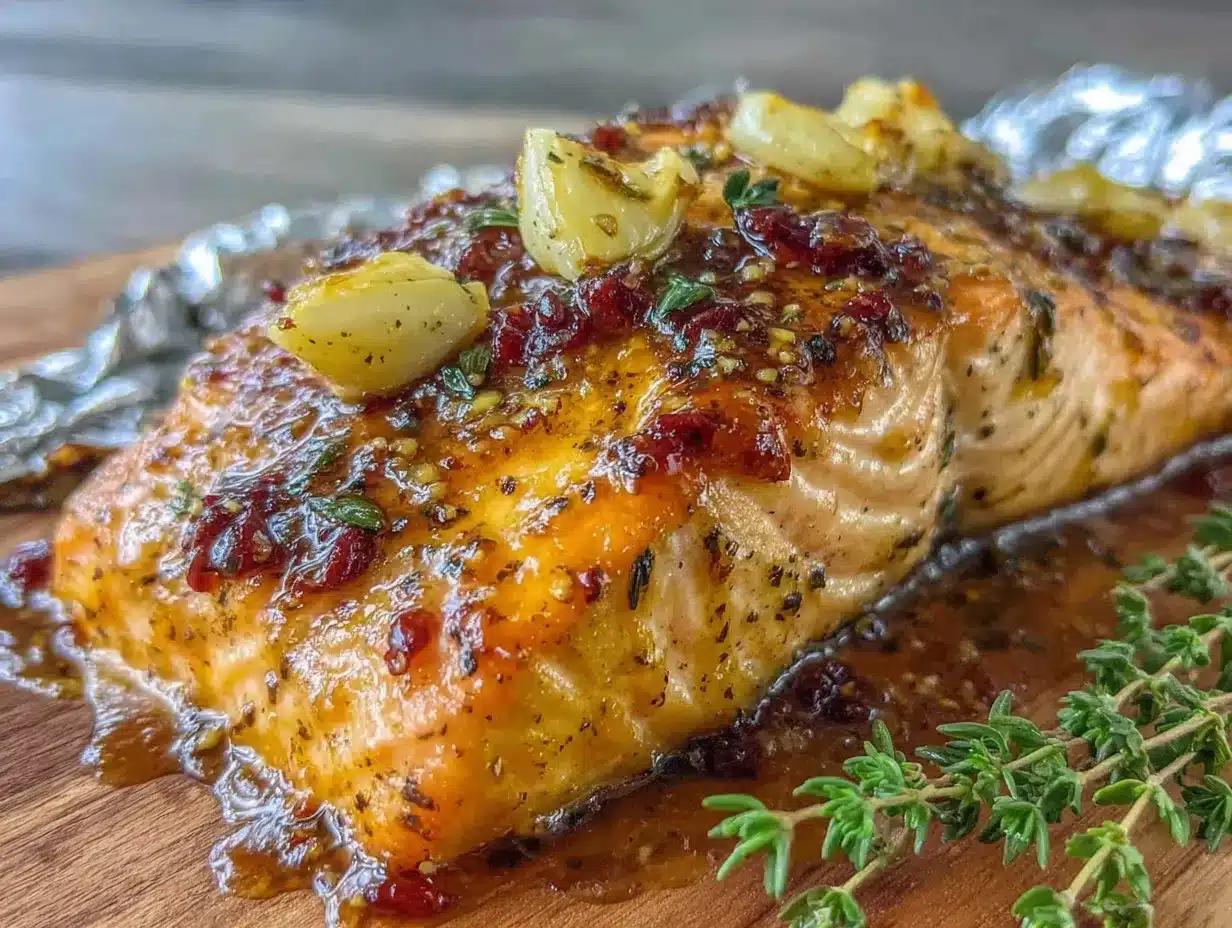
Let me walk you through this step by step. I’ve made this recipe more times than I can count, so I’ll share all the little tricks I’ve learned along the way.
- Preheat your oven to 400°F (200°C). Position the rack in the middle of the oven. While it heats, you can prep everything else. This temperature is the sweet spot — hot enough to cook the salmon quickly but gentle enough to keep it moist.
- Make the honey garlic sauce. In a small bowl, whisk together the honey, low-sodium soy sauce, minced garlic, olive oil, sesame oil (if using), and grated ginger. Taste it. It should be sweet, savory, and a little punchy from the garlic. If it tastes too sweet, add another splash of soy sauce. Too salty? A tiny bit more honey. Trust your palate here — you’re the one eating it.
- Prepare the salmon fillets. Pat each fillet dry with paper towels. This is important — dry salmon gets better browning and the sauce clings better. Season both sides lightly with salt and pepper. Don’t overdo the salt; the soy sauce handles that job.
- Set up your foil packets. Tear off four large sheets of heavy-duty aluminum foil, each about 12 by 18 inches. Place one salmon fillet in the center of each sheet, skin-side down if your fillets have skin. Drizzle about 2 tablespoons of the honey garlic sauce over each fillet, making sure to coat the top and sides.
- Fold the foil packets. Bring the two long sides of the foil together over the salmon and fold them over a few times to seal. Then fold up the short ends, creating a tight packet. Leave a little room inside for steam to circulate — don’t wrap it too tightly. Think of it as a little steam tent for your salmon.
- Bake the salmon. Place the foil packets on your baking sheet, seam-side up. Bake for 12-15 minutes, depending on the thickness of your fillets. For fillets that are about 1 inch thick, 13 minutes is usually perfect. The salmon is done when it flakes easily with a fork and the internal temperature reaches 145°F (63°C).
- Optional: Broil for a crispy top. If you want a little caramelization on top, carefully open the foil packets (watch out for steam!) and switch your oven to broil. Broil for 1-2 minutes until the sauce bubbles and browns slightly. Keep a close eye on it — it can go from perfect to burnt in seconds.
- Rest and serve. Let the salmon rest in the foil packets for 2-3 minutes. This allows the juices to redistribute. Carefully open the packets, transfer the salmon to plates, and spoon any remaining sauce from the foil over the top. Garnish with sliced green onions and sesame seeds.
Personal Tip: I always make extra sauce — about 1.5 times the recipe — and reserve a few tablespoons to drizzle over the finished salmon. The sauce that cooked with the fish is delicious, but that extra fresh drizzle takes it over the top. Also, if you’re cooking for a crowd, you can easily double or triple this recipe. Just use multiple baking sheets and rotate them halfway through baking.
Cooking Tips & Techniques
I’ve learned a few things the hard way so you don’t have to. Here are my best tips for perfect honey garlic salmon every time.
Don’t overthink the foil. I used to struggle with making perfect little packets, but honestly, as long as they’re sealed well enough to trap steam, you’re fine. A little sauce leaking out isn’t the end of the world — it just means you’ll have a slightly messier baking sheet. The salmon will still be delicious.
Watch the cooking time. Salmon continues to cook after it comes out of the oven, so it’s better to pull it out when it’s just barely done. If you wait until it flakes perfectly in the oven, it’ll be overcooked by the time you eat it. I pull mine at 140°F (60°C) internal temperature and let carryover cooking do the rest.
One mistake I made early on: I used too much honey in the sauce, thinking sweeter would be better. It wasn’t. The salmon became sticky and the sauce burned on the edges of the foil. Balance is everything — the soy sauce and garlic need to shine through. Stick to the ratio I’ve given you.
Multitasking tip: While the salmon bakes, cook your sides. Rice takes about 15 minutes, which is almost exactly the same time as the salmon. Steam some broccoli or green beans in the microwave. Toss a simple salad. By the time the salmon rests, your whole meal is ready.
For consistent results: If your fillets are different thicknesses, place the thicker ones toward the back of the oven where it’s slightly hotter, or start checking the thinner ones a minute or two early. You can also fold the thin tail ends under to make them more uniform in thickness.
Variations & Adaptations
This recipe is incredibly flexible. Here are some ways I’ve adapted it for different tastes and dietary needs.
Spicy Honey Garlic Salmon: Add 1/2 teaspoon of red pepper flakes or a teaspoon of sriracha to the sauce. The heat cuts through the sweetness beautifully. My husband loves this version, and I’ll sometimes double the spice for just his fillet while keeping the rest mild for the kids.
Lemon Herb Version: Add the zest of one lemon and a teaspoon of dried thyme or oregano to the sauce. Squeeze fresh lemon juice over the salmon before serving. This bright, herby variation is perfect for spring and summer dinners.
Low-Carb/Keto Adaptation: Replace the honey with a sugar-free honey substitute or use monk fruit sweetener. The texture will be slightly different, but the flavor is still fantastic. Serve with roasted vegetables or cauliflower rice instead of regular rice.
Air Fryer Method: This works beautifully in an air fryer. Place the foil packets in the air fryer basket and cook at 375°F (190°C) for 10-12 minutes. Check for doneness and add a minute or two if needed. The air fryer circulates heat beautifully and cooks the salmon evenly.
Different Protein: This sauce works with chicken thighs, shrimp, or even firm tofu. For chicken, increase the cooking time to 20-25 minutes. For shrimp, reduce to 8-10 minutes. For tofu, press it well first and bake for 15 minutes.
I tried a miso-ginger variation once, adding a tablespoon of white miso paste to the sauce. It was incredible — salty, funky, and deeply savory. If you have miso in your fridge, give it a try. It’s become my secret-weapon version when I want to impress guests.
Serving & Storage Suggestions
This honey garlic salmon is best served warm, right out of the foil packet. The steam has kept it perfectly moist, and the sauce is at its glossiest and most flavorful.
Serving Suggestions: I love serving this over a bed of steamed jasmine rice or coconut rice — the rice soaks up all that extra honey garlic sauce. For a low-carb option, serve it over cauliflower rice or alongside roasted asparagus and cherry tomatoes. A simple cucumber salad with rice vinegar and sesame seeds is a refreshing side that balances the richness of the salmon. For a complete meal, add steamed broccoli or green beans tossed with a little sesame oil.
Storage: Store leftover salmon in an airtight container in the refrigerator for up to 3 days. The salmon will continue to absorb the sauce as it sits, so the flavor actually gets deeper. I’ve been known to eat it cold straight from the fridge the next day — it’s that good.
Reheating: The best way to reheat is gently. Place the salmon in a 300°F (150°C) oven for about 10 minutes, covered loosely with foil to prevent drying out. You can also microwave it in 30-second bursts, but be careful — overcooking in the microwave will make it tough. I prefer the oven method for the best texture.
Freezing: You can freeze the cooked salmon in an airtight container for up to 2 months. Thaw overnight in the refrigerator and reheat gently. The texture won’t be quite as perfect as fresh, but it’s still delicious and makes for an easy emergency dinner.
Flavor Development: Honestly, this salmon is even better the next day. The flavors meld together overnight, and the sauce penetrates deeper into the fish. I sometimes make a double batch just for leftovers. Cold salmon flaked over a salad with avocado and a drizzle of extra sauce is one of my favorite lunches.
Nutritional Information & Benefits
This honey garlic salmon is not just delicious — it’s genuinely good for you. Here’s what you’re getting in each serving.
- Calories: Approximately 380 per serving (one fillet with sauce)
- Protein: 35 grams — salmon is an excellent source of high-quality protein
- Healthy Fats: 18 grams, including omega-3 fatty acids that support heart and brain health
- Carbohydrates: 18 grams, mostly from honey
- Sugar: 16 grams (natural from honey)
- Sodium: 520 mg (using low-sodium soy sauce)
Health Benefits: Salmon is packed with omega-3 fatty acids, which are essential for reducing inflammation and supporting cardiovascular health. It’s also rich in B vitamins, selenium, and potassium. Garlic and ginger both have anti-inflammatory properties and support immune function. Honey provides antioxidants and natural energy. This is a meal that nourishes your body while satisfying your taste buds.
Dietary Considerations: This recipe is naturally gluten-free if you use tamari or coconut aminos instead of soy sauce. It’s also dairy-free, nut-free, and egg-free. For a lower-sugar version, reduce the honey to 2 tablespoons and add a splash of rice vinegar for acidity. The flavor will be less sweet but still delicious.
Personal Note: I love that this recipe lets me feed my family something that feels indulgent but is actually really healthy. We’re not a household that counts every calorie, but knowing that this meal is packed with good-for-you ingredients makes me feel great about serving it regularly.
Conclusion
This honey garlic salmon in foil has become a staple in our home for good reason. It’s fast, forgiving, and consistently delicious. The foil packet method means no sticky pans to scrub, no dry fish, and no complicated techniques. It’s the kind of recipe that makes you look like a hero on a Tuesday night when you’re running on empty.
I love that this recipe came from my daughter’s simple question — why not just cook it all together? Sometimes the best cooking advice comes from the most unexpected places. It reminded me that good cooking isn’t about following rules; it’s about finding what works. This recipe works, and I hope it becomes a favorite in your home too.
Try it this week and let me know how it turns out! Leave a comment below with your favorite variation or tag me in your photos — I love seeing your creations. And if you have a picky eater who swears they don’t like fish, this might just change their mind. It changed mine.
Frequently Asked Questions
Can I use frozen salmon for this recipe?
Yes, absolutely. Thaw the salmon completely in the refrigerator overnight, then pat it very dry with paper towels before using. Frozen salmon tends to release more water as it cooks, so you might have a bit more liquid in the foil packets. Just spoon it off before serving or cook the packets for an extra minute or two.
Can I make this in advance for meal prep?
You can prep the sauce up to 3 days ahead and store it in the refrigerator. You can also assemble the foil packets up to 24 hours in advance and keep them in the fridge. When you’re ready to cook, just pop them in the oven — you may need to add 2-3 minutes to the cooking time since they’ll be cold.
What if I don’t have foil?
You can use parchment paper instead, but it won’t seal as tightly. Double up the parchment and fold the edges carefully. Alternatively, place the salmon and sauce in a covered baking dish and bake at 400°F for the same amount of time. The texture will be slightly different since there’s less steam, but it will still be delicious.
How do I know when the salmon is fully cooked?
The salmon is done when it flakes easily with a fork and the internal temperature reaches 145°F (63°C). The flesh should be opaque all the way through, not translucent in the center. If you don’t have a thermometer, look for the white protein (albumin) that sometimes appears on the surface — that’s a sign the salmon is cooked through.
Can I double this recipe for a crowd?
Absolutely. This recipe scales beautifully. Just multiply the ingredients by the number of servings you need. Use multiple baking sheets if necessary, and rotate them halfway through baking. The cooking time stays the same as long as the fillets are similar in thickness. It’s perfect for dinner parties or family gatherings.
Pin This Recipe!
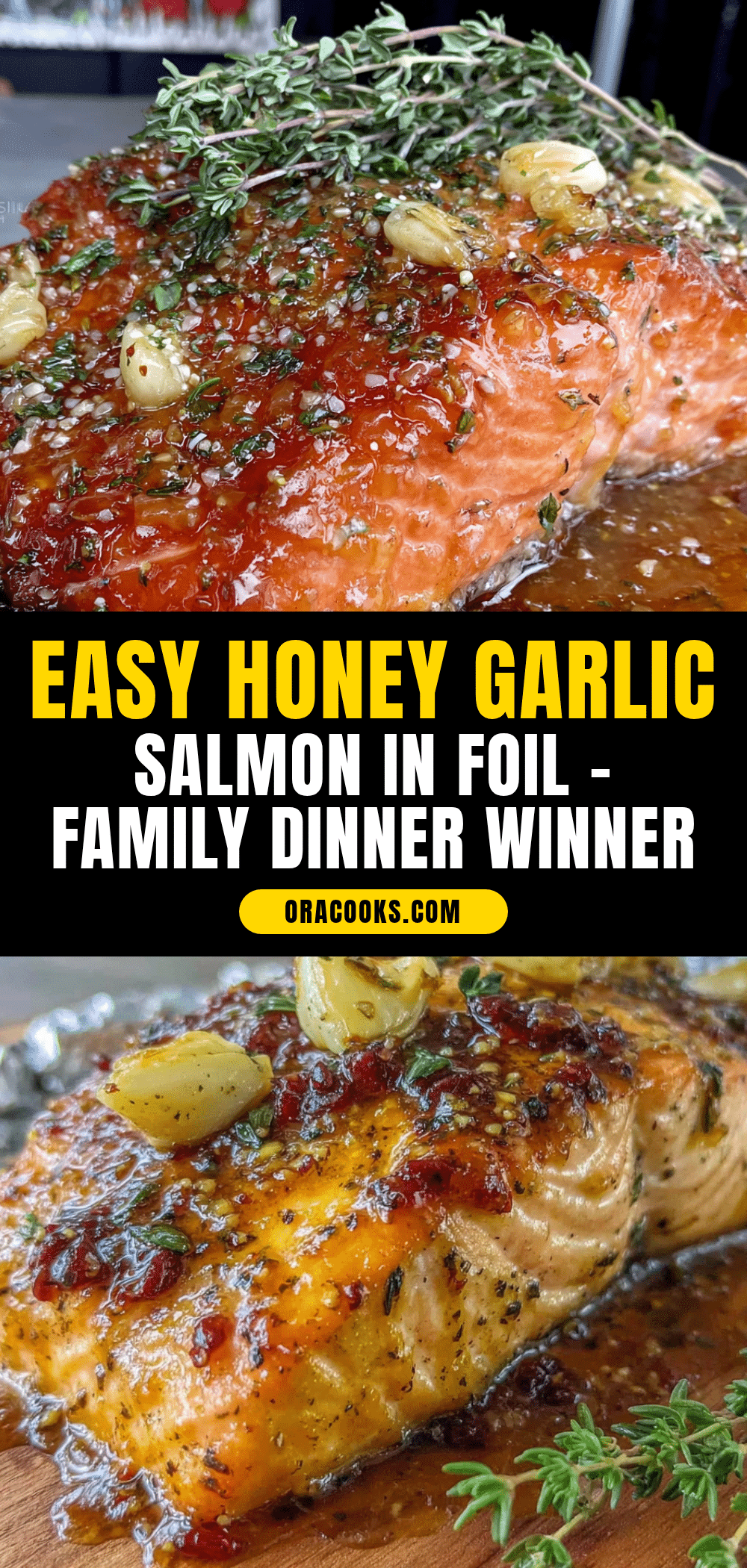
Easy Honey Garlic Salmon in Foil – Best Family Dinner
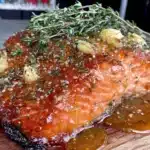
This honey garlic salmon in foil is a quick, easy, and delicious weeknight dinner. The foil packet method keeps the salmon incredibly moist while the sauce reduces into a sticky, sweet-savory glaze.
- Prep Time: 10 minutes
- Cook Time: 15 minutes
- Total Time: 25 minutes
- Yield: 4 servings 1x
- Category: Main Course
- Cuisine: American
Ingredients
- 4 salmon fillets (about 6 ounces each)
- 1/4 cup honey
- 3 tablespoons low-sodium soy sauce
- 4 cloves garlic, minced
- 2 tablespoons olive oil
- 1 teaspoon sesame oil (optional)
- 1 teaspoon fresh ginger, grated
- Salt and black pepper to taste
- 2–3 green onions, sliced (for garnish)
- 1 tablespoon sesame seeds (for garnish)
Instructions
- Preheat your oven to 400°F (200°C). Position the rack in the middle of the oven.
- In a small bowl, whisk together the honey, low-sodium soy sauce, minced garlic, olive oil, sesame oil (if using), and grated ginger. Taste and adjust sweetness or saltiness as needed.
- Pat each salmon fillet dry with paper towels. Season both sides lightly with salt and pepper.
- Tear off four large sheets of heavy-duty aluminum foil, each about 12 by 18 inches. Place one salmon fillet in the center of each sheet, skin-side down if your fillets have skin. Drizzle about 2 tablespoons of the honey garlic sauce over each fillet, coating the top and sides.
- Bring the two long sides of the foil together over the salmon and fold them over a few times to seal. Then fold up the short ends, creating a tight packet with a little room inside for steam to circulate.
- Place the foil packets on a baking sheet, seam-side up. Bake for 12-15 minutes, depending on the thickness of your fillets. The salmon is done when it flakes easily with a fork and the internal temperature reaches 145°F (63°C).
- Optional: For a crispy top, carefully open the foil packets and switch the oven to broil. Broil for 1-2 minutes until the sauce bubbles and browns slightly.
- Let the salmon rest in the foil packets for 2-3 minutes. Carefully open the packets, transfer the salmon to plates, and spoon any remaining sauce from the foil over the top. Garnish with sliced green onions and sesame seeds.
Notes
For best results, use fresh garlic and ginger. If your honey has crystallized, warm the jar in a bowl of hot water. For a gluten-free version, use tamari or coconut aminos instead of soy sauce. To make extra sauce, multiply the sauce ingredients by 1.5 and reserve a few tablespoons to drizzle over the finished salmon.
Nutrition
- Serving Size: 1 fillet with sauce
- Calories: 380
- Sugar: 16
- Sodium: 520
- Fat: 18
- Saturated Fat: 3
- Carbohydrates: 18
- Protein: 35
Keywords: honey garlic salmon, salmon in foil, easy salmon recipe, weeknight dinner, healthy salmon, gluten-free salmon