Love this? Save it for later!
Share the inspiration with your friends
It was 1:15 AM on a Thursday — honestly, not the best time to be in the kitchen — but that nagging craving for a perfectly seared steak just wouldn’t quit. I didn’t have fancy ingredients or a full pantry to work with, but I did have a ribeye, a cast iron skillet, and a stubborn hunger that refused to be ignored. The house was silent except for the steady hiss of the pan heating up. I grabbed what I had, threw caution to the wind, and went for it.
You know that feeling when a simple craving turns into a full-on kitchen experiment? I was halfway through when I realized I forgot to preheat the pan properly (classic me), but by the time I sliced into that ribeye, with its golden, restaurant-quality seared crust and juicy, tender center, I was hooked. This wasn’t just any steak — it was the Perfect Steakhouse Ribeye with a sear so good it could rival any upscale restaurant.
Maybe you’ve been there too: late night, limited ingredients, but a hunger for something special. This recipe stuck with me because it’s doable on a weeknight, no fancy equipment needed, and it delivers every time — that crispy crust, the rich marbling melting into each bite. It’s the kind of steak that makes you close your eyes and savor every mouthful. Let me tell you, it’s well worth the midnight oil.
Why You’ll Love This Recipe
When I first perfected this ribeye steak recipe, it was a total game changer. I’m not just talking about any steak — this is the kind that hits all the right notes, whether you’re a seasoned cook or just getting started. After testing countless times, here’s why this recipe has become my go-to for restaurant-quality seared ribeye:
- Quick & Easy: Ready in under 30 minutes, perfect for those nights when you want something impressive but don’t want to fuss.
- Simple Ingredients: No fancy marinades or obscure spices needed — just salt, pepper, a good cut of ribeye, and basic pantry staples.
- Perfect for Special Occasions or Weeknight Treats: Whether it’s a casual dinner or a date night, this steak feels like a celebration.
- Crowd-Pleaser: Always gets compliments, and I’ve yet to meet a steak lover who didn’t go back for seconds.
- Unbelievably Delicious: The seared crust locks in juices, giving you a flavorful, tender steak that tastes like it’s straight from a steakhouse.
What really sets this recipe apart is the technique — searing at the right temperature, flipping at just the right time, and finishing with butter and aromatics for that restaurant touch. The seasoning is simple but perfectly balanced, letting the ribeye’s rich flavor shine. Honestly, once you nail this crust, you’ll understand why I keep coming back to this recipe. It’s all about that satisfying sizzle and juicy bite that makes you feel like a pro chef at home.
What Ingredients You Will Need
This recipe calls for straightforward, high-quality ingredients that work together to deliver bold flavor and an irresistible texture. The beauty here is that most of these are pantry staples or easy to find at any grocery store. Here’s what you’ll need:
- Ribeye Steak (1-inch to 1.5-inch thick), about 12–16 oz (340–450 g): Look for well-marbled cuts with a good fat cap for flavor and juiciness. I usually pick USDA Choice or Prime when possible.
- Coarse Kosher Salt: Essential for seasoning and creating that crust. Diamond Crystal brand is my favorite for even coverage.
- Freshly Ground Black Pepper: Adds a touch of heat and depth without overpowering the beef.
- Vegetable Oil or Canola Oil (2 tablespoons): High smoke point oils are best for searing without burning.
- Unsalted Butter (2 tablespoons): For basting – adds rich flavor and helps develop a golden crust.
- Fresh Garlic Cloves (2, smashed): Infuses the butter with subtle aromatic notes.
- Fresh Thyme or Rosemary Sprigs (2–3 sprigs): Herbaceous accents complement the steak’s richness.
If you want to switch things up, swapping rosemary for sage or using ghee instead of butter can give a slightly different flavor profile. Just remember, quality ribeye is the star here — pick a cut you love and trust.
Equipment Needed
- Cast Iron Skillet: This is my top recommendation for the perfect sear. It retains and distributes heat evenly, which is crucial. A heavy stainless steel pan can work too if you don’t have cast iron.
- Tongs: For flipping the steak without piercing it, which keeps juices locked in.
- Instant-Read Meat Thermometer: Optional but highly recommended to hit your preferred doneness perfectly. I use a ThermoWorks thermometer, which is my kitchen MVP.
- Plate and Foil: For resting the steak after cooking to let those juices redistribute.
If you’re on a budget, a heavy-bottomed non-stick pan can suffice, but the cast iron’s crust development is unmatched. Also, keep your pan well-seasoned for best results and avoid overcrowding the pan to prevent steaming the steak.
Preparation Method
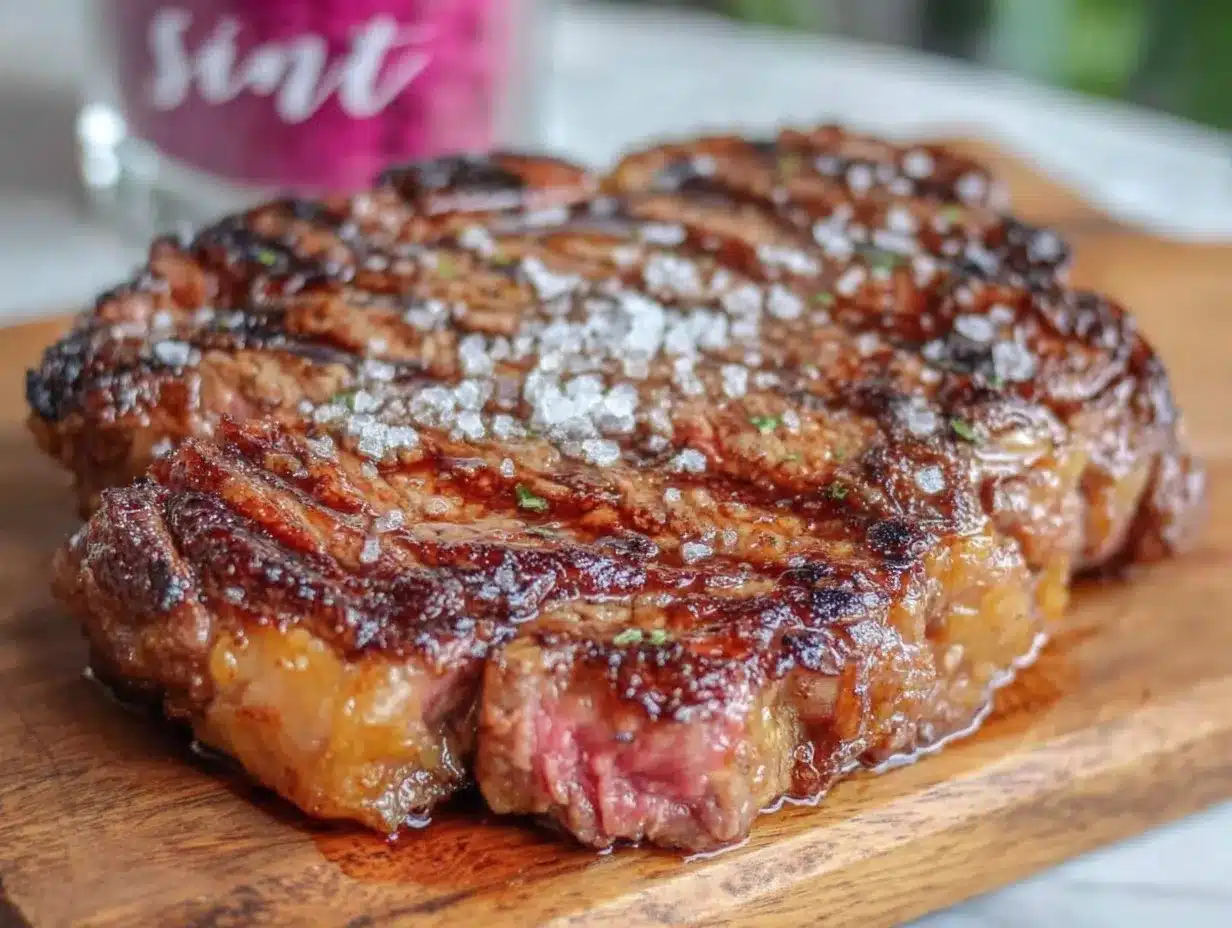
- Bring the Ribeye to Room Temperature (about 30 minutes): Take the steak out of the fridge and let it sit on a plate. This ensures even cooking. Pat it dry with paper towels to remove excess moisture — this helps with searing.
- Season Generously with Salt and Pepper: Coat both sides evenly. Don’t be shy here; the salt helps form the crust.
- Preheat Your Cast Iron Skillet Over High Heat (about 5 minutes): You want it smoking hot but not burning. Add the vegetable oil and swirl it around to coat the pan.
- Place the Ribeye in the Pan: Lay it down away from you to avoid splatter. You should hear a loud sizzle – that’s the crust beginning to form. Cook for about 3–4 minutes without moving it.
- Flip the Steak Using Tongs: Cook the other side for 3 minutes.
- Add Butter, Garlic, and Herbs: Reduce heat to medium. Tilt the pan and spoon melted butter over the steak repeatedly to baste it. This adds flavor and helps caramelize the crust. Baste for about 2–3 minutes.
- Check Internal Temperature: For medium rare, aim for 130°F (54°C). Remove steak from pan just before it hits the desired temp — carryover heat will finish it.
- Rest the Steak: Transfer to a plate and tent loosely with foil for 5–7 minutes. This step is key for juicy results.
- Slice and Serve: Cut against the grain for tenderness. Pour any pan juices over the top.
If you find the crust isn’t as dark as you want, don’t fret. It’s better to avoid burning and go for a rich brown color. Also, remember that each stove and pan heats differently, so adjust times as needed. I once got distracted by a phone call mid-sear — the crust still turned out great, so it’s forgiving but keep an eye on it!
Cooking Tips & Techniques
Getting that perfect steakhouse ribeye crust requires some patience and attention to detail, but I promise it’s easier than it looks. Here’s what I’ve learned from countless steaks:
- Don’t Skip the Drying Step: Moisture is the enemy of a good sear. Pat your steak dry thoroughly before seasoning.
- High Heat is Your Friend: That initial sear happens best at a very hot pan. If your pan isn’t hot enough, you’ll end up steaming the steak rather than searing it.
- Use a Heavy Pan: Cast iron or thick-bottomed stainless steel pans hold heat better, giving you a consistent crust.
- Resist the Urge to Move the Steak: Let it sit still while searing so the crust forms properly.
- Butter Basting is a Game-Changer: The combination of butter, garlic, and herbs infuses the steak with extra flavor and helps build a beautiful brown crust.
- Resting is Non-Negotiable: Cutting into a steak immediately after cooking causes precious juices to run out — resting keeps it juicy and tender.
Early on, I made the mistake of flipping too often and the crust never really developed. Now, I know one flip is enough. Also, using a thermometer saved me from overcooking more times than I can count. Trust me — it’s worth it!
Variations & Adaptations
This ribeye recipe is ridiculously adaptable, so you can tailor it to your taste or dietary needs without losing that steakhouse quality:
- Herb Variations: Swap thyme and rosemary for sage or oregano for a different aromatic profile.
- Spice Rub: Add smoked paprika, garlic powder, or chili flakes for a bolder flavor.
- Butter Alternatives: For dairy-free, use ghee or coconut oil for basting.
- Oven Finish: For thicker cuts, sear on the stove then finish in a 400°F (200°C) oven for 5–7 minutes to reach your desired doneness.
- Gluten-Free: Naturally gluten-free, but avoid cross-contamination if using shared equipment.
Personally, I tried adding a touch of espresso powder to the dry rub once — weirdly, it deepened the flavor and gave a subtle earthiness that won me over. Feel free to experiment as you get comfortable with the basics!
Serving & Storage Suggestions
Serve your perfect steakhouse ribeye hot, sliced, and drizzled with those pan juices. It pairs beautifully with classic sides like garlic mashed potatoes, roasted vegetables, or a fresh arugula salad. For drinks, a robust red wine like Cabernet Sauvignon or a bold IPA complements the richness perfectly.
If you have leftovers, wrap them tightly in foil and store in the refrigerator for up to 3 days. Reheat gently in a skillet on low heat or in the oven at 250°F (120°C) to keep the steak tender and avoid overcooking. I always find the flavors mellow and deepen overnight, making the next day’s steak sandwiches or salads even better.
Nutritional Information & Benefits
A 12-ounce (340 g) ribeye steak provides roughly 850 calories, 65 grams of protein, and 65 grams of fat, with some saturated fats from the marbling. It’s an excellent source of iron, zinc, and B vitamins, which are essential for energy and immune function.
While ribeye is a rich cut, enjoying it in moderation fits well within a balanced diet. For those watching calories or fat, trimming excess fat or choosing a leaner steak cut is an option. For me, every now and then, this steak feels like a deserved indulgence that fuels both body and soul.
Conclusion
If you’re looking for a straightforward way to get restaurant-quality results at home, this Perfect Steakhouse Ribeye recipe is your ticket. Simple ingredients, a few key techniques, and a little patience come together to create that crave-worthy seared crust and juicy center. I love this recipe because it’s reliable and makes me feel like I’m treating myself, no matter the day.
Don’t hesitate to customize it to your tastes — swap herbs, try a spice rub, or finish in the oven if you prefer thicker cuts. I’d love to hear how your steaks turn out, so drop a comment or share your own tips. Trust me, once you nail this, you’ll want to make it again and again. Happy cooking!
Frequently Asked Questions About Perfect Steakhouse Ribeye
- Q: What thickness should my ribeye be for best results?
A: Aim for 1 to 1.5 inches (2.5–3.8 cm) thick. Thinner steaks cook too quickly and may not develop a great crust; thicker steaks might need an oven finish. - Q: How do I know when my steak is done?
A: Use an instant-read thermometer — 130°F (54°C) for medium rare, 140°F (60°C) for medium. Resting will raise the temp a few degrees. - Q: Can I use a different cut of steak?
A: Yes! New York strip or filet mignon work well with this searing method, though cooking times will vary. - Q: Why is resting the steak so important?
A: Resting lets the juices redistribute, preventing them from spilling out when you cut, resulting in a juicier steak. - Q: What if I don’t have fresh herbs?
A: You can skip them or add a pinch of dried herbs during basting, though fresh herbs add the best aroma and flavor.
Pin This Recipe!
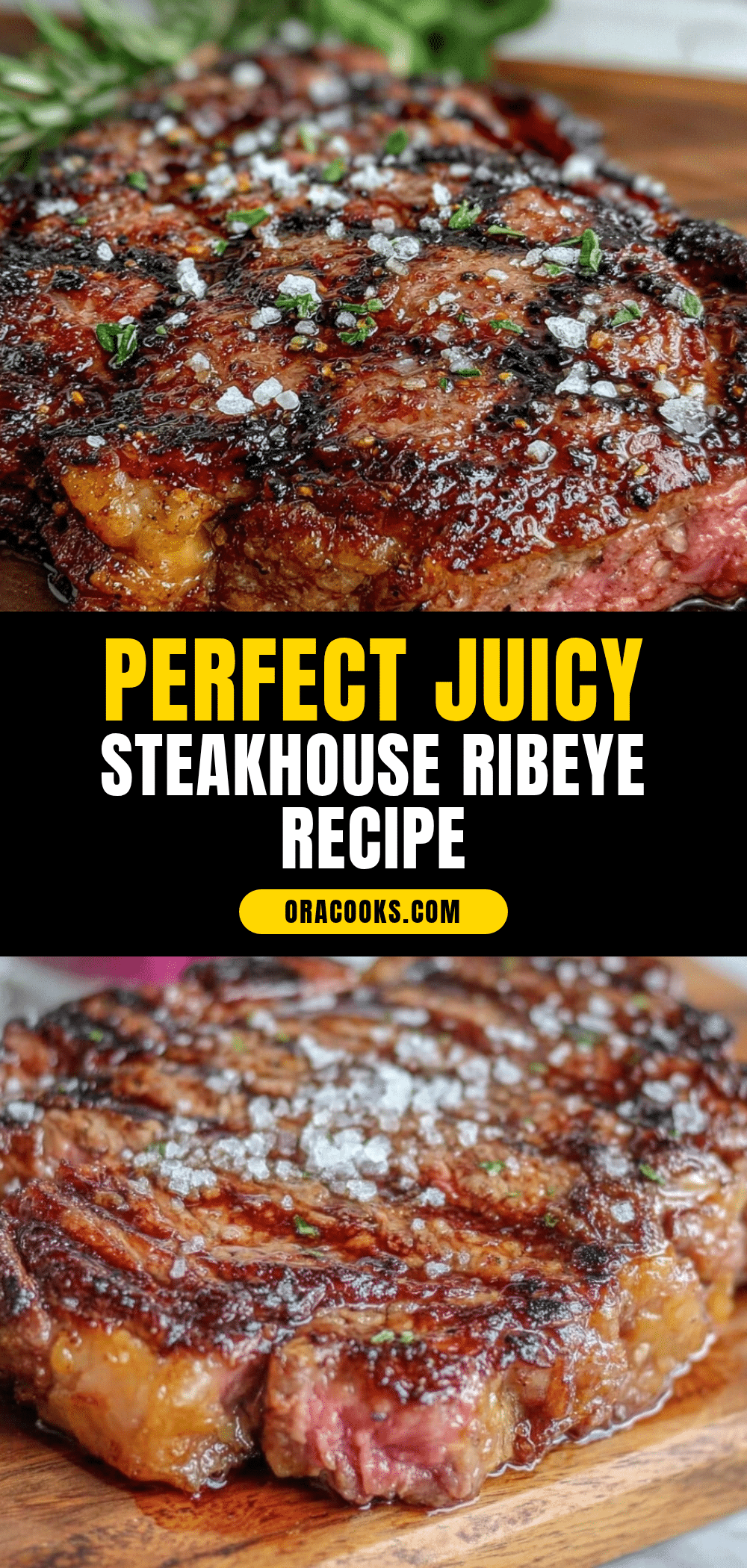
Perfect Steakhouse Ribeye Recipe for Restaurant-Quality Seared Crust
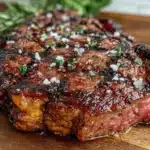
A straightforward recipe for a perfectly seared ribeye steak with a crispy crust and juicy center, delivering restaurant-quality results at home with simple ingredients and techniques.
- Prep Time: 35 minutes
- Cook Time: 10 minutes
- Total Time: 45 minutes
- Yield: 1 serving 1x
- Category: Main Course
- Cuisine: American
Ingredients
- 1 ribeye steak (1-inch to 1.5-inch thick), about 12–16 oz (340–450 g)
- Coarse kosher salt
- Freshly ground black pepper
- 2 tablespoons vegetable oil or canola oil
- 2 tablespoons unsalted butter
- 2 fresh garlic cloves, smashed
- 2–3 sprigs fresh thyme or rosemary
Instructions
- Bring the ribeye to room temperature (about 30 minutes). Pat dry with paper towels to remove excess moisture.
- Season generously with coarse kosher salt and freshly ground black pepper on both sides.
- Preheat a cast iron skillet over high heat for about 5 minutes until smoking hot. Add vegetable oil and swirl to coat the pan.
- Place the ribeye in the pan away from you to avoid splatter. Cook for 3–4 minutes without moving it.
- Flip the steak using tongs and cook the other side for 3 minutes.
- Reduce heat to medium. Add butter, smashed garlic, and herb sprigs. Tilt the pan and spoon melted butter over the steak repeatedly to baste for 2–3 minutes.
- Check internal temperature aiming for 130°F (54°C) for medium rare. Remove steak just before it hits desired temperature.
- Transfer steak to a plate and tent loosely with foil. Rest for 5–7 minutes.
- Slice against the grain and serve, pouring any pan juices over the top.
Notes
Pat the steak dry before seasoning to ensure a good sear. Use a heavy pan like cast iron for even heat distribution. Avoid moving the steak while searing to develop a crust. Butter basting with garlic and herbs adds flavor and helps caramelize the crust. Rest the steak after cooking to keep it juicy. Adjust cooking times based on steak thickness and stove heat. For thicker cuts, finish in a 400°F oven for 5–7 minutes.
Nutrition
- Serving Size: 1 ribeye steak (12–1
- Calories: 850
- Sodium: 1200
- Fat: 65
- Saturated Fat: 28
- Protein: 65
Keywords: ribeye steak, steakhouse ribeye, seared ribeye, cast iron steak, restaurant-quality steak, easy steak recipe, medium rare steak