Love this? Save it for later!
Share the inspiration with your friends
The neighborhood chili cook-off was in six hours and I’d completely forgotten. Everyone else would be bringing their grandfather’s secret recipe, slow-simmered for two days with hand-ground beef and mysterious spices. I had a butternut squash sitting on my counter, some onions, and a carton of chicken broth I’d bought on a whim. Honestly, I almost just grabbed a bag of chips and called it a night.
But something made me stop. Maybe it was stubbornness, or maybe I just really didn’t want to show up empty-handed. I started roasting that squash, figuring at least my apartment would smell amazing. I was scraping the caramelized flesh into a pot when my neighbor, Dave, knocked on the door to borrow a whisk. He took one look at the golden-orange mixture simmering on my stove and said, “That smells like you’re cheating.” I laughed it off, but I secretly hoped he was right.
The soup came together in under an hour. I threw in some garlic, a touch of coconut milk for creaminess, and a pinch of cayenne because I like a little heat. I poured it into a thermos, still unsure, and walked over to the community center. You know that feeling when you’re the underdog and you’re just hoping not to embarrass yourself? That was me, holding my soup next to a table of bubbling chili pots.
Well, let me tell you what happened. My little butternut squash soup won. Not just a participation ribbon, either — it took the whole thing. People kept coming back for second and third ladles, asking for the recipe. I stood there, slightly stunned, trying to remember what I’d actually done. That night, I learned something important: sometimes the simplest things, made with what you have, are the ones that surprise you the most. And that’s why I keep making this soup, every fall, for every gathering I can.
Why You’ll Love This Recipe
This isn’t just another butternut squash soup recipe. I’ve tested this one at least a dozen times, tweaking the roast time, adjusting the liquid ratio, playing with the spices. What I landed on is the version that gets the most “oh wow” reactions, and it’s the one I’m sharing with you today.
- Crowd-Pleasing Perfection: This soup has won over chili lovers, soup skeptics, and even my veggie-hating cousin. It’s that good.
- Simple Ingredients: You don’t need a specialty grocery store. Butternut squash, onion, garlic, broth, and a few pantry staples are all it takes.
- Make-Ahead Magic: Perfect for hosting. Make it a day ahead, and the flavors meld together even better. Just reheat and serve when your guests arrive.
- Impressive Without Stress: Roasting the squash does the heavy lifting. It brings out a natural sweetness that makes this soup taste like you spent hours fussing — but you didn’t.
- Dietary Friendly: Naturally gluten-free and can easily be made vegan or dairy-free. Everyone at your table can enjoy it.
This recipe is the one that makes you close your eyes after the first bite. It’s comfort in a bowl, but with a roasted depth that feels special. For your next dinner party, potluck, or festive get-together, this soup will be the dish everyone talks about — and the one they ask you to bring again.
What Ingredients You Will Need
This recipe uses simple, wholesome ingredients that come together to create a soup with incredible depth of flavor. Most of these are pantry staples, and the star of the show — the butternut squash — is widely available during fall and winter.
For the Roasted Squash
- 1 large butternut squash (about 3 pounds / 1.4 kg), halved lengthwise and seeds scooped out
- 2 tablespoons olive oil (I prefer a good quality extra virgin for roasting)
- 1/2 teaspoon salt
- 1/4 teaspoon black pepper
For the Soup Base
- 1 tablespoon butter (or use olive oil for a vegan version)
- 1 medium yellow onion, diced (about 1 cup)
- 3 cloves garlic, minced
- 1 teaspoon fresh thyme leaves (or 1/2 teaspoon dried)
- 1/2 teaspoon ground cumin (adds warmth without overpowering)
- 1/4 teaspoon cayenne pepper (optional, for a gentle kick)
- 4 cups chicken or vegetable broth (low-sodium recommended)
- 1/2 cup canned coconut milk (full-fat for creaminess, or use heavy cream)
For Serving
- Toasted pumpkin seeds (pepitas) for garnish
- A drizzle of coconut milk or cream
- Fresh thyme sprigs
- Crusty bread on the side
When choosing a butternut squash, look for one that feels heavy for its size with a matte, tan skin. Avoid any with soft spots or cracks. I like to buy mine from a local farmer’s market when possible — they’re often fresher and sweeter. For the broth, I recommend Pacific Foods or Swanson for consistent flavor. If you’re using coconut milk, make sure it’s well-shaken before opening, as the cream and water can separate.
Equipment Needed
You don’t need a fancy kitchen to make this soup, which is part of its charm. Here’s what you’ll need:
- Baking sheet (rimmed, to catch any juices from the squash)
- Parchment paper or aluminum foil (for easy cleanup)
- Large soup pot or Dutch oven (5 to 6 quarts is ideal)
- Chef’s knife (a sharp one makes cutting squash much safer)
- Vegetable peeler (optional, but helpful if you prefer to peel the squash raw)
- Immersion blender (my preferred tool for silky smooth soup, but a regular blender works too)
- Wooden spoon or spatula
- Measuring cups and spoons
If you don’t have an immersion blender, let the soup cool slightly before transferring it to a regular blender in batches. Never fill the blender more than halfway with hot liquid — trust me, I learned that lesson the messy way. A good Dutch oven like a Le Creuset is lovely, but a heavy-bottomed stockpot works just fine. Your wallet will thank you.
Preparation Method
Let’s get cooking! This recipe comes together in about 1 hour and 15 minutes, with about 20 minutes of active prep time.
- Preheat your oven to 400°F (200°C). Line a baking sheet with parchment paper or foil for easier cleanup.
- Prepare the butternut squash. Carefully halve the squash lengthwise using a sharp chef’s knife. Scoop out the seeds and stringy bits with a spoon. You can save the seeds to roast later if you like. Brush the cut sides with olive oil and season with salt and pepper. Place the squash halves cut-side down on the prepared baking sheet. This helps them steam as they roast, keeping the flesh moist.
- Roast the squash for 40-50 minutes. You’ll know it’s done when you can easily pierce the flesh with a fork and the edges are caramelized and golden. The kitchen will smell incredible at this point. Let the squash cool for about 10 minutes — it’s easier to handle when it’s not screaming hot.
- While the squash roasts, start the soup base. In your large pot, melt the butter over medium heat. Add the diced onion and cook, stirring occasionally, for 5-7 minutes until softened and translucent. Don’t rush this step — properly cooked onions are the foundation of good flavor.
- Add the garlic and spices. Toss in the minced garlic, fresh thyme, cumin, and cayenne pepper (if using). Cook for another minute until fragrant, stirring constantly so the garlic doesn’t burn. Your kitchen should smell warm and savory at this point.
- Add the broth and simmer. Pour in the 4 cups of broth and bring the mixture to a gentle boil. Then reduce the heat to low and let it simmer while you finish the squash.
- Scoop the roasted squash. Once the squash is cool enough to handle, use a spoon to scoop the flesh away from the skin. It should come off easily in large, soft chunks. Add all the squash flesh to the pot with the broth and onion mixture.
- Simmer everything together. Bring the soup back to a gentle simmer and cook for 5-10 minutes, allowing all the flavors to meld together. The squash will start to break down naturally.
- Blend until smooth. Remove the pot from the heat. Use an immersion blender directly in the pot to puree the soup until it’s completely smooth and velvety. If using a regular blender, work in batches and hold the lid down with a kitchen towel — hot soup expands and can blow the lid off.
- Stir in the coconut milk. Add the 1/2 cup of coconut milk and stir until fully incorporated. This adds a luxurious creaminess without being heavy. Taste and adjust seasoning — you might want a pinch more salt or a dash more cayenne.
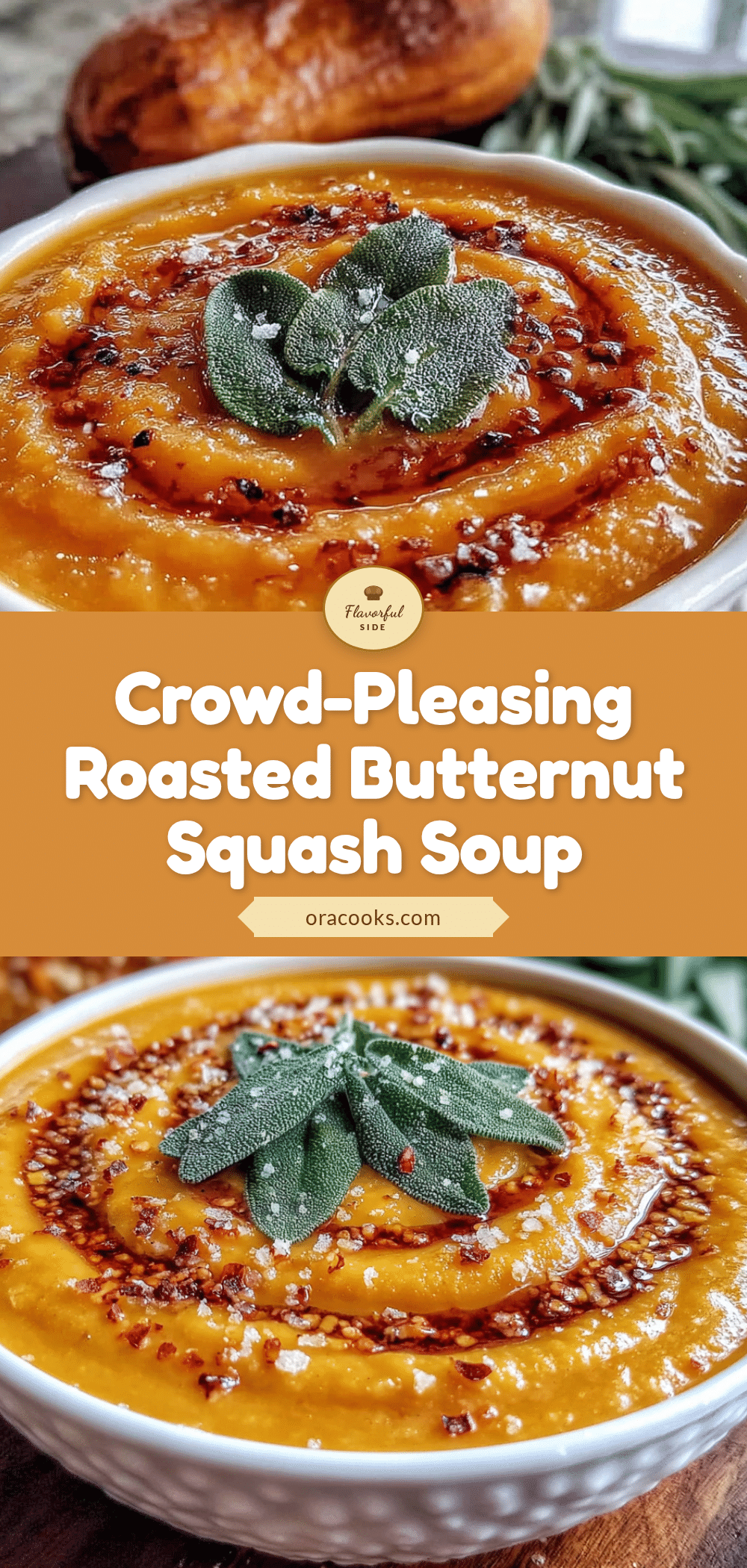
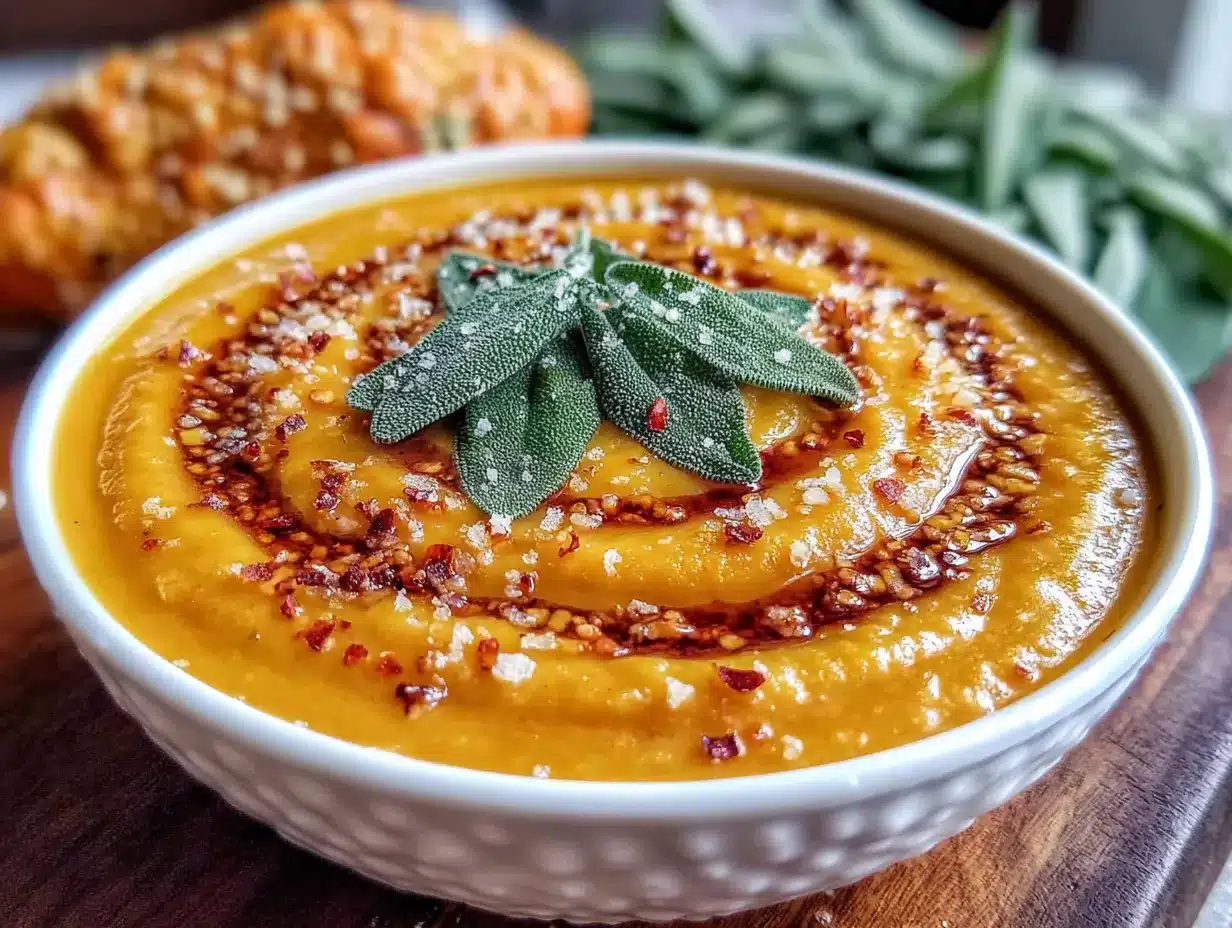
- Serve and garnish. Ladle the soup into bowls. Top with toasted pumpkin seeds, a swirl of extra coconut milk, and a few fresh thyme leaves. Serve hot with crusty bread on the side.
Pro tip for hosts: You can do steps 1 through 9 up to two days in advance. Just reheat gently on the stove, then add the coconut milk right before serving. This makes entertaining so much less stressful.
Cooking Tips & Techniques
I’ve made this soup more times than I can count, and I’ve definitely made my share of mistakes. Here’s what I’ve learned so you don’t have to repeat my errors.
Don’t skip the roasting step. I know it’s tempting to just boil the squash to save time, but roasting is what gives this soup its deep, caramelized flavor. That golden-brown color on the cut side of the squash? That’s pure flavor. Boiling just doesn’t create the same magic.
Cut the squash safely. Butternut squash is notoriously hard to cut. If you’re struggling, microwave the whole squash for 2-3 minutes to soften it slightly. Or, you can pierce it with a fork and roast it whole for 20 minutes before cutting. Your knife will thank you, and so will your fingers.
Season as you go. Don’t wait until the end to add all the salt. Season the squash before roasting, season the onions as they cook, and taste the soup before blending. Layering the seasoning creates a more complex final flavor.
Blend with caution. Hot soup in a blender is a recipe for disaster. I once had the lid blow off and paint my entire kitchen ceiling orange. It was not my finest moment. Always let the soup cool for at least 10 minutes before blending, and never fill the blender more than halfway.
Adjust the consistency. If your soup is too thick after blending, add more broth or a splash of water until it reaches your desired consistency. If it’s too thin, let it simmer uncovered for a few minutes to reduce and concentrate the flavor.
Variations & Adaptations
This recipe is wonderfully flexible. Here are some ways to make it your own:
Vegan & Dairy-Free: Use olive oil instead of butter, and stick with coconut milk or a dairy-free cream. Vegetable broth works beautifully here. No one will miss the dairy.
Spicy Southwest Version: Add a diced jalapeño (seeds removed if you want less heat) along with the onions. Swap the cumin for chili powder, and stir in a tablespoon of lime juice at the end. Top with crushed tortilla chips and avocado.
Apple & Squash Combo: Roast a peeled and chopped apple (like Honeycrisp or Fuji) alongside the squash. The apple adds a subtle sweetness and fruity note that pairs perfectly with the squash. I tried this on a whim one fall and it’s become my favorite variation.
Herb-Infused: Add a sprig of fresh rosemary or sage to the pot while the soup simmers. Remove the herb sprig before blending. It adds an earthy, aromatic layer that’s perfect for holiday dinners.
Make it a Meal: Stir in a cup of cooked white beans or chickpeas after blending for added protein and fiber. Or serve the soup with a dollop of Greek yogurt and a side of roasted chickpeas for crunch.
Serving & Storage Suggestions
This soup is best served hot, straight from the pot. For a dinner party, I like to ladle it into individual bowls and let guests garnish their own. Set out small bowls of toasted pumpkin seeds, extra coconut milk, fresh herbs, and maybe some crispy bacon bits for the non-vegetarians.
What to serve alongside: A crusty sourdough or French baguette is perfect for dipping. A simple green salad with a tangy vinaigrette balances the soup’s richness. For a heartier meal, serve with a grilled cheese sandwich — it’s a classic pairing for a reason.
Storage: Let the soup cool completely before storing. Transfer to an airtight container and refrigerate for up to 5 days. The flavors actually deepen and meld together overnight, so leftovers often taste even better.
Freezing: This soup freezes beautifully. Pour cooled soup into freezer-safe containers or zip-top bags, leaving an inch of headroom for expansion. Freeze for up to 3 months. Thaw overnight in the refrigerator before reheating.
Reheating: Gently reheat the soup on the stovetop over medium-low heat, stirring occasionally. If it’s too thick after thawing, add a splash of broth or water. You can also reheat individual portions in the microwave — just cover the bowl and heat in 1-minute intervals, stirring between each.
Nutritional Information & Benefits
Here’s an approximate nutritional breakdown per serving (based on 6 servings):
- Calories: 220
- Fat: 12g
- Carbohydrates: 28g
- Fiber: 6g
- Protein: 4g
- Sugar: 8g (naturally occurring)
Butternut squash is a nutritional powerhouse. It’s loaded with vitamin A (one serving provides over 100% of your daily needs), vitamin C, potassium, and fiber. The roasting process actually makes the antioxidants more bioavailable, so your body can absorb them better. The coconut milk adds healthy fats that help your body absorb the fat-soluble vitamins in the squash.
This soup is naturally gluten-free and can be made vegan with a simple swap. It’s also relatively low in calories for such a satisfying dish, making it a great option if you’re watching your intake without sacrificing flavor.
I personally love that I can serve this to a crowd and feel good about what they’re eating. It’s comfort food that actually nourishes you — the best kind of cooking, if you ask me.
Conclusion
This roasted butternut squash soup has become my go-to for every fall gathering, and I think it’s about to become yours too. It’s the recipe that proves you don’t need complicated techniques or a dozen ingredients to make something truly memorable. Just good squash, a hot oven, and a little bit of time.
I love how forgiving this soup is — you can tweak the spices, swap the cream, add extra veggies, and it always turns out delicious. It’s the kind of recipe that builds your confidence in the kitchen because it’s hard to mess up. And when you serve it to friends and family, watching them go back for seconds? That’s the best feeling.
So go ahead and give it a try. Make it for your next potluck, your Thanksgiving dinner, or just a cozy night in. And when you do, I’d love to hear how it turned out. Did you add your own twist? Did it win over any skeptics? Drop a comment below and share your experience — your story might inspire someone else to get in the kitchen too.
Happy cooking, friends!
Frequently Asked Questions
Can I use frozen butternut squash instead of fresh?
Yes, you can! Frozen butternut squash is already peeled and cubed, which saves prep time. However, roasting frozen squash can be trickier because it releases more water. For best results, spread the frozen cubes on a baking sheet, drizzle with oil, and roast at 425°F (220°C) for 30-40 minutes until tender and caramelized. The texture won’t be quite as concentrated as fresh, but it still makes a delicious soup.
How do I make this soup thicker or thinner?
For a thicker soup, use less broth (start with 3 cups instead of 4) or let the soup simmer uncovered for 10-15 minutes after blending to reduce it. For a thinner soup, simply stir in additional broth or water until it reaches your desired consistency. Remember that the soup will thicken slightly as it cools.
Can I make this soup ahead of time for a party?
Absolutely! This is one of the best make-ahead recipes. Prepare the soup completely through step 9 (blending), then let it cool and refrigerate for up to 2 days. When you’re ready to serve, gently reheat the soup on the stove, then stir in the coconut milk right before serving. The flavors actually improve after a day in the fridge.
Is this soup spicy?
The recipe as written has a very mild warmth from the cayenne pepper — it’s more of a background note than an actual heat. If you’re sensitive to spice, simply omit the cayenne. If you love heat, feel free to add an extra pinch or even a diced jalapeño with the onions. You can always add more heat at the end, but you can’t take it out.
Can I use a different type of squash?
Yes! This recipe works well with other winter squashes. Kabocha squash (also called Japanese pumpkin) gives an extra creamy texture. Acorn squash works but has a milder flavor, so you might want to roast an extra clove of garlic to compensate. Buttercup or honeynut squash are also excellent choices. Just avoid spaghetti squash — it has a very different texture and won’t create the same creamy soup.
Pin This Recipe!