Love this? Save it for later!
Share the inspiration with your friends
I had refused to touch sauerkraut for almost thirty years. Honestly, the smell alone sent me running from the kitchen as a kid, and I carried that grudge well into adulthood. Then last October, my neighbor Klaus knocked on my door holding a cast iron skillet and a sheepish grin. He had made his grandmother’s Oktoberfest dinner and needed someone to taste it before his in-laws arrived. I took a forkful out of pure politeness, expecting to fake a smile. Instead, I found myself standing in his doorway, eating straight from the pan while the autumn wind whipped around us. He caught me scraping the last bits of caramelized onion off the bottom with my finger. I mean, there was no denying it at that point. That skillet changed everything I thought I knew about bratwurst and sauerkraut, and now it has become the dish I reach for every time the leaves start turning. Maybe you have been on the fence about sauerkraut too, or maybe you already love it and just need a quicker way to get that cozy Oktoberfest feeling on a Tuesday night. Either way, this recipe is the one that stuck with me, and I keep making it because it tastes like someone gave you a warm hug from the inside out.
Why You Will Love This Recipe
This isn’t just another sausage dinner. After testing this skillet at least a dozen times across different stoves and even a campfire once, I can tell you it delivers every single time without stress or complicated techniques.
- Quick and Easy: From fridge to table in under 30 minutes, making it perfect for those busy weeknights when you still want something that feels special.
- Simple Ingredients: Everything comes from a standard grocery store. No hunting down specialty items or spending a fortune.
- Perfect for Oktoberfest at Home: Whether you are hosting a party or just craving that beer hall vibe, this skillet brings the festivity without the crowd.
- Crowd-Pleaser: I have served this to picky kids, skeptical in-laws, and genuine bratwurst connoisseurs. The pan comes back empty every time.
- Unbelievably Delicious: The way the bratwurst browns in its own juices while the sauerkraut soaks up all those savory flavors is next-level comfort food that makes you close your eyes after the first bite.
What makes this recipe different from the rest is the two-step caramelization process. Most recipes just dump everything in one pan and hope for the best. I brown the brats first to build a crust, then let them finish cooking in the sauerkraut mixture so they stay juicy on the inside. It is a small extra step that makes a huge difference in texture and depth of flavor.
This recipe isnt just good. It is the kind that makes you text your friends a photo with the caption “guess what I just made” before you even sit down to eat. It is comfort food reimagined, faster than you thought possible, but with the same soul-soothing satisfaction that makes you feel like you are wrapped in a wool blanket with a stein of something warm.
What Ingredients You Will Need
This recipe uses simple, hearty ingredients that come together to create that signature Oktoberfest flavor without any fuss. Most of these are pantry staples or easy to find at any grocery store.
- 4 bratwurst sausages, fully cooked or fresh (I prefer Johnsonville or a local butcher brand for the best snap when you bite into them)
- 1 tablespoon olive oil (or any neutral cooking oil with a high smoke point)
- 1 medium yellow onion, thinly sliced (adds sweetness as it caramelizes)
- 2 cloves garlic, minced (fresh is best, but jarred works in a pinch)
- 1 can (14 ounces) sauerkraut, drained but not rinsed (look for refrigerated sauerkraut in the deli section for better texture and flavor than the shelf-stable cans)
- 1/2 cup chicken broth (low-sodium preferred so you can control the salt level)
- 1/2 cup beer, preferably a German-style lager or ale (optional but highly recommended for that authentic flavor; use extra broth if skipping)
- 1 teaspoon caraway seeds (adds that classic rye bread note that pairs perfectly with bratwurst)
- 1/2 teaspoon smoked paprika (gives a subtle smokiness without overpowering)
- 1 bay leaf (removed before serving, adds depth)
- Salt and black pepper to taste (go easy on the salt since the brats and sauerkraut are already salty)
- Fresh parsley, chopped for garnish (optional but adds a nice pop of color)
For the beer, I recommend a straightforward lager like Warsteiner or Spaten. Nothing too hoppy or dark, you want the maltiness to complement the brats, not compete with them. If you prefer not to use beer, just replace it with an equal amount of additional chicken broth. The dish will still be delicious, just slightly less complex.
When choosing sauerkraut, look for bags or jars in the refrigerated section rather than cans on the shelf. The refrigerated kind has a crunchier texture and a brighter, tangier flavor that holds up better during cooking. I have tried both, and honestly, the difference is noticeable enough that I always go for the cold stuff now.
Equipment Needed
You do not need a fancy kitchen to pull this off. Here is what you will need:
- Large cast iron skillet or heavy-bottomed skillet (12-inch works best; cast iron holds heat beautifully and gives the brats a gorgeous sear)
- Sharp knife and cutting board for slicing the onion and mincing garlic
- Tongs for turning the bratwurst without piercing them (poking them lets the juices escape)
- Wooden spoon or spatula for stirring the sauerkraut mixture
- Measuring cups and spoons
- Lid or foil to cover the skillet while the brats finish cooking
If you do not have a cast iron skillet, any heavy-bottomed pan will work. I have made this in a stainless steel skillet and even an electric skillet when camping. The key is even heat distribution, so avoid thin nonstick pans if you can. They just do not get hot enough to give the brats that beautiful brown crust.
One tip I learned the hard way, make sure your skillet has a lid that fits well. The first time I made this, I used a baking sheet as a makeshift cover and lost way too much steam. The brats came out drier than I wanted. A tight-fitting lid makes all the difference for keeping everything moist.
Preparation Method
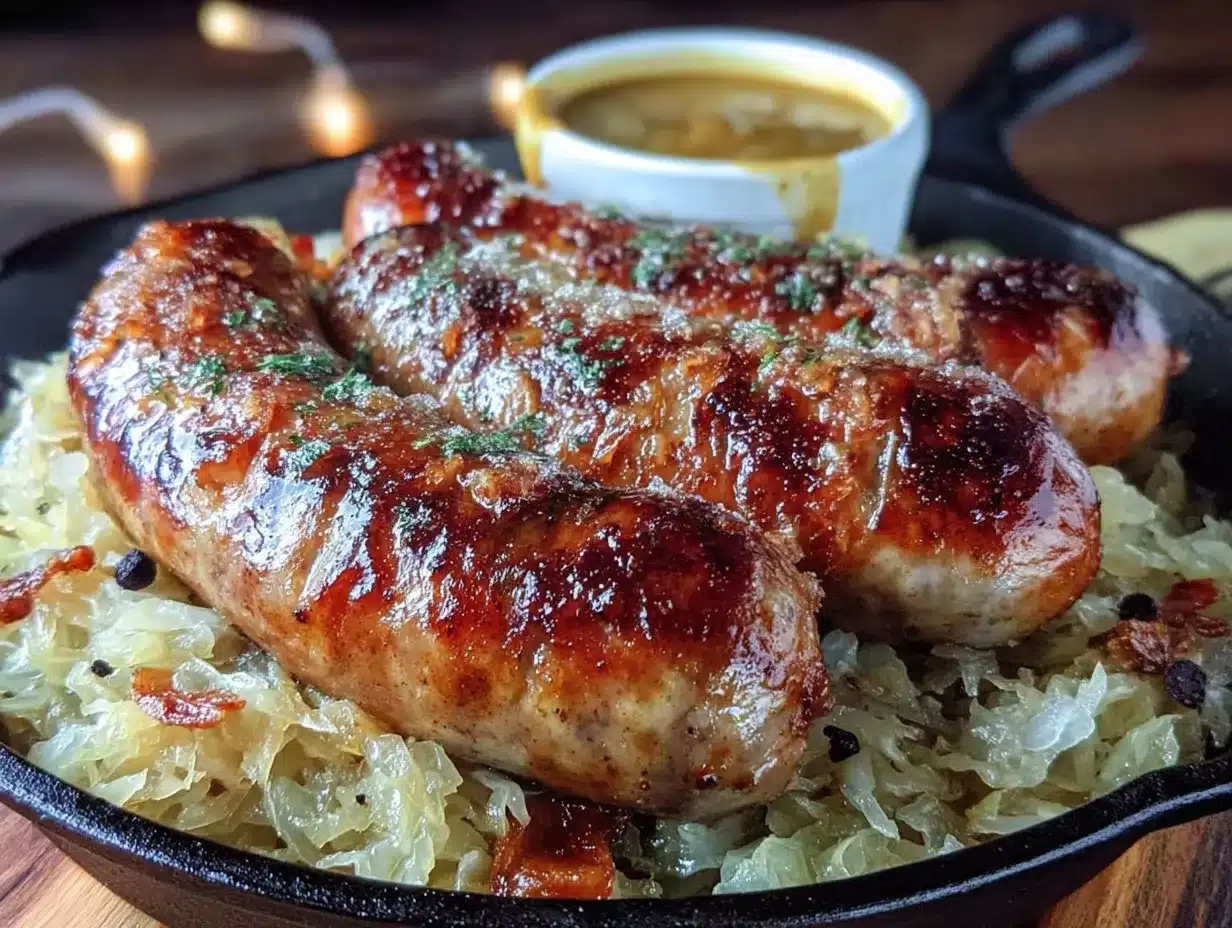
Let me walk you through this step by step. Trust me, it is easier than it sounds, and the whole thing comes together in about 25 minutes.
- Prep your ingredients first. Slice the onion thinly, mince the garlic, and drain the sauerkraut. Having everything ready before you start cooking makes the process smooth and prevents that panicked scramble for ingredients while something is burning.
- Heat your skillet over medium-high heat. Add the olive oil and let it shimmer for about 30 seconds. The oil should be hot but not smoking. If you see wisps of smoke, turn the heat down slightly.
- Brown the bratwurst. Place the brats in the hot skillet, making sure they are not touching each other. Let them cook undisturbed for 3 to 4 minutes until the bottoms are deeply browned. Use tongs to turn them and brown the other sides. You want a nice golden-brown crust all around, about 8 to 10 minutes total. Do not poke them with a fork. The juices inside are what keep them tender.
- Remove the brats and set them aside on a plate. They will not be fully cooked through at this point, and that is okay. They will finish cooking later in the sauerkraut mixture.
- Cook the onions in the same skillet. Reduce the heat to medium and add the sliced onions. Stir them around, scraping up any browned bits from the bottom of the pan. Those bits are packed with flavor. Cook the onions for 5 to 6 minutes, stirring occasionally, until they are soft and starting to turn golden at the edges.
- Add the garlic. Stir in the minced garlic and cook for 30 seconds until fragrant. Garlic burns quickly, so keep it moving and do not walk away.
- Add the sauerkraut, broth, beer, caraway seeds, smoked paprika, and bay leaf. Stir everything together until well combined. The liquid should be bubbling gently around the edges.
- Return the bratwurst to the skillet. Nestle them down into the sauerkraut mixture so they are partially submerged. Spoon some of the sauerkraut over the tops of the brats for extra flavor.
- Cover the skillet and reduce the heat to low. Let everything simmer together for 10 to 12 minutes. The brats will finish cooking through, and the flavors will meld beautifully. The kitchen will start smelling like a cozy German beer hall around minute five.
- Remove the bay leaf and check for seasoning. Taste the sauerkraut mixture and add salt and pepper if needed. Remember that the brats and sauerkraut are already salty, so go easy.
- Serve immediately. Spoon the sauerkraut onto plates or into shallow bowls, top with the bratwurst, and sprinkle with fresh parsley if using.
One thing I always do, I let the skillet rest off the heat for about two minutes before serving. This allows the juices to settle back into the brats and the sauerkraut to absorb any remaining liquid. The texture is just better that way.
Cooking Tips and Techniques
Over the years, I have made every mistake you can imagine with this dish, so let me save you some trouble.
Do not skip the browning step. I know it is tempting to just dump everything in the pan and let it simmer, but that golden crust on the bratwurst is where the flavor lives. It adds a nutty, savory depth that you simply cannot get any other way. The first time I made this, I was in a hurry and skipped the browning. The result was edible, but honestly, it was boring. Never again.
Watch your heat levels. Medium-high for browning, then low for simmering. If you keep the heat too high after adding the sauerkraut and liquid, the beer will boil off too quickly and the brats will end up dry. You want a gentle simmer, not a rolling boil. Little bubbles around the edges of the pan, not a full eruption in the center.
Let the brats rest before slicing. If you are serving them whole, let them sit in the covered skillet for a couple of minutes after turning off the heat. If you prefer sliced bratwurst, remove them from the pan and let them rest on a cutting board for three minutes before slicing. This keeps the juices inside where they belong.
Timing strategy for a full meal. Start the skillet first, then while it simmers, you can boil some potatoes or warm up some crusty bread. The simmering time is about 12 minutes, which is exactly how long it takes to steam some baby potatoes or toast some rye bread in the oven. Multitasking makes the whole dinner come together at the same time.
One mistake I made more than once. I used to rinse the sauerkraut because I thought it would be less sour. Do not do that. The tanginess is what balances the richness of the bratwurst. If you rinse it, you wash away all that character and end up with bland, sad cabbage. Just drain it and let it work its magic.
Variations and Adaptations
This recipe is forgiving and easy to tweak based on what you have or what you are craving.
Dietary adaptations. For a lower-carb version, skip the beer and use all chicken broth. Serve the skillet over mashed cauliflower instead of potatoes. I have done this for friends on keto diets, and they raved about it. For a gluten-free version, use a gluten-free beer or just extra broth. Most bratwurst is gluten-free, but check the label to be sure.
Flavor variations. Add a diced apple to the onions while they cook for a touch of sweetness that pairs beautifully with the tangy sauerkraut. I tried this on a whim one rainy Sunday, and it has become my go-to fall variation. You can also toss in some sliced mushrooms along with the onions for an earthy depth that feels extra cozy.
Different cooking methods. This recipe works great in a slow cooker too. Brown the brats and onions in a skillet first, then transfer everything to a slow cooker and cook on low for 4 to 5 hours. The flavors meld even more deeply, and the house smells incredible all afternoon. Just be aware that the brats will be softer and less snappy than the stovetop version.
Spice it up. If you like heat, add a pinch of red pepper flakes along with the garlic. It does not make the dish spicy, just gives it a little warmth that lingers pleasantly. I do this when I want something a bit more exciting on a cold night.
Serving and Storage Suggestions
This skillet is a complete meal on its own, but a few thoughtful sides can turn it into a feast.
Serving temperature and presentation. Serve the bratwurst and sauerkraut hot, straight from the skillet. Spoon the sauerkraut into shallow bowls or onto plates, then lay the brats on top. A sprinkle of fresh parsley or chives adds color and freshness. For a traditional touch, serve with a dollop of spicy brown mustard on the side.
What to serve alongside. Crusty rye bread or pretzel rolls are perfect for soaking up the juices. German potato salad, boiled potatoes with butter and dill, or a simple side salad with a tangy vinaigrette all work beautifully. If you want to keep things simple, a chunk of good bread and a cold beer are honestly all you need.
Storage instructions. Leftovers keep well in an airtight container in the refrigerator for up to 4 days. The flavors actually deepen overnight, so leftovers taste even better the next day. I often make a double batch just for this reason.
Reheating methods. The best way to reheat is in a skillet over medium-low heat with a splash of broth or water to loosen the sauerkraut. Cover and warm for 5 to 7 minutes, stirring occasionally. You can also microwave individual portions, but the brats will lose their snap. If you are in a hurry, the microwave works fine for the sauerkraut, just reheat the brats separately in a skillet for a minute per side.
Freezer instructions. This dish freezes well for up to 3 months. Let it cool completely, then transfer to a freezer-safe container. Thaw overnight in the refrigerator and reheat in a skillet as described above. The texture of the sauerkraut remains excellent after freezing, which surprised me the first time I tried it.
Nutritional Information and Benefits
Here is the estimated nutritional breakdown per serving, assuming the recipe serves four people with one bratwurst each.
| Nutrient | Amount Per Serving |
|---|---|
| Calories | 380 |
| Protein | 18g |
| Fat | 26g |
| Carbohydrates | 12g |
| Fiber | 4g |
| Sugar | 5g |
| Sodium | 1100mg |
Sauerkraut is a fermented food, which means it is packed with probiotics that support gut health. It also contains vitamin C and fiber, making it more nutritious than you might expect from something that looks like shredded cabbage in a jar. The bratwurst provides protein and B vitamins, while the onions and garlic add antioxidants and anti-inflammatory compounds.
If you are watching your sodium intake, use low-sodium chicken broth and look for reduced-sodium bratwurst. The nutritional values above are estimates and will vary based on the specific brands and ingredients you use.
Conclusion
This Oktoberfest Bratwurst and Sauerkraut Skillet is proof that simple ingredients, treated with a little care, can produce something genuinely memorable. It is quick enough for a Tuesday night, impressive enough for guests, and cozy enough to make you look forward to cold weather. I love this recipe because it reminds me that sometimes the best dishes come from the things we thought we did not like, prepared by someone who knew what they were doing.
I encourage you to make this your own. Swap the beer for broth, add an apple, throw in some mushrooms, or serve it over mashed potatoes. The base recipe is solid, but the variations are where the fun begins. If you try it, I would love to hear how it turned out. Drop a comment below and let me know what twist you added, or just tell me about the look on your family’s faces when they took that first bite. That is honestly my favorite part of sharing recipes.
Until next time, keep your skillet hot and your heart full. Happy cooking
Frequently Asked Questions
Can I use turkey or chicken bratwurst instead of pork?
Absolutely. Turkey or chicken bratwurst works well in this recipe, though they tend to be leaner and slightly drier. Watch the cooking time closely, and consider adding an extra tablespoon of oil to prevent sticking. The overall flavor will still be delicious, just a bit lighter.
Do I have to use beer, or can I skip it?
Beer is optional. If you prefer not to use it, simply replace it with an equal amount of chicken broth. The dish will still taste fantastic, just without that subtle maltiness that beer adds. I have made it both ways many times, and both versions are winners.
How do I keep the bratwurst from drying out?
The key is not overcooking them and not piercing the casings. Brown them just until the crust forms, then let them finish cooking gently in the simmering sauerkraut mixture. Covering the skillet traps steam and keeps everything moist. Also, let them rest for a couple of minutes before serving.
Can I make this ahead of time for a party?
Yes. You can make the entire dish a day ahead and reheat it gently on the stovetop. In fact, the flavors meld and deepen overnight, making it even better the next day. Just add a splash of broth when reheating to loosen the sauerkraut back up.
What is the best way to serve leftovers?
Leftovers are fantastic. Reheat in a skillet with a splash of broth, or use the sauerkraut as a topping for hot dogs or sausages the next day. I have even piled leftovers onto a crusty roll with mustard for an incredible next-day sandwich. There is no wrong way to use them.
Pin This Recipe!

Best Easy Oktoberfest Bratwurst and Sauerkraut Skillet Recipe

This quick and easy Oktoberfest-inspired skillet features juicy bratwurst browned to perfection and simmered with tangy sauerkraut, caramelized onions, and a touch of beer for a cozy, crowd-pleasing dinner ready in under 30 minutes.
- Prep Time: 10 minutes
- Cook Time: 20 minutes
- Total Time: 30 minutes
- Yield: 4 servings 1x
- Category: Main Course
- Cuisine: German
Ingredients
- 4 bratwurst sausages (fully cooked or fresh)
- 1 tablespoon olive oil
- 1 medium yellow onion, thinly sliced
- 2 cloves garlic, minced
- 1 can (14 ounces) sauerkraut, drained but not rinsed
- 1/2 cup chicken broth (low-sodium preferred)
- 1/2 cup beer (German-style lager or ale, optional; use extra broth if skipping)
- 1 teaspoon caraway seeds
- 1/2 teaspoon smoked paprika
- 1 bay leaf
- Salt and black pepper to taste
- Fresh parsley, chopped for garnish (optional)
Instructions
- Prep your ingredients first: slice the onion thinly, mince the garlic, and drain the sauerkraut.
- Heat your skillet over medium-high heat. Add the olive oil and let it shimmer for about 30 seconds.
- Brown the bratwurst: place the brats in the hot skillet, making sure they are not touching. Cook undisturbed for 3 to 4 minutes until the bottoms are deeply browned. Use tongs to turn them and brown the other sides, about 8 to 10 minutes total. Do not poke them with a fork.
- Remove the brats and set them aside on a plate. They will not be fully cooked through at this point.
- Cook the onions in the same skillet: reduce the heat to medium and add the sliced onions. Stir, scraping up any browned bits from the bottom. Cook for 5 to 6 minutes, stirring occasionally, until soft and starting to turn golden.
- Add the garlic: stir in the minced garlic and cook for 30 seconds until fragrant.
- Add the sauerkraut, broth, beer, caraway seeds, smoked paprika, and bay leaf. Stir everything together until well combined. The liquid should be bubbling gently around the edges.
- Return the bratwurst to the skillet: nestle them down into the sauerkraut mixture so they are partially submerged. Spoon some of the sauerkraut over the tops.
- Cover the skillet and reduce the heat to low. Let everything simmer together for 10 to 12 minutes.
- Remove the bay leaf and check for seasoning. Add salt and pepper if needed.
- Serve immediately: spoon the sauerkraut onto plates or into shallow bowls, top with the bratwurst, and sprinkle with fresh parsley if using.
Notes
Do not skip the browning step; it adds flavor. Watch heat levels: medium-high for browning, then low for simmering. Let the brats rest before slicing to keep juices inside. Do not rinse the sauerkraut; its tanginess balances the dish. For a lower-carb version, skip the beer and use all chicken broth. For a gluten-free version, use gluten-free beer or extra broth. Leftovers keep in the refrigerator for up to 4 days and freeze well for up to 3 months.
Nutrition
- Serving Size: 1 bratwurst with sau
- Calories: 380
- Sugar: 5
- Sodium: 1100
- Fat: 26
- Saturated Fat: 9
- Carbohydrates: 12
- Fiber: 4
- Protein: 18
Keywords: Oktoberfest, bratwurst, sauerkraut, skillet, German, quick dinner, comfort food