Love this? Save it for later!
Share the inspiration with your friends
I wasn’t expecting cooking advice from the plumber, but there I was, standing in my kitchen with a leaky pipe and a half-baked idea for brunch. He was on his knees under the sink, wrench in hand, when he started talking about this cinnamon pull-apart bread his grandmother used to make. Honestly, I was just nodding politely, trying to remember if I’d paid the water bill. But then he described how she’d use canned biscuits to save time, and I stopped pretending to listen to the dripping pipe. My ears perked up. Canned biscuits? For something that looked and tasted like a fancy bakery creation? He laughed, said it was the only thing he could make without burning water, and scribbled the method on a napkin he pulled from his overalls pocket. That napkin, slightly greasy and smudged with what I hoped was coffee, sat on my counter for three weeks before I finally tried it.
Let me tell you, I was skeptical. I mean, I’ve made cinnamon rolls from scratch, kneaded dough until my arms ached, and waited hours for things to rise. The idea of using refrigerated biscuit dough felt almost like cheating. But that first batch came out of the oven, and the smell—warm sugar, butter, and cinnamon—filled every corner of my apartment. The plumber was right. It was absurdly good. The pieces pulled apart with this perfect sticky resistance, each one coated in a caramelized cinnamon coating that was somehow both crunchy and gooey. I ate three pieces standing over the pan, burning my fingers because I couldn’t wait for it to cool. Maybe you’ve been there, hovering over a hot baking dish, telling yourself you’ll only have one bite.
What got me, though, was how forgiving this recipe is. You can’t really mess it up. Overmix the coating? It still tastes incredible. Forget to grease the pan enough? Just scrape it out with a spoon. It’s the kind of recipe that makes you look like a hero with almost zero effort. That plumber? I ran into him a few months later at the hardware store, and I told him his grandmother’s monkey bread had become my go-to for every potluck and lazy Sunday morning. He just grinned and said, “Told you.” And he was right. This quick pull-apart cinnamon monkey bread has saved me more times than I can count, and it always, always disappears first.
Why You’ll Love This Recipe
This isn’t just another monkey bread recipe. After testing this dozens of times—burning a few batches, undercooking others, and tweaking the sugar-to-cinnamon ratio until it was just right—I can confidently say this version is the one you’ll come back to. Here’s why it stands out:
- Quick & Easy: From start to finish, this comes together in under 30 minutes. No yeast, no rising time, no complicated techniques. It’s perfect for those mornings when you want something special but don’t have hours to spare.
- Simple Ingredients: You probably already have everything in your pantry and fridge right now. Canned biscuits, butter, brown sugar, cinnamon, and vanilla. That’s it. No fancy grocery store trips required.
- Perfect for Any Occasion: This works for holiday mornings, weekend brunches, potlucks, sleepovers, or just a random Tuesday when you need something sweet. It’s versatile like that.
- Crowd-Pleaser: I’ve served this to kids, picky eaters, and serious food snobs. Every single person goes back for seconds. It’s the kind of dish that makes people close their eyes and say “mmm” without thinking.
- Unbelievably Delicious: The texture is what gets you. The outside of each piece gets slightly crispy and caramelized, while the inside stays soft and pillowy. It’s like cinnamon rolls and sticky buns had a beautiful, easy-to-make baby.
What makes this version different from all the others? It’s the butter-to-sugar ratio. I spent a good three batches figuring this out. Too much butter, and the bottom gets soggy. Too little, and the coating doesn’t stick. This recipe hits that sweet spot where each piece is coated in a glossy, crunchy shell without being greasy. Plus, I add a splash of vanilla to the butter mixture—it’s a small thing, but it rounds out the flavor in a way that makes people ask, “What’s your secret?”
This is comfort food at its finest. It’s the kind of recipe that makes you feel like you’ve got it all together, even when you’re running on three hours of sleep and haven’t washed your hair. It’s warm, it’s sticky, and it’s absolutely worth every single calorie.
What Ingredients You Will Need
This recipe uses simple, everyday ingredients to create something that tastes like you spent hours in the kitchen. The magic is in how they come together, not in fancy or hard-to-find items.
- Canned Buttermilk Biscuits (16.3 oz, 8 count): This is the shortcut that makes everything possible. I recommend Pillsbury Grands! Buttermilk Biscuits for the best texture. They’re fluffier and hold up better than the smaller cans. You’ll need two cans for a standard bundt pan.
- Granulated Sugar (1 cup): This creates the crunchy coating on the outside of each piece. Don’t use powdered sugar—it won’t give you that caramelized texture.
- Ground Cinnamon (2 tablespoons): Use fresh cinnamon for the best flavor. I like Saigon cinnamon for its bold, warm taste. It makes a noticeable difference.
- Unsalted Butter (½ cup, 1 stick): Salted butter works in a pinch, but unsalted gives you more control over the overall saltiness. Cut it into pieces so it melts evenly.
- Brown Sugar (1 cup, packed): Light or dark brown sugar both work. Dark brown sugar gives a deeper, more molasses-like flavor. Pack it firmly into your measuring cup.
- Vanilla Extract (1 teaspoon): Pure vanilla extract is worth it here. It enhances the sweetness and adds warmth. Imitation vanilla works, but the flavor won’t be as rich.
- Optional Add-Ins: Chopped pecans or walnuts (½ cup) sprinkled in the pan add nice crunch. Raisins or dried cranberries work too, but they can burn if placed on top.
Ingredient Selection Tips: For the biscuits, look for the big, flaky layers kind—not the small, flat ones. The texture is completely different. If you can only find the smaller biscuits, you’ll need three cans instead of two. For the brown sugar, if it’s hard as a rock, microwave it with a damp paper towel for 15 seconds to soften it up. And please, don’t skip the vanilla. It’s not in most monkey bread recipes, but trust me, it’s the secret ingredient that makes people think you did something fancy.
Substitution Guidance: Need this dairy-free? Use plant-based butter and check your biscuit ingredients—some canned biscuits contain milk. For a gluten-free version, use gluten-free canned biscuits. They exist, but the texture will be slightly different—less fluffy, more dense. If you’re watching sugar, you can reduce the brown sugar by a quarter cup, but the coating won’t be as sticky and caramelized.
Equipment Needed
You don’t need a professional kitchen for this. Here’s what you’ll actually use:
- Bundt Pan (10-12 cup): This is non-negotiable. The center tube allows heat to circulate, cooking the middle pieces evenly. A 9-inch round cake pan works in a pinch, but the center pieces won’t cook as well. I’ve tried both—the bundt pan wins every time.
- Mixing Bowls (2 medium): One for the cinnamon-sugar mixture, one for the butter-brown sugar sauce. Nothing fancy needed.
- Sharp Knife or Kitchen Shears: For cutting the biscuits into quarters. Kitchen shears are actually easier and less messy than a knife. I use my regular kitchen scissors and wash them right after.
- Saucepan (small): For melting the butter and brown sugar together. A microwave-safe bowl works too—just microwave in 30-second bursts, stirring in between.
- Measuring Cups and Spoons: Standard set. Make sure your measuring cup for brown sugar is dry.
- Cooling Rack: Optional but helpful. Letting the bread cool in the pan for 5 minutes, then inverting it onto a rack prevents the bottom from getting soggy.
- Serving Plate (large, with a lip): The caramel sauce will drip, so a plate with a slight rim catches it. Trust me on this.
Budget-Friendly Options: Don’t have a bundt pan? Check thrift stores—I found mine for three dollars. You can also use a 9×13 baking dish, but the pieces won’t pull apart as neatly. Just arrange them in a single layer and bake for slightly less time. A silicone bundt pan works great too, and you don’t even need to grease it.
Maintenance Tip: After making monkey bread, soak your pan in hot soapy water immediately. The caramelized sugar hardens like cement if you wait. I learned this the hard way and spent an hour scrubbing.
Preparation Method
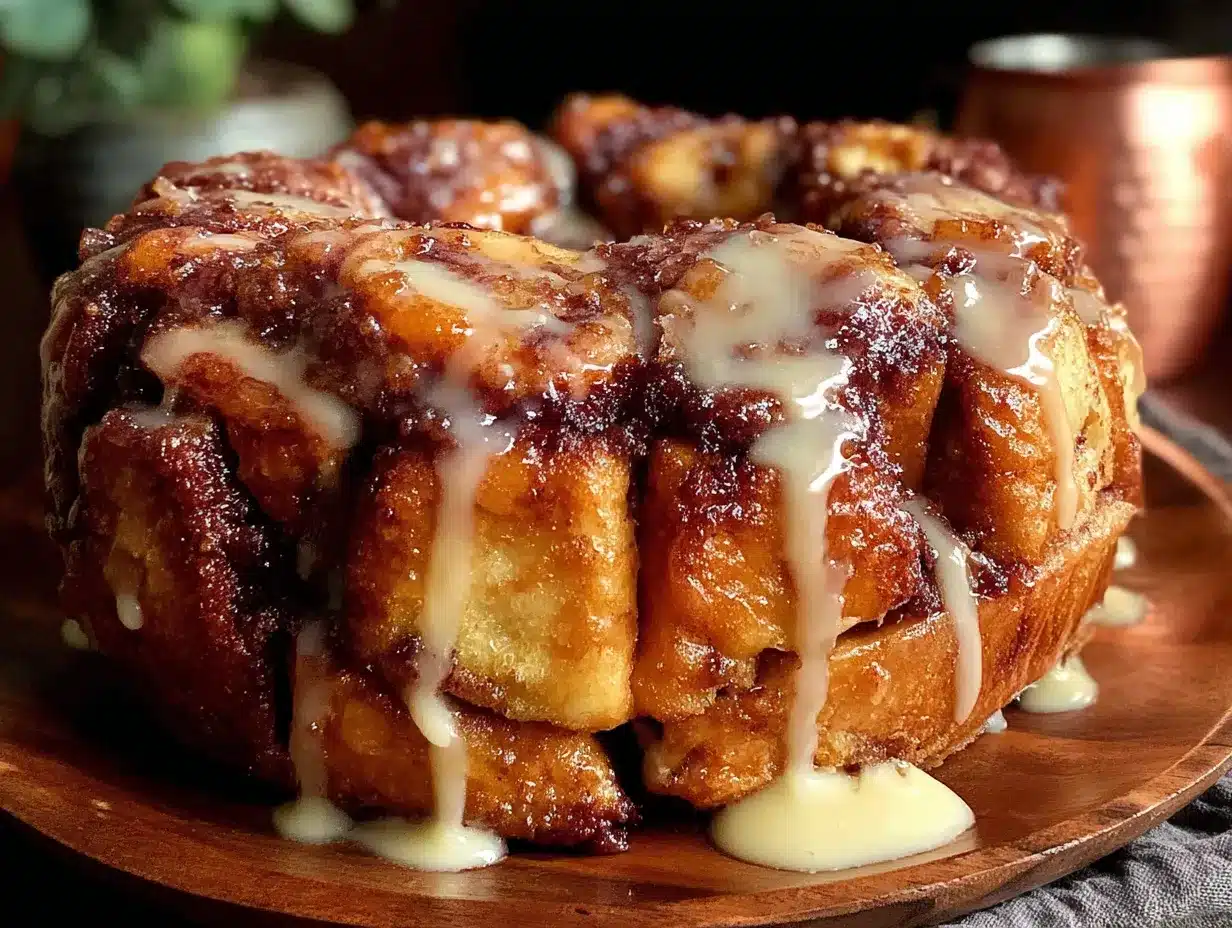
Let’s get to the fun part. This comes together fast, so read through everything once before you start. Trust me—you don’t want to be mid-recipe with melted butter going cold while you search for the cinnamon.
- Preheat your oven to 350°F (175°C). Position the rack in the center. While it’s heating, generously grease your bundt pan with butter or non-stick spray. Don’t skimp here—every nook and cranny needs coating. I use a pastry brush to get into all the ridges. If you’re using a non-stick pan, grease it anyway. The sugar mixture will stick to anything.
- Open both cans of biscuits. Separate each biscuit and cut it into quarters. You should have about 64 pieces total. A sharp knife works, but I find kitchen shears faster and less messy. Just snip each biscuit into four roughly equal pieces. They don’t need to be perfect—rustic is fine.
- In a medium bowl, whisk together 1 cup granulated sugar and 2 tablespoons ground cinnamon. Make sure there are no clumps. I use a fork to break up any cinnamon lumps. The mixture should look like sandy, reddish-brown beach sand.
- Working in batches, toss the biscuit pieces in the cinnamon-sugar mixture. Drop about 10-12 pieces in at a time, shake the bowl gently, and make sure each piece is fully coated. Don’t rush this step. Bare spots mean less flavor. Use your hands if needed—it gets messy, but that’s part of the fun.
- Arrange the coated pieces in the prepared bundt pan. Don’t just dump them all in at once. Place them in an even layer, slightly overlapping. Sprinkle any remaining cinnamon-sugar mixture over the top. If you’re adding nuts or dried fruit, sprinkle them between layers now.
- In a small saucepan over medium heat, melt ½ cup unsalted butter with 1 cup packed brown sugar and 1 teaspoon vanilla extract. Stir constantly until the butter is melted and the sugar has dissolved, about 2-3 minutes. The mixture should be smooth and bubbly. Don’t walk away—it can burn quickly. If using the microwave, heat in 30-second bursts, stirring each time.
- Pour the butter-brown sugar mixture evenly over the biscuit pieces. Try to cover as much surface area as possible. Use a spatula to scrape every last drop from the pan. This is the sauce that makes everything sticky and glorious.
- Bake for 25-30 minutes, or until the top is deep golden brown and the edges are bubbling. The kitchen will smell like a cinnamon roll bakery at this point. Check at 25 minutes—if the top is browning too fast, tent loosely with foil for the last 5 minutes. The bread is done when a toothpick inserted into the center comes out clean (minus some sticky sauce).
- Let the bread cool in the pan for exactly 5 minutes. This is important. Too short, and it will fall apart when you flip it. Too long, and it will stick to the pan. Set a timer. I’ve ruined batches by getting distracted.
- Place a large serving plate (with a rim!) upside down on top of the pan. Holding both together firmly, carefully flip the pan over. Lift the pan slowly. If any pieces stick, gently coax them out with a butter knife. The caramel sauce will cascade down the sides—that’s what you want.
- Serve warm. This is not a make-ahead-and-serve-later kind of dish. The magic is in the warm, pull-apart texture. Let people grab pieces with their fingers or forks. No plates required, honestly.
Sensory Cues: At step 8, you’ll see the edges bubbling with a deep amber caramel. The top should be a rich golden brown, not pale. You’ll hear a slight sizzle when you pull it from the oven. When you flip it at step 10, the caramel should flow slowly, not run like water. If it’s too runny, it needed a few more minutes in the oven.
Troubleshooting: If your bread is browning too fast on top but still doughy in the center, your oven runs hot. Reduce temperature to 325°F next time. If the caramel is burning before the bread is done, your pan might be too dark—dark pans absorb more heat. Use a lighter-colored pan or reduce oven temperature by 25°F.
Cooking Tips & Techniques
After making this more times than I care to count, I’ve collected a few tricks that make the difference between good monkey bread and unforgettable monkey bread.
Don’t Overcrowd the Pan: I know it’s tempting to cram in as many pieces as possible, but they need room to expand. Leave a little space between pieces. They’ll puff up and create those lovely air pockets that catch the caramel sauce. Overcrowding leads to dense, doughy centers.
The Butter Temperature Matters: When you pour the butter-brown sugar mixture over the biscuits, make sure it’s warm—not boiling, not cold. If it’s too hot, it will partially cook the biscuit pieces before they even go in the oven. If it’s cold, it won’t spread evenly. Aim for warm enough that the butter is fully liquid but not bubbling aggressively.
My Biggest Failure: The first time I made this, I forgot to grease the pan. I mean, I read the recipe, nodded, and then just… skipped it. The result was a cinnamon-sugar disaster that required a chisel to remove from the pan. I ended up serving it in chunks, telling everyone it was “deconstructed monkey bread.” They were nice about it, but I learned my lesson. Grease. The. Pan.
Timing Strategy: This recipe moves fast, so have everything prepped before you start. Open the biscuit cans, measure the sugar and cinnamon, cut the butter. Once you start coating and layering, you won’t have time to search for ingredients. I lay everything out on the counter like I’m on a cooking show.
Consistency Check: If your caramel sauce seems too thin after baking, you might have used low-fat butter or a different brand of brown sugar. Stick with full-fat butter and firmly packed brown sugar for the best results. The sauce should be thick enough to coat the back of a spoon.
Make It Ahead (Sort Of): You can coat the biscuit pieces in cinnamon sugar the night before and store them in a ziplock bag in the fridge. In the morning, just arrange them in the pan, make the sauce, and bake. It saves about 10 minutes, which feels like a lot when you’re half asleep.
Variations & Adaptations
This recipe is a canvas. Here are some ways I’ve adapted it over the years:
1. Apple Cinnamon Monkey Bread: Peel and dice one medium apple (Granny Smith works great). Toss the pieces in cinnamon sugar and layer them between the biscuit pieces. The apple softens and releases juice that mingles with the caramel. It’s like apple pie and monkey bread had a beautiful child. I tried this one Thanksgiving morning when I had leftover apples, and it was a hit.
2. Chocolate Lover’s Version: Add ½ cup mini chocolate chips to the cinnamon-sugar mixture. Toss the biscuit pieces as usual. The chocolate melts into the crevices, creating gooey pockets. Use dark chocolate chips for a less sweet version. My kids go crazy for this one, but honestly, so do I.
3. Savory Monkey Bread: Yes, this works. Skip the cinnamon and sugar. Instead, toss the biscuit pieces in melted butter mixed with garlic powder, dried rosemary, and grated Parmesan cheese. Layer with shredded mozzarella and bake as directed. Serve with marinara sauce for dipping. It’s perfect for game day or as a side with soup.
4. Pumpkin Spice Monkey Bread (Fall Edition): Add 1 teaspoon pumpkin pie spice to the cinnamon-sugar mixture. Replace 2 tablespoons of the butter with pumpkin puree (just whisk it into the warm butter mixture). The pumpkin adds moisture and a subtle earthy sweetness. I make this every October and it never lasts long.
5. Gluten-Free Adaptation: Use gluten-free canned biscuits. The texture will be slightly denser and less fluffy, but the flavor is still there. Reduce baking time by 2-3 minutes and check early. Gluten-free baked goods can dry out faster.
Dietary Adjustments: For a lower-sugar version, reduce the granulated sugar to ¾ cup and the brown sugar to ¾ cup. The coating won’t be as crunchy, but it’s still delicious. For a vegan version, use plant-based butter and check that your biscuits are vegan—some brands use buttermilk.
Serving & Storage Suggestions
Serving: This is best served warm, straight from the oven. The ideal temperature is about 10 minutes after it comes out—hot enough that the caramel is still soft, but cool enough that you won’t burn your mouth. Place the whole thing on a large plate with a lip (the caramel will pool at the bottom). Let people pull off pieces with their fingers. Forks are optional. I like to set out small plates and napkins because things get sticky.
What to Serve With It: A cup of strong black coffee or cold milk is the classic pairing. For brunch, serve it alongside scrambled eggs and bacon to balance the sweetness. A dollop of Greek yogurt or crème fraîche cuts through the sugar nicely. Fresh berries on the side add brightness and color.
Storage: Leftover monkey bread (if you have any) should be stored in an airtight container at room temperature for up to 2 days. Do not refrigerate—it will dry out and the caramel will harden into a rock-like substance. I learned this the hard way.
Reheating: The best way to revive leftovers is in the oven. Preheat to 300°F (150°C), place the monkey bread on a baking sheet, and warm for 5-7 minutes. The microwave works in a pinch (20 seconds per piece), but the texture won’t be as good—the caramel gets chewy instead of gooey. If you’re reheating the whole thing, cover with foil to prevent the top from burning.
Freezing: You can freeze the baked monkey bread for up to 1 month. Wrap it tightly in plastic wrap, then foil. To serve, thaw overnight in the fridge, then reheat in a 300°F oven for 10 minutes. The texture won’t be quite as fresh, but it’s still pretty great for a frozen treat.
How Flavors Develop: Honestly, this is best fresh. The caramel coating loses its crunch after a few hours. But if you have leftovers, they make an amazing bread pudding base. Just chop the pieces, soak in a custard mixture (eggs, milk, vanilla), and bake. Waste not, want not.
Nutritional Information & Benefits
Let’s be real—this is a treat, not a health food. But here’s what you’re working with per serving (based on 12 servings):
| Nutrient | Amount per Serving |
|---|---|
| Calories | 380 |
| Total Fat | 18g |
| Saturated Fat | 10g |
| Carbohydrates | 52g |
| Sugar | 32g |
| Protein | 4g |
| Sodium | 520mg |
Health Highlights: On the plus side, cinnamon is packed with antioxidants and has anti-inflammatory properties. Some studies suggest it may help regulate blood sugar. The butter provides vitamin A, and the brown sugar offers trace amounts of calcium and iron (though let’s be honest, we’re not eating this for the minerals).
Dietary Considerations: This recipe contains gluten, dairy, and possibly soy (check your biscuit ingredients). It is not vegan, gluten-free, or low-carb as written. For a lighter version, you can reduce the butter by 2 tablespoons and use a sugar substitute in the coating, but the texture will change significantly.
My Personal Take: I don’t make this every week. It’s a special occasion thing—birthday mornings, holiday brunches, or when I need a guaranteed crowd-pleaser. Life is about balance, and sometimes balance means eating monkey bread for breakfast and having a salad for dinner. No regrets.
Conclusion
This quick pull-apart cinnamon monkey bread is more than a recipe—it’s a little piece of joy that takes almost no effort to create. It’s the kind of dish that makes people smile, makes them reach for another piece, and makes them ask for the recipe before they’ve even finished chewing. I’ve made it for brunches, potlucks, lazy Sunday mornings, and even a few weekday breakfasts when I needed something to look forward to. It never fails.
What I love most is how adaptable it is. You can keep it classic, go wild with add-ins, or even make it savory. It’s forgiving, fast, and absolutely delicious. The plumber who shared his grandmother’s method probably had no idea how many times I’d make this, how many people I’d share it with, or how many sticky fingers would reach for just one more piece. But I’m grateful he did.
So go ahead—try it. Make it your own. Burn your fingers on a hot piece straight from the pan. Lick the caramel off your thumb. And when someone asks you for the recipe, tell them it came from a plumber with a napkin and a good memory. They won’t believe you, but that’s part of the fun.
I’d love to hear how yours turns out! Drop a comment below and let me know what variations you tried, or tag me in your photos. Happy baking, friends!
Frequently Asked Questions
1. Can I use homemade biscuit dough instead of canned?
Yes, absolutely. If you have a favorite biscuit recipe, use that. Just make sure the dough is slightly sweet and fluffy. The baking time might increase by 5-10 minutes since homemade dough is denser. The canned version is just faster and more consistent for this recipe.
2. Why did my monkey bread come out raw in the center?
This usually happens when the pan is too crowded or the pieces are too large. Make sure you’re cutting each biscuit into four equal quarters. Also, check your oven temperature—it might run cooler than it says. An oven thermometer is a cheap fix for this problem.
3. Can I make this in a different pan?
A bundt pan is ideal, but you can use a 9×13 baking dish. Arrange the coated pieces in a single layer (they’ll puff up). Bake for 20-25 minutes. The texture will be less pull-apart and more like individual sticky buns, but it’s still delicious.
4. How do I prevent the caramel from burning on the bottom?
If your caramel is burning before the bread is done, your pan might be too dark or your oven too hot. Try reducing the oven temperature by 25°F and placing the pan on the middle rack. You can also add a splash of water to the butter mixture to dilute the sugar slightly.
5. Can I double this recipe?
Yes, but you’ll need two bundt pans. Don’t try to cram everything into one pan—it won’t cook evenly. Make the cinnamon-sugar mixture and butter sauce separately for each batch. Bake them on separate racks, swapping halfway through if your oven has hot spots.
Pin This Recipe!
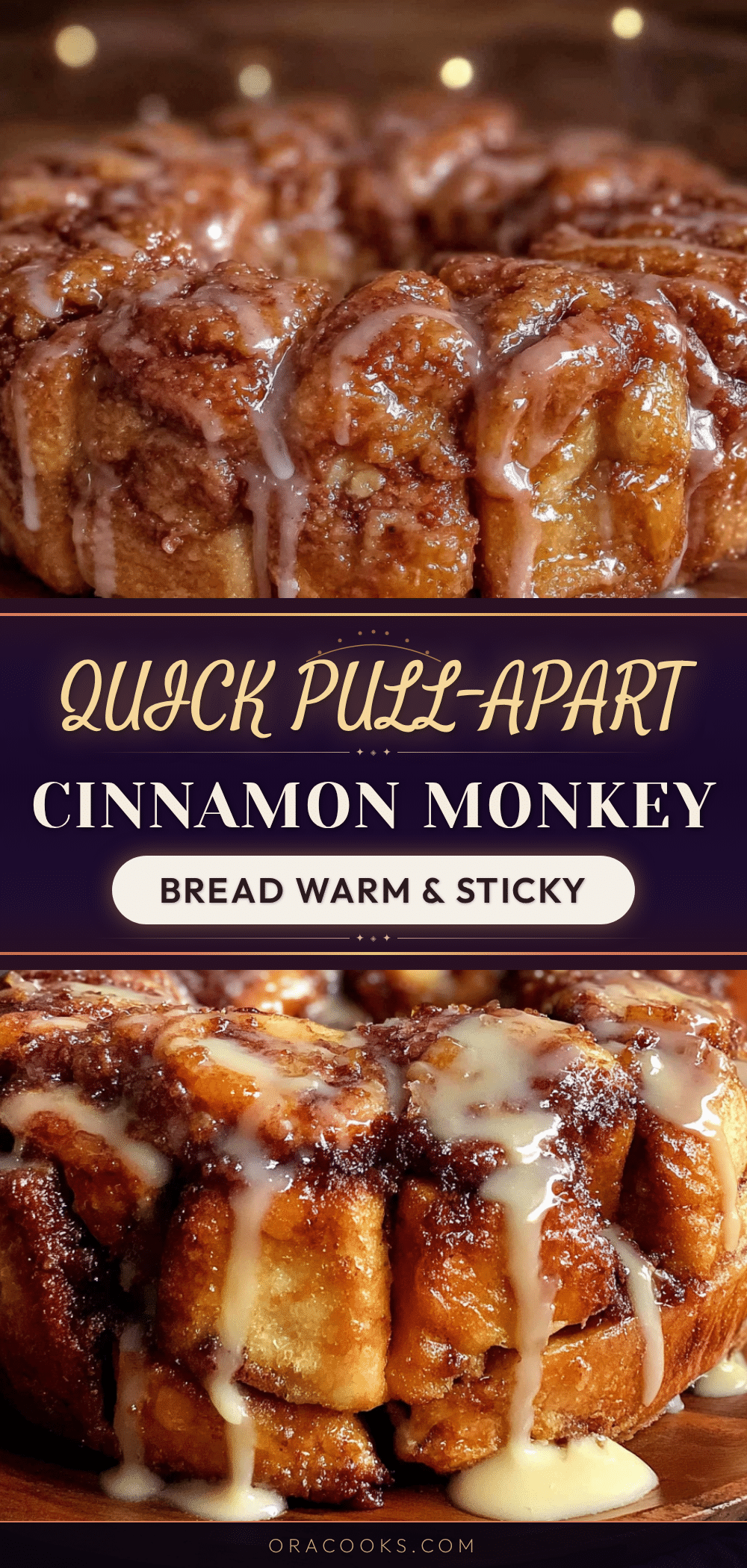
Best Quick Pull-Apart Cinnamon Monkey Bread Recipe
This quick pull-apart cinnamon monkey bread uses canned biscuits for a shortcut, creating a warm, sticky, and caramelized treat that’s perfect for brunch, potlucks, or lazy Sunday mornings. It’s forgiving, fast, and absolutely delicious.
- Prep Time: 10 minutes
- Cook Time: 25-30 minutes
- Total Time: 35-40 minutes
- Yield: 12 servings 1x
- Category: Breakfast, Brunch, Dessert
- Cuisine: American
Ingredients
- 2 cans (16.3 oz each) canned buttermilk biscuits (8 count each, such as Pillsbury Grands!)
- 1 cup granulated sugar
- 2 tablespoons ground cinnamon
- 1/2 cup unsalted butter (1 stick)
- 1 cup packed brown sugar (light or dark)
- 1 teaspoon vanilla extract
- Optional: 1/2 cup chopped pecans or walnuts, raisins, or dried cranberries
Instructions
- Preheat oven to 350°F (175°C). Generously grease a 10-12 cup bundt pan with butter or non-stick spray.
- Open both cans of biscuits. Separate each biscuit and cut into quarters (about 64 pieces total).
- In a medium bowl, whisk together 1 cup granulated sugar and 2 tablespoons ground cinnamon until no clumps remain.
- Working in batches, toss biscuit pieces in the cinnamon-sugar mixture until fully coated.
- Arrange coated pieces in the prepared bundt pan in an even layer, slightly overlapping. Sprinkle any remaining cinnamon-sugar mixture over the top. If using nuts or dried fruit, sprinkle between layers.
- In a small saucepan over medium heat, melt 1/2 cup unsalted butter with 1 cup packed brown sugar and 1 teaspoon vanilla extract. Stir constantly until smooth and bubbly, about 2-3 minutes. (Alternatively, microwave in 30-second bursts, stirring each time.)
- Pour the butter-brown sugar mixture evenly over the biscuit pieces, covering as much surface area as possible.
- Bake for 25-30 minutes, until top is deep golden brown and edges are bubbling. If top browns too fast, tent loosely with foil for last 5 minutes.
- Let bread cool in pan for exactly 5 minutes. Set a timer.
- Place a large serving plate (with a rim) upside down on top of the pan. Holding both firmly, carefully flip the pan over. Lift pan slowly, coaxing out any stuck pieces with a butter knife.
- Serve warm. Let people pull off pieces with their fingers or forks.
Notes
For best results, use full-fat butter and firmly packed brown sugar. Grease the pan thoroughly to prevent sticking. Let the bread cool in the pan for exactly 5 minutes before inverting. Serve warm for the best texture. Leftovers can be stored in an airtight container at room temperature for up to 2 days; reheat in a 300°F oven for 5-7 minutes.
Nutrition
- Serving Size: 1 serving (1/12 of r
- Calories: 380
- Sugar: 32
- Sodium: 520
- Fat: 18
- Saturated Fat: 10
- Carbohydrates: 52
- Fiber: 1
- Protein: 4
Keywords: monkey bread, cinnamon pull-apart bread, quick monkey bread, easy monkey bread, canned biscuit monkey bread, pull-apart bread, cinnamon sugar bread