Love this? Save it for later!
Share the inspiration with your friends
My brother-in-law Mark had claimed to hate squash for thirty-seven years. Thirty-seven years. He’d make this face—you know the one—whenever a roasted vegetable medley showed up at the Thanksgiving table. “That’s for rabbits,” he’d say, pushing the platter toward someone else. Then last November, I made this creamy roasted butternut squash pasta for a small dinner party, and I caught him standing at the kitchen counter, fork already in the dish, scraping the last bit of sauce from the bottom of the pan. He didn’t even try to look innocent about it. “This isn’t squash,” he said, mouth half-full. “This is something else entirely.”
Honestly, I almost didn’t tell him. Part of me wanted to let him believe it was some fancy cheese sauce I’d spent hours perfecting. But I’m not that cruel—well, maybe a little. I let him finish his third helping before I casually mentioned the main ingredient. The look on his face? Priceless. He’s asked me to bring this creamy roasted butternut squash pasta to every family gathering since, and I’ve never seen him turn down a single bite.
Maybe you’ve been there with a skeptic at your table. Someone who’s convinced they don’t like something, and no amount of explaining will change their mind. This recipe does the convincing for you. It’s the kind of dish that makes people close their eyes on the first bite, then ask for the recipe before the plates are cleared. I’ve made it for potlucks, holiday dinners, and casual weeknight meals, and it never fails to get that same reaction. The secret is in the roasting—deep, caramelized, almost sweet—blended into a sauce so velvety you’d swear there was cream involved. There isn’t. Well, a little, but we’ll get to that.
Why You’ll Love This Recipe
I’ve tested this creamy roasted butternut squash pasta at least a dozen times, tweaking the roast time, the garlic ratio, the pasta shape. My neighbor Linda, who runs a small catering business out of her home, tried it and immediately added it to her menu rotation. That’s when I knew this one was special. It’s not just another pasta recipe—it’s the one people remember.
- Deceptively Simple: The ingredient list looks short, but the flavor tastes like you spent all day in the kitchen. Most of the work is hands-off roasting time.
- Perfect for Hosting: You can make the sauce up to three days ahead. When guests arrive, just boil pasta and warm the sauce. No last-minute scrambling while people are standing in your kitchen with wine glasses.
- Naturally Crowd-Pleasing: I’ve served this to toddlers, teenagers, picky eaters, and foodie friends. Everyone loves it. The texture is so smooth and creamy that even squash skeptics (you know who you are) get converted.
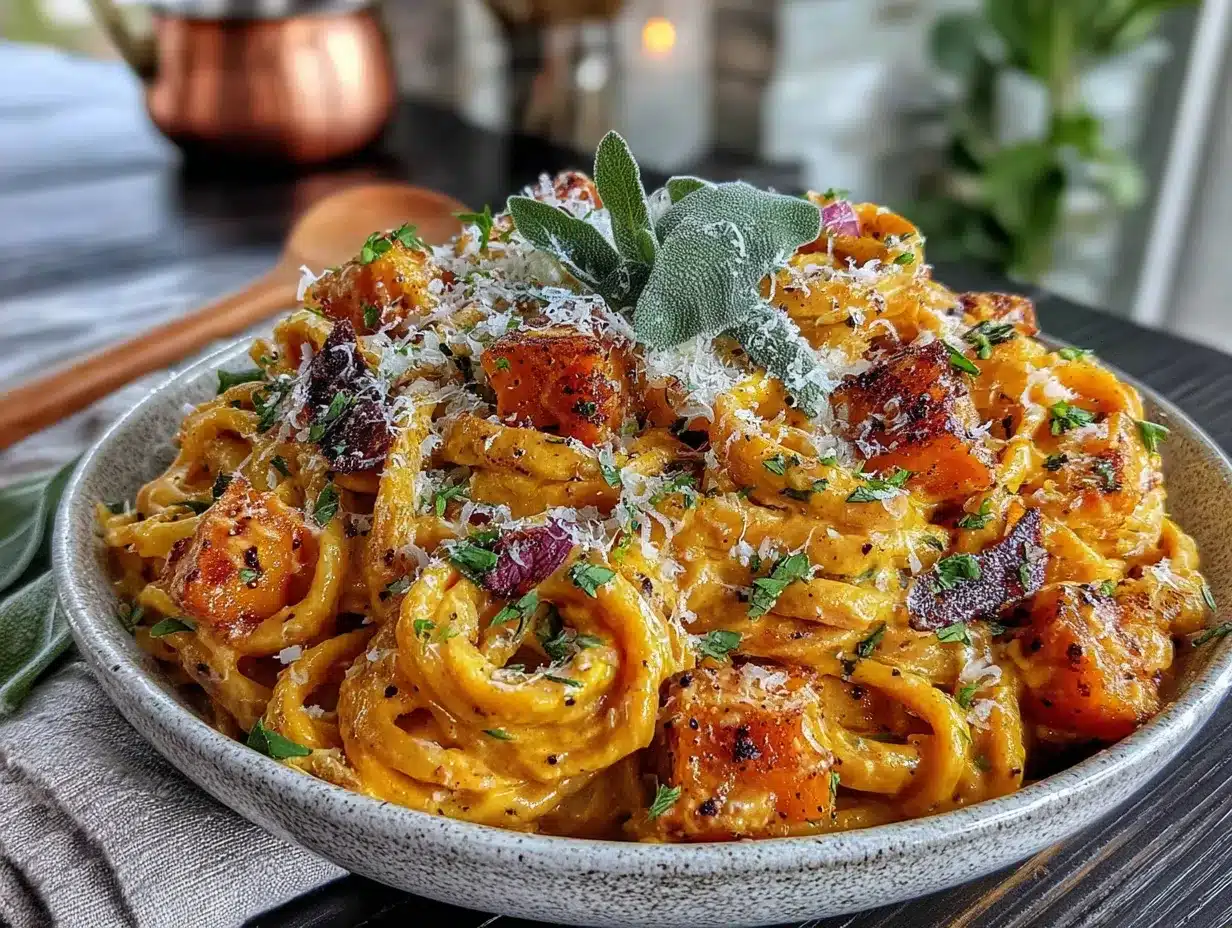
- Impressive Presentation: The golden-orange sauce against al dente pasta, topped with crispy sage and toasted walnuts? It looks like something from a fancy restaurant menu, but you made it in your own kitchen.
- Make-Ahead Friendly: This is the kind of dish you want when hosting. Prep the sauce, store it in the fridge, and finish the pasta right before serving. Your future self will thank you.
What sets this creamy roasted butternut squash pasta apart from other recipes is the roasting process. I don’t boil or steam the squash—I roast it until the edges caramelize and the natural sugars concentrate. That deep, almost nutty sweetness is what makes the sauce so addictive. Plus, I add a touch of nutritional yeast for a subtle cheesy flavor without actual cheese. It’s a little trick I picked up from a vegan friend, and honestly, it works beautifully.
This recipe is comfort food reimagined—healthier than a heavy cream-based sauce, but every bit as satisfying. It’s the kind of meal that makes you feel good about what you’re eating while still feeling indulgent. Perfect for impressing guests without stress, or turning a simple Tuesday dinner into something memorable.
What Ingredients You Will Need
This creamy roasted butternut squash pasta uses simple, wholesome ingredients to deliver bold flavor and satisfying texture without the fuss. Most of these are pantry staples or easy to find at any grocery store. Here’s what you’ll need and why each ingredient matters.
For the Roasted Squash
- 1 medium butternut squash, about 2 to 2.5 pounds (peeled, seeded, and cut into 1-inch cubes) — Look for squash that feels heavy for its size with firm, unblemished skin. Pre-cut squash works in a pinch, but whole squash tends to be fresher and more flavorful.
- 3 tablespoons olive oil, divided — Use a good-quality extra virgin olive oil for roasting. It helps the squash caramelize beautifully.
- 4 cloves garlic, unpeeled — Roasting garlic whole in its skin transforms it into sweet, buttery goodness. You’ll squeeze the soft cloves into the sauce later.
- 1 teaspoon salt — I prefer kosher salt for roasting. It distributes evenly and doesn’t clump.
- ½ teaspoon black pepper — Freshly ground, always. Pre-ground pepper just doesn’t have the same punch.
- ½ teaspoon smoked paprika — This adds a subtle warmth that complements the squash’s sweetness. Regular paprika works too, but smoked adds something special.
For the Creamy Sauce
- 1 cup vegetable broth (low-sodium preferred) — Adds depth and helps thin the sauce to the perfect consistency. Chicken broth works if you’re not keeping it vegetarian.
- ¼ cup heavy cream — Just enough for richness without overwhelming the squash flavor. For a dairy-free version, full-fat coconut milk works beautifully—just don’t use the light stuff.
- 2 tablespoons nutritional yeast — This is my secret ingredient. It adds a savory, almost cheesy flavor that makes the sauce taste more complex. I recommend the brand Bragg for consistent quality.
- 2 tablespoons grated Parmesan cheese (plus more for serving) — Adds saltiness and umami. Pecorino Romano works too, but it’s saltier, so adjust accordingly.
- 1 tablespoon butter — A little butter at the end adds richness and helps emulsify the sauce. Use unsalted so you control the salt level.
For the Pasta and Topping
- 12 ounces pasta — I recommend short, sturdy shapes like rigatoni, fusilli, or penne. They catch the sauce in their ridges and hold up well. Avoid delicate shapes like angel hair—they’ll get lost in the sauce.
- 2 tablespoons fresh sage leaves — Crispy fried sage is non-negotiable in my opinion. It adds an earthy, aromatic note that perfectly balances the sweet squash.
- ¼ cup walnuts, roughly chopped — Toasted until fragrant, they add crunch and a slightly bitter contrast. Pine nuts work too, but walnuts are more budget-friendly.
- 1 tablespoon olive oil (for frying sage and walnuts)
Substitution Notes
If you’re gluten-free, use your favorite gluten-free pasta—just cook it al dente since gluten-free varieties can get mushy quickly. For a dairy-free version, skip the cream, butter, and Parmesan, and use full-fat coconut milk plus an extra tablespoon of nutritional yeast. The sauce will still be creamy and delicious, just with a slightly different flavor profile. And if you can’t find fresh sage, dried sage works in a pinch—use about half the amount and add it to the sauce instead of frying.
Equipment Needed
You don’t need a fancy kitchen to make this creamy roasted butternut squash pasta. Here’s what you’ll need, along with some tips from my own trial and error.
- Baking sheet — A rimmed baking sheet works best. The rim catches any juices from the squash and prevents spills. I use a half-sheet pan, which fits a medium squash perfectly. Line it with parchment paper for easier cleanup.
- Blender or food processor — A high-speed blender like a Vitamix will give you the silkiest sauce, but a regular blender or food processor works fine. Just blend a little longer to get it smooth. If using a food processor, you might need to stop and scrape down the sides a few times.
- Large pot — For boiling pasta. Make sure it’s big enough that the pasta has room to move around. A 5-quart pot is ideal.
- Large skillet or sauté pan — For toasting the walnuts and frying the sage. A 10-inch skillet works well. Non-stick is fine, but stainless steel gives you better control over the heat.
- Chef’s knife and cutting board — A sharp chef’s knife makes peeling and cubing the squash much easier. I learned the hard way that a dull knife is dangerous when dealing with hard squash. Take your time and use a stable cutting board.
- Vegetable peeler — A sturdy Y-peeler is my preference for butternut squash. It’s faster than a standard peeler and handles the tough skin better.
If you don’t have a blender, you can mash the roasted squash with a potato masher or fork, but the texture won’t be as smooth. It’ll still taste great, just a bit more rustic. And honestly, rustic has its own charm.
Preparation Method
Let me walk you through this step by step. I’ve made this creamy roasted butternut squash pasta more times than I can count, and these are the exact steps I follow every time.
Step 1: Roast the Squash
Preheat your oven to 400°F (200°C). While it’s heating, peel your butternut squash. I know, peeling squash is the worst part—it’s hard and slippery and takes forever. Here’s a trick: microwave the whole squash for 2 to 3 minutes before peeling. It softens the skin just enough to make peeling easier without cooking the flesh. Cut the squash in half lengthwise, scoop out the seeds, and cut the flesh into 1-inch cubes. Try to keep them uniform in size so they roast evenly.
Toss the cubes with 2 tablespoons of olive oil, salt, pepper, and smoked paprika. Spread them in a single layer on your baking sheet. Don’t crowd them—if they’re too close together, they’ll steam instead of roasting. Add the unpeeled garlic cloves to the baking sheet. Roast for 25 to 30 minutes, flipping halfway through. You want the squash to be tender when pierced with a fork and the edges to have golden-brown caramelized spots. That caramelization is where the flavor lives.
Step 2: Make the Sauce
Let the roasted squash cool for about 5 minutes. Squeeze the roasted garlic cloves out of their skins—they should slide right out. Add the squash, roasted garlic, vegetable broth, heavy cream, nutritional yeast, and Parmesan to your blender. Blend on high until completely smooth. This takes about 60 to 90 seconds. The sauce should be thick but pourable. If it’s too thick, add another tablespoon or two of broth. Taste it and adjust salt and pepper. Set the sauce aside.
Here’s a tip I learned from a cooking class: don’t blend the sauce while it’s piping hot. The steam can build up pressure and blow the lid off your blender. Let it cool for a few minutes, and always hold the lid down with a towel when blending hot liquids.
Step 3: Cook the Pasta
Bring a large pot of generously salted water to a boil. Add your pasta and cook according to package directions until al dente. Reserve about 1 cup of pasta water before draining. This starchy water is liquid gold—it helps thicken and bind the sauce to the pasta. Drain the pasta but don’t rinse it. Rinsing removes the starch that helps the sauce stick.
Step 4: Toast the Walnuts and Fry the Sage
While the pasta cooks, heat 1 tablespoon of olive oil in your skillet over medium heat. Add the chopped walnuts and cook, stirring frequently, until they’re fragrant and lightly toasted, about 2 to 3 minutes. They burn quickly, so keep an eye on them. Remove the walnuts from the skillet and set them aside.
In the same skillet, add the sage leaves in a single layer. Cook for about 30 to 60 seconds per side, until they’re crispy and darker green. They’ll crisp up more as they cool. Remove them and set aside on a paper towel.
Step 5: Combine Everything
In the same pot you used for the pasta (or a large skillet), warm the butternut squash sauce over medium-low heat. Add the drained pasta and toss to coat. If the sauce seems too thick, add a splash of reserved pasta water until it reaches your desired consistency. Stir in the butter until melted and incorporated. Taste one last time and adjust seasoning.
Serve immediately, topped with crispy sage, toasted walnuts, and extra Parmesan. The contrast between the creamy sauce, crunchy walnuts, and crispy sage is what makes this dish unforgettable.
Cooking Tips & Techniques
I’ve made plenty of mistakes with this creamy roasted butternut squash pasta so you don’t have to. Here’s what I’ve learned the hard way.
Don’t skip the caramelization. The first time I made this, I was in a hurry and only roasted the squash until it was tender. The sauce was fine—edible, even—but it lacked that deep, sweet flavor that makes this recipe special. Those browned edges aren’t just cosmetic; they’re concentrated flavor. Give the squash the full 30 minutes, and don’t be afraid of a little char.
Toast your nuts fresh. I know it’s tempting to use pre-toasted walnuts from a bag, but they’re never as good. Freshly toasted walnuts have a warmth and crunch that elevates the whole dish. Plus, they only take a few minutes. Just watch them closely—I’ve burned more batches than I’d like to admit while multitasking.
Reserve more pasta water than you think you need. I usually save about a cup and a half. The sauce thickens as it sits, especially if you’re serving a crowd and the pasta sits for a bit. Having extra starchy water on hand lets you loosen the sauce at the last minute without diluting the flavor.
Timing is everything when hosting. Here’s my strategy: roast the squash and make the sauce up to three days ahead. Store the sauce in the fridge. On the day of your gathering, boil the pasta just before serving. Warm the sauce in a large skillet, add the pasta, and finish with the toppings. This way, you’re only doing about 10 minutes of active work while your guests are there. You can even toast the walnuts and fry the sage a few hours ahead—just store them separately in an airtight container.
If the sauce separates, don’t panic. This can happen if you reheat it too quickly or add cold liquid. Just whisk in a tablespoon of warm water or broth, and it should come back together. A little extra butter helps too.
Variations & Adaptations
One of the best things about this creamy roasted butternut squash pasta is how adaptable it is. Here are some variations I’ve tried and loved.
Add Protein: This pasta is hearty on its own, but if you’re feeding a crowd of hungry guests, add some protein. Crispy pancetta or bacon bits add saltiness and crunch. Grilled chicken or Italian sausage work beautifully too. For a vegetarian option, try adding white beans or chickpeas—they blend right into the sauce or can be tossed in whole.
Make It Vegan: Swap the heavy cream for full-fat coconut milk, use vegan butter or olive oil instead of butter, and replace the Parmesan with extra nutritional yeast or a vegan Parmesan alternative. The sauce will be slightly coconut-forward, but it pairs surprisingly well with the squash. I’ve served this version to dairy-loving friends, and no one complained.
Change the Pasta Shape: While I prefer short pasta, this sauce works beautifully with longer shapes too. Try it with pappardelle or fettuccine for a more elegant presentation. For a low-carb option, serve the sauce over zucchini noodles or spaghetti squash. Just be aware that the texture is different—lighter, but still delicious.
Seasonal Swaps: In the fall, I sometimes add a pinch of cinnamon or nutmeg to the sauce for extra warmth. In the summer, I swap the sage for fresh basil and add a handful of cherry tomatoes at the end. Pumpkin or acorn squash work in place of butternut squash, though you might need to adjust the roasting time slightly.
Spice It Up: Add a pinch of red pepper flakes when you toast the walnuts, or stir a teaspoon of harissa paste into the sauce. The heat cuts through the creaminess beautifully and adds a whole new dimension.
Serving & Storage Suggestions
This creamy roasted butternut squash pasta is best served immediately, while the sauce is warm and the walnuts are still crunchy. But let’s be real—when you’re hosting, timing doesn’t always work out perfectly. Here’s how to handle it.
Serving Temperature: Serve the pasta hot, straight from the skillet. If you’re plating individually, twirl the pasta into nests using tongs and a ladle, then top with the garnishes. For a family-style dinner, transfer everything to a large warmed serving bowl and let guests help themselves. The golden-orange sauce against a white bowl is stunning—your table will look like a magazine spread.
What to Serve Alongside: This pasta is rich and satisfying, so keep the sides simple. A crisp green salad with lemon vinaigrette cuts through the creaminess beautifully. Roasted broccoli or green beans add color and texture. Garlic bread is always welcome for sopping up any leftover sauce. For drinks, a light white wine like Sauvignon Blanc or a dry Pinot Grigio complements the squash’s sweetness without overwhelming it.
Storage: Leftover pasta keeps in an airtight container in the refrigerator for up to 4 days. The sauce will thicken as it sits, and the walnuts will lose their crunch. That’s okay—just add a splash of water or broth when reheating to loosen the sauce. I actually think the flavors meld and deepen overnight, so leftovers are often even better the next day.
Reheating: The best way to reheat is in a skillet over medium-low heat with a splash of water or broth. Stir frequently until warmed through. You can also microwave individual portions, but the texture won’t be as good. If you’re reheating for a crowd, warm the sauce separately and toss with freshly cooked pasta—it’s almost like making it fresh.
Freezing: The sauce freezes beautifully for up to 3 months. Let it cool completely, then transfer to a freezer-safe container or zip-top bag. Thaw overnight in the refrigerator, then reheat gently. I like to freeze the sauce in individual portions so I can pull out just what I need for a quick weeknight dinner. Don’t freeze the assembled pasta—the texture of the noodles suffers.
Nutritional Information & Benefits
This creamy roasted butternut squash pasta isn’t just delicious—it’s surprisingly nutritious. Here’s a rough breakdown per serving (based on 6 servings).
| Nutrient | Amount Per Serving |
|---|---|
| Calories | 420 |
| Total Fat | 18g |
| Saturated Fat | 6g |
| Cholesterol | 25mg |
| Sodium | 520mg |
| Total Carbohydrates | 55g |
| Dietary Fiber | 8g |
| Sugars | 8g |
| Protein | 12g |
| Vitamin A | 290% DV |
| Vitamin C | 35% DV |
| Iron | 15% DV |
Butternut squash is packed with vitamin A in the form of beta-carotene, which supports eye health and immune function. It’s also a good source of fiber, which keeps you full and aids digestion. The walnuts add omega-3 fatty acids, and the garlic has anti-inflammatory properties. Even with the cream and cheese, this dish is more nutrient-dense than your typical creamy pasta.
For a lighter version, reduce the cream to 2 tablespoons and use low-fat milk instead. You can also cut the Parmesan in half and rely more on the nutritional yeast for cheesy flavor. The dish will still be satisfying, just a bit less indulgent.
Dietary considerations: This recipe is vegetarian as written. It can be made vegan with the substitutions mentioned above. It contains gluten, dairy, and nuts. For a nut-free version, skip the walnuts or substitute toasted pumpkin seeds.
Conclusion
I’ve made this creamy roasted butternut squash pasta for birthday dinners, holiday gatherings, and quiet Tuesday nights when I needed something comforting. Every single time, it delivers. The sauce is velvety and rich, the toppings add texture and contrast, and the whole thing comes together with surprisingly little effort. It’s the kind of recipe that makes you look like a hero in the kitchen without breaking a sweat.
What I love most about this dish is how it brings people together. There’s something about a bowl of creamy pasta that makes conversation flow easier, laughter come more freely, and everyone feel a little more at home. Whether you’re hosting a formal dinner party or a casual potluck, this recipe will earn you compliments and recipe requests.
I’d love to hear how it turns out for you. Did you add your own twist? Did you convert a squash skeptic at your table? Drop a comment below and let me know—I read every single one. And if you share a photo on Pinterest or Instagram, tag me so I can see your beautiful creation. Happy cooking, friends. This one’s a keeper.
Frequently Asked Questions
Can I use frozen butternut squash instead of fresh?
Yes, you can use frozen butternut squash in a pinch. However, frozen squash tends to release more water during roasting, which means less caramelization and a slightly thinner sauce. To compensate, roast the frozen squash at 425°F (220°C) for an extra 10 to 15 minutes, and drain any excess liquid before blending. The flavor will still be good, just not as deeply sweet as fresh-roasted squash.
How do I prevent the sauce from being too thin?
If your sauce turns out too thin, don’t worry—it’s fixable. First, make sure you’re not adding too much broth. Start with ¾ cup and add more only if needed. If the sauce is already thin, return it to a saucepan and simmer over medium-low heat, stirring frequently, until it thickens to your liking. You can also whisk in a slurry of 1 teaspoon cornstarch mixed with 2 teaspoons cold water, then simmer for a minute until thickened.
Can I make this recipe ahead of time for a party?
Absolutely. This is one of my favorite make-ahead dishes for entertaining. Roast the squash and blend the sauce up to 3 days in advance. Store the sauce in an airtight container in the refrigerator. On the day of your party, cook the pasta fresh, warm the sauce, and combine. You can also toast the walnuts and fry the sage a few hours ahead—just keep them in separate containers at room temperature.
What can I use instead of nutritional yeast?
If you don’t have nutritional yeast, you can skip it or substitute with a tablespoon of miso paste for a similar savory depth. Another option is to add an extra tablespoon of Parmesan cheese. The nutritional yeast adds a subtle cheesy flavor, but the dish will still be delicious without it. I’ve made this recipe both ways, and honestly, it’s great either way.
How do I peel a butternut squash safely?
Butternut squash can be tricky to peel because of its hard skin and curved shape. Here’s my safest method: First, microwave the whole squash for 2 to 3 minutes to soften the skin slightly. Then, cut off both ends with a sharp chef’s knife. Stand the squash upright on its flat end and slice down to remove the skin in strips. Alternatively, you can roast the squash whole (after pricking it with a fork) at 400°F for about 45 minutes, let it cool, then scoop out the flesh. This method gives you a softer, less structured texture but works beautifully for the sauce.
Pin This Recipe!
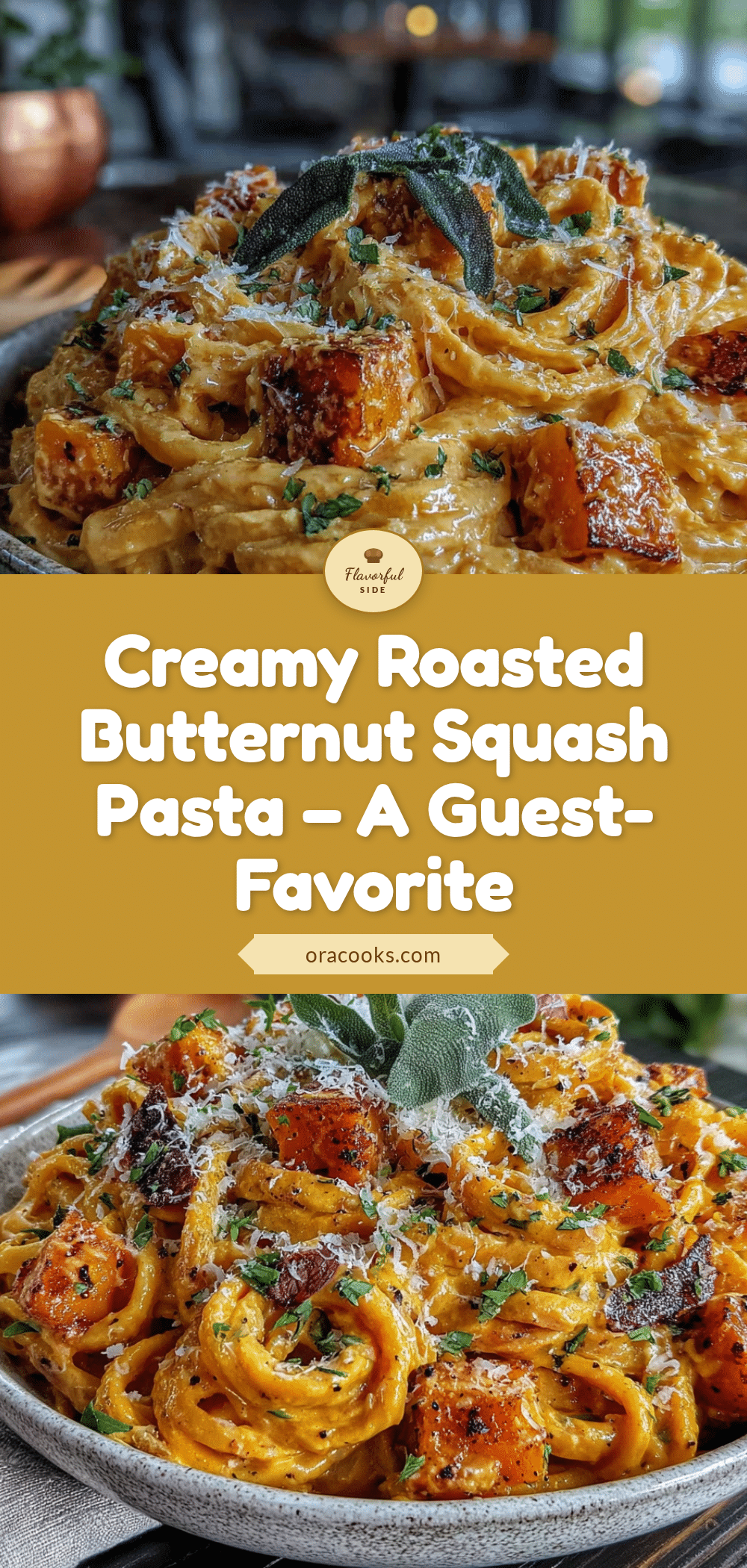
Creamy Roasted Butternut Squash Pasta: Best Easy Recipe

This creamy roasted butternut squash pasta is a crowd-pleasing dish that converts even the most stubborn squash skeptics. The secret is in the roasting—deep, caramelized, almost sweet—blended into a velvety sauce that tastes indulgent but is surprisingly simple to make.
- Prep Time: 15 minutes
- Cook Time: 30 minutes
- Total Time: 45 minutes
- Yield: 6 servings 1x
- Category: Main Course
- Cuisine: American
Ingredients
- 1 medium butternut squash, about 2 to 2.5 pounds (peeled, seeded, and cut into 1-inch cubes)
- 3 tablespoons olive oil, divided
- 4 cloves garlic, unpeeled
- 1 teaspoon salt
- ½ teaspoon black pepper
- ½ teaspoon smoked paprika
- 1 cup vegetable broth (low-sodium preferred)
- ¼ cup heavy cream
- 2 tablespoons nutritional yeast
- 2 tablespoons grated Parmesan cheese (plus more for serving)
- 1 tablespoon butter
- 12 ounces pasta (short, sturdy shapes like rigatoni, fusilli, or penne)
- 2 tablespoons fresh sage leaves
- ¼ cup walnuts, roughly chopped
- 1 tablespoon olive oil (for frying sage and walnuts)
Instructions
- Preheat your oven to 400°F (200°C). Peel the butternut squash, cut in half lengthwise, scoop out seeds, and cut into 1-inch cubes. Toss with 2 tablespoons olive oil, salt, pepper, and smoked paprika. Spread in a single layer on a rimmed baking sheet. Add unpeeled garlic cloves. Roast for 25 to 30 minutes, flipping halfway, until tender and caramelized.
- Let the roasted squash cool for about 5 minutes. Squeeze the roasted garlic cloves out of their skins. Add the squash, roasted garlic, vegetable broth, heavy cream, nutritional yeast, and Parmesan to a blender. Blend on high until completely smooth, about 60 to 90 seconds. Adjust salt and pepper to taste. Set aside.
- Bring a large pot of generously salted water to a boil. Cook pasta according to package directions until al dente. Reserve about 1 cup of pasta water before draining. Do not rinse the pasta.
- While the pasta cooks, heat 1 tablespoon olive oil in a skillet over medium heat. Add the chopped walnuts and cook, stirring frequently, until fragrant and lightly toasted, about 2 to 3 minutes. Remove and set aside. In the same skillet, add the sage leaves in a single layer. Cook for about 30 to 60 seconds per side until crispy. Remove and set aside on a paper towel.
- In the same pot used for pasta (or a large skillet), warm the butternut squash sauce over medium-low heat. Add the drained pasta and toss to coat. If the sauce is too thick, add a splash of reserved pasta water until desired consistency. Stir in the butter until melted. Serve immediately, topped with crispy sage, toasted walnuts, and extra Parmesan.
Notes
The sauce can be made up to 3 days ahead. For a vegan version, use full-fat coconut milk instead of heavy cream, vegan butter, and extra nutritional yeast instead of Parmesan. For a nut-free version, substitute toasted pumpkin seeds for walnuts. Reserve more pasta water than you think you need to adjust sauce consistency.
Nutrition
- Serving Size: 1 serving
- Calories: 420
- Sugar: 8
- Sodium: 520
- Fat: 18
- Saturated Fat: 6
- Carbohydrates: 55
- Fiber: 8
- Protein: 12
Keywords: butternut squash pasta, creamy pasta, roasted butternut squash, easy pasta recipe, fall pasta, vegetarian pasta, make-ahead pasta