Love this? Save it for later!
Share the inspiration with your friends
This was supposed to be a quick marinara for a Tuesday night. I had the canned tomatoes ready, the garlic minced, and that slightly smug feeling you get when you think dinner is basically handled. Then I realized the oven was already on from roasting vegetables, and I thought, well, that’s one way to make this more interesting. I tossed the tomatoes in, got distracted by a phone call, and twenty minutes later, the kitchen smelled like a slow-simmering Sunday that had never actually happened. What came out of that oven was nothing like the plan—and better.
Honestly, I almost walked away from it. The sauce looked a little too dark around the edges, and I was sure I had ruined a perfectly good can of San Marzanos. But I stirred it anyway, added a splash of olive oil, and tasted it. That first bite had this unexpected depth—sweet, smoky, and rich in a way that felt like it had been cooking for hours. I mean, I was just standing there in my kitchen, spoon in hand, completely caught off guard by a happy accident. Maybe you’ve been there, where a tiny mistake turns into something you want to make forever.
That night, I served it over pasta with a little parmesan, and my partner asked where I had bought the sauce. That’s when I knew I had stumbled onto something. This easy homemade roasted tomato sauce for Sunday dinner became my new ritual, not because it’s fancy, but because it’s forgiving. It lets you walk away, get distracted, and still end up with something that tastes like you spent all day stirring. That’s the kind of recipe that stays with you.
Why You’ll Love This Recipe
This isn’t just another tomato sauce recipe. It’s the one that makes you wonder why you ever bought the jarred stuff. I’ve tested this small batch version at least a dozen times, tweaking the roasting time and the garlic ratio, and I can tell you—it’s bulletproof. Here’s why you’ll keep coming back to it:
- Quick & Easy: Comes together in under 45 minutes, most of which is hands-off oven time. Perfect for a busy weeknight when you still want that Sunday dinner feeling.
- Simple Ingredients: No fancy grocery trips needed. You likely already have everything in your kitchen—canned tomatoes, garlic, olive oil, and a few dried herbs.
- Perfect for Small Batches: This recipe makes just enough for a pasta dinner for two or three, with a little left over for bruschetta the next day. No waste, no massive pots.
- Crowd-Pleaser: Every time I’ve served this, people ask for the recipe. It’s got that deep, slow-cooked flavor without the hours of simmering.
- Unbelievably Delicious: The roasting caramelizes the tomatoes and garlic, creating a sweetness you just can’t get from stovetop cooking. It’s comfort food reimagined—faster, but with the same soul-soothing satisfaction.
What makes this recipe different is the technique. Roasting the tomatoes instead of simmering them concentrates the flavor and adds a subtle smokiness that feels like you’ve been tending a pot all afternoon. It’s the kind of sauce that makes you close your eyes after the first bite. Trust me, once you try this, you won’t go back.
What Ingredients You Will Need
This recipe uses simple, wholesome ingredients to deliver bold flavor and satisfying texture without the fuss. Most of these are pantry staples, so you can whip this up anytime the craving hits.
- Canned whole peeled tomatoes (28 oz / 800 g): I recommend San Marzano tomatoes for their sweetness and low acidity. If you can’t find them, any good-quality whole peeled tomato will work. Avoid crushed or diced here—whole tomatoes hold up better during roasting.
- Garlic cloves (4-5, smashed): Smashing them instead of mincing keeps them from burning too quickly in the oven. You want that mellow, roasted garlic flavor, not bitterness.
- Extra-virgin olive oil (3 tbsp / 45 ml): Use a good one here—it’s a key flavor. I like California Olive Ranch for a balanced, fruity taste.
- Dried oregano (1 tsp): Adds that classic Italian note. Fresh oregano works too, but use 1 tablespoon if you’re swapping.
- Dried basil (1 tsp): Or 1 tablespoon fresh, stirred in at the end for brightness.
- Red pepper flakes (¼ tsp, optional): For a little warmth. Leave it out if you’re serving kids or prefer a milder sauce.
- Salt (½ tsp, plus more to taste): I use kosher salt—it dissolves evenly and lets you control the seasoning.
- Balsamic vinegar (1 tsp): This is my secret ingredient. It rounds out the acidity and adds a tiny bit of sweetness without making the sauce taste like vinegar.
- Fresh basil leaves (4-5, for finishing): Optional, but highly recommended. It adds a pop of color and freshness right before serving.
If you’re in a pinch, you can substitute dried herbs for fresh, but try to stick with whole canned tomatoes. The texture just isn’t the same with crushed. For a dairy-free option, this sauce is already vegan as written—just skip the parmesan on top.
Equipment Needed
You don’t need a fancy kitchen to make this sauce. Here’s what I use every time:
- Baking dish or rimmed sheet pan (9×13 inch / 23×33 cm): A glass or ceramic dish works best for even roasting. I’ve used a metal pan before, and it works fine, but the sauce can reduce a bit faster, so keep an eye on it.
- Immersion blender or regular blender: An immersion blender makes cleanup a breeze—you can blend right in the dish. A standard blender works too, just let the sauce cool slightly before blending to avoid splatters.
- Chef’s knife and cutting board: For smashing the garlic and chopping fresh basil.
- Wooden spoon or spatula: For stirring the sauce after roasting.
- Measuring spoons and cups: For accuracy, though this recipe is forgiving.
- Oven mitts: That dish gets hot, trust me.
If you don’t have an immersion blender, you can mash the tomatoes with a potato masher for a chunkier sauce. I’ve done that on camping trips, and it works surprisingly well. Just be prepared for a more rustic texture.
Preparation Method
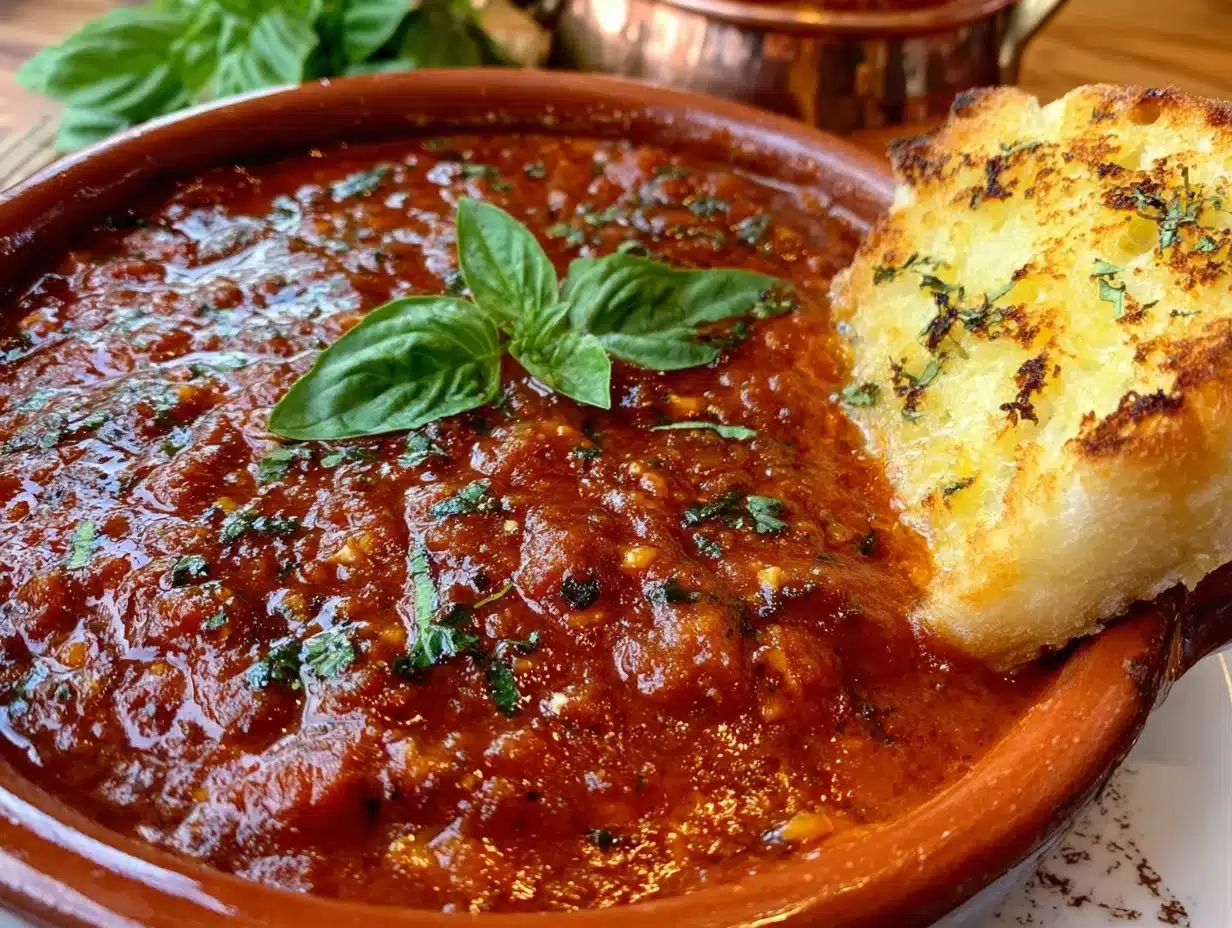
This is where the magic happens. Follow these steps, and you’ll have a sauce that tastes like it simmered all afternoon.
- Preheat your oven to 400°F (200°C). Place a rack in the middle position. While it heats, get your ingredients ready.
- Prepare the tomatoes. Open the can of whole peeled tomatoes and pour them into your baking dish, including the juices. Use your hands or a spoon to break each tomato into rough chunks—don’t overdo it, just a few cracks so they release their juices during roasting.
- Add the garlic and seasonings. Scatter the smashed garlic cloves over the tomatoes. Drizzle with 2 tablespoons of olive oil, then sprinkle the oregano, basil, red pepper flakes (if using), and ½ teaspoon of salt. Give everything a gentle stir to coat.
- Roast for 30-35 minutes. Place the dish in the oven and roast until the tomatoes are softened and starting to caramelize around the edges. The garlic should be golden and fragrant. Halfway through, give the dish a quick stir to prevent the edges from drying out.
- Add the finishing touches. Remove the dish from the oven (careful, it’s hot!). Stir in the balsamic vinegar and the remaining 1 tablespoon of olive oil. Let it cool for about 5 minutes—this makes blending safer.
- Blend to your preferred consistency. Use an immersion blender directly in the dish to puree the sauce until smooth. If you like a chunkier sauce, pulse a few times instead of blending fully. For a smoother texture, blend until velvety. Taste and adjust salt if needed.
- Stir in fresh basil. Tear the fresh basil leaves and stir them into the sauce. The residual heat will wilt them slightly, releasing their aroma.
- Serve immediately or store. Use the sauce right away over pasta, or let it cool completely before transferring to an airtight container.
A few sensory cues to watch for: the garlic should be soft enough to mash with a fork, and the tomatoes should look slightly browned at the edges. If the sauce seems too thick after blending, stir in a tablespoon of pasta water or broth to loosen it.
Cooking Tips & Techniques
I’ve made this sauce more times than I can count, and I’ve learned a few things the hard way. Here are my best tips:
- Don’t skip smashing the garlic. I once minced it out of habit, and it burned in the oven—bitter and unpleasant. Smashed cloves roast slowly and sweetly, which is exactly what you want.
- Watch your roasting time. Ovens vary, so start checking at 25 minutes. You want caramelization, not charring. If the edges are getting too dark, stir the sauce and reduce the heat to 375°F (190°C).
- Use a rimmed pan. I made the mistake of using a flat sheet pan once, and the juices ran off, leaving me with dry, burnt tomatoes. A baking dish with sides keeps everything contained.
- Let it rest before blending. Hot liquid in a blender can be dangerous—it can blow the lid off. Five minutes of cooling is worth the wait.
- Season gradually. The salt in canned tomatoes varies by brand. Start with ½ teaspoon, then adjust after blending. You can always add more, but you can’t take it out.
- Double the batch if you want. This recipe scales beautifully. Just use a larger dish and add 5-10 minutes to the roasting time.
One failure I’ll admit: I once forgot the balsamic vinegar entirely, and the sauce was flat and one-dimensional. That tiny splash makes a huge difference—don’t skip it.
Variations & Adaptations
This sauce is a great base for experimenting. Here are a few ways I’ve adapted it:
- Herby Version: Add a sprig of fresh rosemary or thyme to the dish before roasting. Remove it before blending for a subtle, earthy flavor.
- Spicy Arrabbiata: Double the red pepper flakes and add a chopped fresh chili (like a serrano) to the tomatoes before roasting. It’s perfect for those who like heat.
- Roasted Vegetable Blend: Toss in a chopped carrot and a halved shallot with the tomatoes. They’ll roast alongside and add natural sweetness—great for picky eaters.
- Dairy-Free Creamy Sauce: After blending, stir in ¼ cup of full-fat coconut milk or cashew cream. It sounds odd, but it creates a luscious, creamy texture without dairy.
- Meaty Version: Brown ½ pound of ground beef or Italian sausage in a skillet, then stir it into the finished sauce. Simmer for 10 minutes to meld the flavors.
I’ve tried the roasted vegetable variation for guests who claimed they didn’t like “plain tomato sauce,” and they cleaned their plates. It’s a sneaky way to add nutrition without changing the flavor profile too much.
Serving & Storage Suggestions
This sauce is versatile, so here’s how I like to serve and store it:
- Serving Temperature: Serve hot, straight from the pot or dish. It’s also delicious at room temperature over crusty bread or as a dipping sauce for mozzarella sticks.
- Presentation: Spoon over al dente spaghetti or rigatoni, then top with fresh basil leaves and a sprinkle of parmesan (or nutritional yeast for a vegan option). A drizzle of good olive oil right before serving adds a nice finish.
- Complementary Dishes: Pair with a simple green salad, garlic bread, or roasted vegetables. For a heartier meal, serve alongside grilled chicken or meatballs.
- Storage: Let the sauce cool completely, then transfer to an airtight container. It will keep in the refrigerator for up to 5 days. The flavors actually deepen after a day or two—Sunday dinner tastes even better on Tuesday.
- Freezing: Pour the cooled sauce into freezer-safe bags or containers, leaving a little room for expansion. It freezes well for up to 3 months. Thaw overnight in the fridge or reheat directly from frozen in a saucepan over low heat.
- Reheating: Warm the sauce gently on the stovetop over medium-low heat, stirring occasionally. Add a splash of water or pasta water if it’s too thick. Avoid boiling, which can dull the roasted flavor.
I’ve found that this sauce is even better the next day—the garlic mellows out and the herbs meld together beautifully. It’s a great make-ahead option for busy weeks.
Nutritional Information & Benefits
Here’s an approximate breakdown per serving (based on 4 servings):
- Calories: 120
- Fat: 8g (mostly from olive oil, which is heart-healthy)
- Carbohydrates: 12g
- Fiber: 3g
- Sugar: 6g (natural from tomatoes)
- Protein: 3g
- Sodium: 350mg (varies by canned tomato brand)
Tomatoes are rich in lycopene, an antioxidant linked to heart health and reduced inflammation. Roasting actually increases the bioavailability of lycopene, so you’re getting more benefits than from raw tomatoes. Garlic adds immune-boosting properties, and olive oil provides healthy monounsaturated fats. This sauce is naturally gluten-free, vegan, and dairy-free, making it suitable for many dietary needs. If you’re watching sodium, look for no-salt-added canned tomatoes.
From a wellness perspective, I love that this sauce lets me enjoy comfort food without guilt. It’s whole-food based, minimally processed, and packed with flavor. That’s a win in my book.
Conclusion
This easy homemade roasted tomato sauce for Sunday dinner has become a staple in my kitchen, and I think it will be in yours too. It’s proof that you don’t need to spend hours stirring to get that deep, slow-cooked taste. A little roasting, a few simple ingredients, and you’ve got a sauce that feels special without the stress.
I encourage you to make it your own—tweak the herbs, add a little heat, or blend it smooth or chunky. That’s the beauty of a simple recipe. It’s a canvas for your preferences. Honestly, I love this recipe because it reminds me that good things can come from happy accidents. It’s forgiving, flavorful, and always delivers.
I’d love to hear how yours turns out. Did you add a twist? Serve it with something unexpected? Drop a comment below or share your version on social media—tag me so I can see your creation. Happy cooking, and here’s to many cozy Sunday dinners ahead!
Frequently Asked Questions
Can I use fresh tomatoes instead of canned?
Absolutely. Use about 2 pounds (900 g) of ripe Roma or plum tomatoes. Cut them in half, toss with olive oil and salt, and roast at 400°F (200°C) for 35-40 minutes until softened. Then proceed with the recipe. You may need to blend a little longer to get a smooth consistency.
How do I make this sauce thicker?
If you prefer a thicker sauce, roast the tomatoes for an additional 5-10 minutes to reduce the liquid. Alternatively, after blending, simmer the sauce on the stovetop over low heat for 10-15 minutes, stirring occasionally, until it reaches your desired consistency.
Can I make this in a slow cooker?
Yes, but the flavor will be different. Combine all ingredients (except the balsamic vinegar and fresh basil) in a slow cooker and cook on low for 4-6 hours. Blend as directed, then stir in the vinegar and basil. It won’t have the same caramelized depth, but it’s still delicious.
What if I don’t have balsamic vinegar?
You can substitute with 1 teaspoon of red wine vinegar or a squeeze of lemon juice. The goal is to brighten the acidity. If you have none of those, just skip it—the sauce will still be good, just a little less complex.
Can I add other vegetables to this sauce?
Definitely. Chopped carrots, celery, or bell peppers can be roasted alongside the tomatoes. Just cut them into small, even pieces so they cook at the same rate. This is a great way to sneak in extra veggies for picky eaters.
Pin This Recipe!
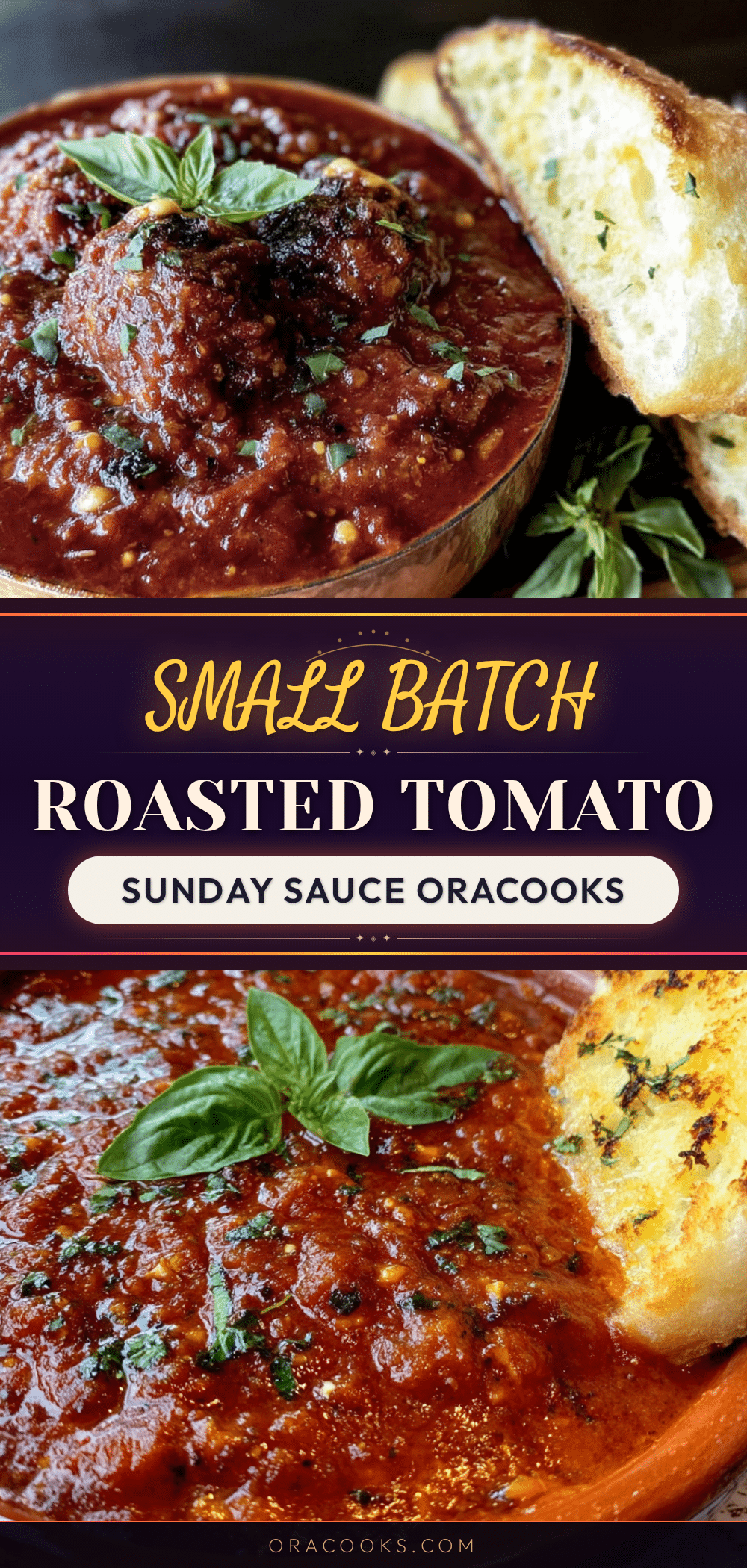
Easy Homemade Roasted Tomato Sauce for Sunday Dinner

This roasted tomato sauce is a happy accident turned ritual—deep, sweet, and smoky with minimal effort. It comes together in under 45 minutes, most of which is hands-off oven time, and tastes like it simmered all afternoon.
- Prep Time: 10 minutes
- Cook Time: 35 minutes
- Total Time: 45 minutes
- Yield: 4 servings 1x
- Category: Main Course
- Cuisine: Italian
Ingredients
- 28 oz (800 g) canned whole peeled tomatoes (preferably San Marzano)
- 4–5 garlic cloves, smashed
- 3 tbsp (45 ml) extra-virgin olive oil, divided
- 1 tsp dried oregano
- 1 tsp dried basil
- ¼ tsp red pepper flakes (optional)
- ½ tsp kosher salt, plus more to taste
- 1 tsp balsamic vinegar
- 4–5 fresh basil leaves, for finishing
Instructions
- Preheat your oven to 400°F (200°C). Place a rack in the middle position.
- Open the can of whole peeled tomatoes and pour them into a 9×13-inch baking dish, including the juices. Break each tomato into rough chunks with your hands or a spoon.
- Scatter the smashed garlic cloves over the tomatoes. Drizzle with 2 tablespoons of olive oil, then sprinkle the oregano, basil, red pepper flakes (if using), and ½ teaspoon of salt. Stir gently to coat.
- Roast for 30-35 minutes, until the tomatoes are softened and starting to caramelize around the edges. Halfway through, give the dish a quick stir.
- Remove the dish from the oven. Stir in the balsamic vinegar and the remaining 1 tablespoon of olive oil. Let cool for about 5 minutes.
- Use an immersion blender directly in the dish to puree the sauce until smooth (or pulse for a chunkier texture). Taste and adjust salt if needed.
- Tear the fresh basil leaves and stir them into the sauce.
- Serve immediately over pasta, or let cool completely before storing.
Notes
Don’t skip smashing the garlic—minced garlic can burn in the oven. Watch the roasting time; start checking at 25 minutes. Use a rimmed pan to contain juices. Let the sauce rest before blending to avoid splatters. Season gradually; salt content varies by tomato brand. The balsamic vinegar is a secret ingredient that rounds out acidity—don’t skip it.
Nutrition
- Serving Size: 1 serving (about ½ c
- Calories: 120
- Sugar: 6
- Sodium: 350
- Fat: 8
- Saturated Fat: 1
- Carbohydrates: 12
- Fiber: 3
- Protein: 3
Keywords: roasted tomato sauce, easy homemade sauce, Sunday dinner, quick marinara, small batch sauce, vegan pasta sauce