Love this? Save it for later!
Share the inspiration with your friends
My landlord asked why I couldn’t just mix everything in one bowl and skip the kneading entirely. I started to explain why that wouldn’t work — then stopped. I’d been making bread for years, and I had my methods. But Mrs. Kowalski had been baking since before I was born, and she was looking at me like I was overcomplicating something simple. She was right, of course. I was so used to the ritual of kneading — the push and pull, the flour on my forearms, the quiet satisfaction of a smooth dough — that I’d forgotten bread could be different. It could be faster. It could be rougher. It could still be incredible.
That afternoon, she showed me her Irish soda bread. No yeast. No waiting for dough to rise. Just flour, buttermilk, a little baking soda, and a handful of raisins and caraway seeds. I watched her mix it with a fork, pat it into a round, and slash a cross on top. An hour later, I was eating a warm slice slathered in butter, and honestly? I felt a little humbled. I mean, I’d spent years perfecting my sourdough starter, and here was a bread that came together in ten minutes and tasted like a hug from someone who really knows how to hug.
This easy Irish soda bread with raisins and caraway has become my go-to ever since. It’s the bread I make when I want something homemade but don’t have the energy for a full baking project. It’s the bread that makes my kitchen smell like a cozy Irish cottage, even on a rainy Tuesday. Maybe you’ve been there — staring at a recipe that requires hours of rising time and thinking, “I just don’t have that in me today.” Well, this one’s for you. It’s proof that simple can be spectacular, and that sometimes the best lessons come from letting someone else be the teacher.
Why You’ll Love This Recipe
This isn’t just another soda bread recipe. After countless batches — some too dry, some too dense, some that just didn’t have that something — I landed on a version that hits every note perfectly. Here’s why this one stands out:
- Quick & Easy: From mixing bowl to oven in under 15 minutes. No yeast, no proofing, no fuss. It’s the perfect last-minute bread for soup night or unexpected guests.
- Simple Ingredients: You probably have everything in your pantry right now. Flour, baking soda, salt, buttermilk, raisins, and caraway seeds. That’s it. No fancy grocery runs required.
- Perfect for St. Patrick’s Day & Beyond: Sure, it’s a classic for March 17th, but honestly? I make this year-round. It pairs beautifully with stews, soups, and even just a good slab of Irish butter.
- Crowd-Pleaser: I’ve brought this to potlucks, family dinners, and casual get-togethers. It always disappears. People love the tender crumb and the little bursts of sweetness from the raisins.
- Unbelievably Delicious: The texture is what gets me every time. It’s crusty on the outside, soft and tender on the inside, with that subtle tang from the buttermilk. The caraway adds a gentle anise-like warmth that makes it distinctly Irish.
What makes this recipe different? It’s the technique. I use a light hand when mixing — overworking the dough is the #1 mistake with soda bread. I also let the buttermilk sit with the baking soda for a minute before adding the dry ingredients, which gives the bread a better rise and a more tender crumb. It’s a small step, but it makes a real difference. This isn’t just another version of Irish soda bread; it’s the one I’ve tested and tweaked until it was just right.
Honestly, this recipe is the kind that makes you close your eyes after the first bite. It’s comfort food reimagined — simpler, faster, but with the same soul-soothing satisfaction. Perfect for impressing guests without stress, or turning a simple meal into something memorable.
What Ingredients You Will Need
This recipe uses simple, wholesome ingredients to deliver bold flavor and satisfying texture without the fuss. Most of these are pantry staples, which makes this bread perfect for spontaneous baking.
- All-purpose flour (4 cups / 500g): The backbone of the bread. I prefer Gold Medal or King Arthur Flour for consistent results. Don’t use bread flour — it makes the bread too tough. All-purpose gives you that perfect tender crumb.
- Baking soda (1 teaspoon): This is your leavening agent. Make sure it’s fresh — baking soda loses potency over time, and your bread won’t rise properly. Test it by dropping a little into vinegar; it should fizz vigorously.
- Salt (1 teaspoon): Use fine sea salt or table salt. Kosher salt works too, but you might need a bit more since the crystals are larger.
- Granulated sugar (2 tablespoons / 25g): Just a touch to balance the tang of the buttermilk and complement the raisins. It doesn’t make the bread sweet, just well-rounded.
- Unsalted butter (4 tablespoons / 57g), cold and cut into small cubes: This adds richness and helps create a tender crumb. If you only have salted butter, reduce the added salt to ¾ teaspoon.
- Buttermilk (1¾ cups / 420ml), well-shaken: The acid in buttermilk reacts with the baking soda to create rise. It also gives the bread its signature tangy flavor. If you don’t have buttermilk, you can make a quick substitute: add 1 tablespoon of lemon juice or white vinegar to a measuring cup, then fill with regular milk to the 1¾ cup line. Let it sit for 5 minutes until it curdles slightly.
- Raisins (1 cup / 150g): I use Thompson raisins for their sweetness and plump texture. Golden raisins work too, offering a slightly milder flavor. Pro tip: toss the raisins with a tablespoon of flour before adding them to the dough. This prevents them from sinking to the bottom of the bread.
- Caraway seeds (1½ tablespoons): This is the signature flavor of traditional Irish soda bread. The seeds add a subtle, slightly sweet, anise-like note that pairs beautifully with the raisins. If you’re not a fan, you can reduce to 1 tablespoon or omit entirely, but I really encourage you to try it — it’s what makes this bread distinctly Irish.
- Optional: Egg wash (1 egg beaten with 1 tablespoon water): For a shiny, golden crust. Not traditional, but it makes for a beautiful presentation.
Equipment Needed
You don’t need much for this recipe, which is part of its charm. Here’s what you’ll need:
- Large mixing bowl: Any large bowl will do. I use a sturdy ceramic one because it doesn’t slide around.
- Whisk or fork: For mixing the dry ingredients together.
- Pastry cutter or two knives: To cut the butter into the flour. You can also use your fingertips — just work quickly so the butter doesn’t warm up too much.
- Rubber spatula or wooden spoon: For bringing the dough together.
- Bench scraper or your hands: For shaping the dough.
- Baking sheet: Line it with parchment paper for easy cleanup. A cast-iron skillet also works beautifully for a rustic look.
- Sharp knife or lame: For slashing the cross on top. A serrated knife works well too.
- Cooling rack: Essential for letting the bread cool properly — otherwise, the bottom can get soggy.
If you don’t have a pastry cutter, don’t worry. I’ve used two forks in a pinch, and it works fine. Just make sure the butter pieces are about the size of peas before you add the buttermilk.
Preparation Method
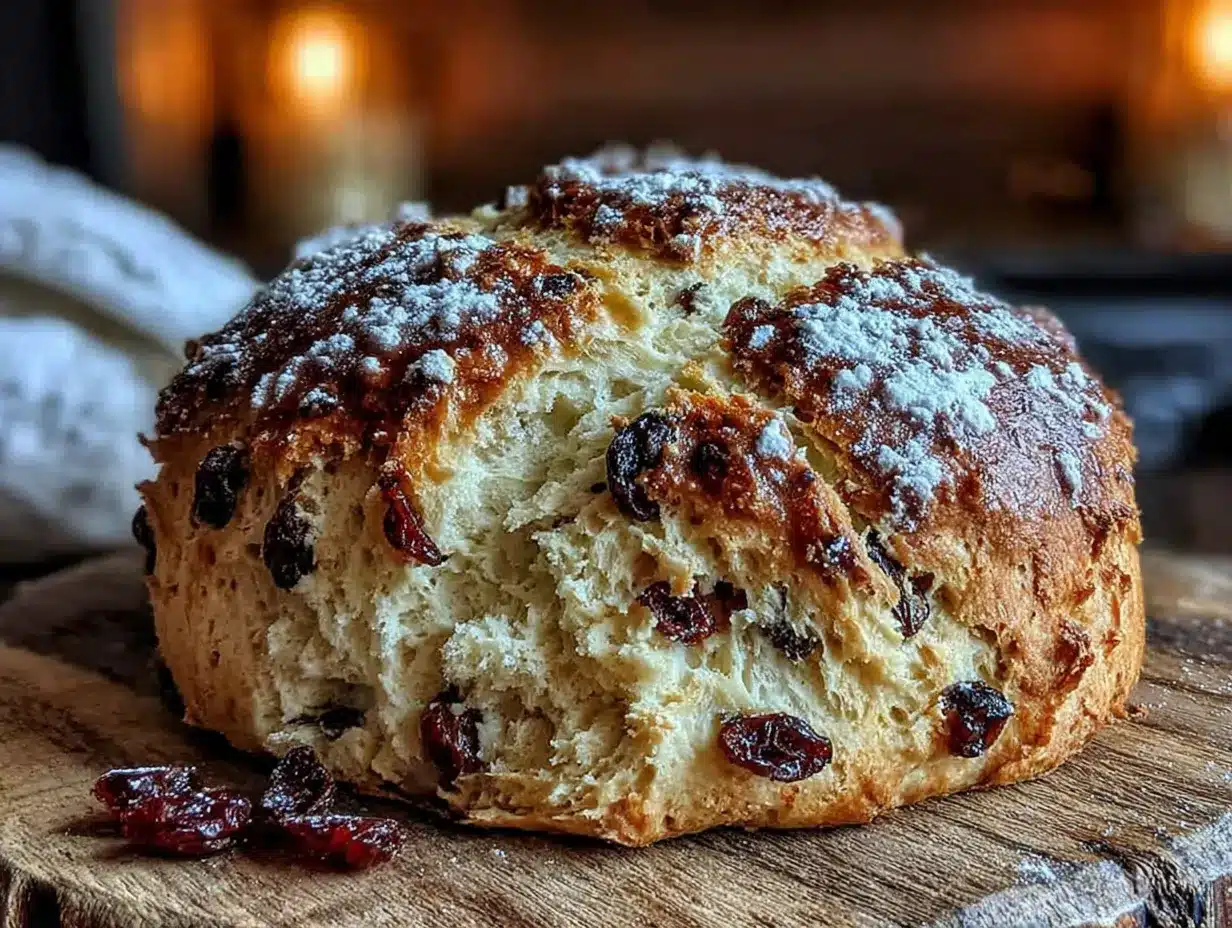
Preheat your oven to 425°F (220°C). Line a baking sheet with parchment paper and set aside.
- Mix the dry ingredients: In a large mixing bowl, whisk together 4 cups (500g) all-purpose flour, 1 teaspoon baking soda, 1 teaspoon salt, and 2 tablespoons (25g) sugar. Make sure the baking soda is evenly distributed — this is crucial for even rising.
- Cut in the butter: Add 4 tablespoons (57g) cold, cubed unsalted butter to the flour mixture. Use a pastry cutter or two knives to cut the butter into the flour until the mixture resembles coarse crumbs with some pea-sized butter pieces remaining. You can also use your fingertips — just work quickly so the butter stays cold. The little bits of butter are what create tenderness in the final bread.
- Add the raisins and caraway: Stir in 1 cup (150g) raisins and 1½ tablespoons caraway seeds. Make sure the raisins are evenly distributed. If you tossed them in flour earlier, any excess flour will just blend into the dough.
- Make a well and add buttermilk: Create a well in the center of the dry ingredients. Pour in 1¾ cups (420ml) buttermilk. Use a rubber spatula or wooden spoon to mix everything together with a few gentle strokes. The dough will be shaggy and slightly sticky — that’s exactly what you want. Do not overmix. Overworking the dough develops gluten, which makes soda bread tough and rubbery. Stop as soon as the flour is incorporated.
- Shape the dough: Lightly flour your hands and a work surface. Turn the dough out onto the floured surface. Gently bring it together into a round shape. Don’t knead it — just pat it into a disc about 1½ inches thick. If the dough feels too sticky, sprinkle a little more flour on top, but go easy. A slightly sticky dough yields a more tender bread.
- Place on baking sheet and slash: Transfer the dough round to your prepared baking sheet. Using a sharp knife, cut a deep cross into the top of the dough, about ½ inch deep. This isn’t just decorative — it’s traditional and helps the bread bake evenly by allowing heat to penetrate the center. Some say it also “lets the fairies out,” and honestly, I like that explanation better.
- Bake: Place the baking sheet in the preheated oven and bake for 35-40 minutes. The bread is done when it’s golden brown and sounds hollow when you tap the bottom. If you have an instant-read thermometer, the internal temperature should be around 200°F (93°C).
- Cool: Transfer the bread to a wire rack to cool completely before slicing. I know it’s tempting to cut into it right away, but slicing too early can make the crumb gummy. Let it rest for at least 30 minutes. The aroma filling your kitchen will test your patience, I promise.
Cooking Tips & Techniques
After making this bread more times than I can count, I’ve picked up a few tricks that make a real difference. Here’s what I’ve learned:
Don’t overmix the dough. This is the most common mistake. Soda bread relies on a light touch. Mix just until the flour is incorporated — a few lumps are fine. Overmixing develops gluten, and you’ll end up with a dense, tough loaf instead of a tender one.
Use cold ingredients. Cold butter and cold buttermilk help keep the dough from getting too warm. Warm dough can make the baking soda react too quickly, leading to a poor rise. If your kitchen is warm, you can even chill the flour for 10 minutes before starting.
Let the buttermilk and baking soda react. After you add the buttermilk to the dry ingredients, let it sit for about 30 seconds before mixing. This gives the acid and baking soda a head start on their chemical reaction, which means a better rise. I learned this trick from a pastry chef friend, and it’s a game-changer.
Bake on a preheated baking sheet. If you want an extra-crispy bottom crust, place your baking sheet in the oven while it preheats. When you put the dough on the hot sheet, it gets an immediate blast of heat that creates a beautiful crust.
Trust the hollow sound test. I’ve burned the bottom of more than a few loaves because I relied solely on visual cues. The hollow sound when you tap the bottom is the most reliable indicator of doneness. If you’re unsure, give it an extra 2-3 minutes.
One of my biggest failures? I once used expired baking soda. The bread came out flat and dense, with a weird metallic taste. Now I always check the expiration date and do the vinegar test if I’m unsure. Learn from my mistake — fresh baking soda is non-negotiable.
Variations & Adaptations
This recipe is wonderfully adaptable. Here are some variations I’ve tried and loved:
- Whole Wheat Irish Soda Bread: Replace 1 cup (125g) of the all-purpose flour with whole wheat flour. You’ll need to add an extra 2-3 tablespoons of buttermilk since whole wheat flour absorbs more liquid. The bread will be denser and nuttier, with a lovely rustic flavor.
- Savory Soda Bread: Omit the sugar, raisins, and caraway seeds. Add 1 cup (100g) grated sharp cheddar cheese, 2 tablespoons chopped fresh rosemary, and ½ teaspoon black pepper. This version is incredible served warm with soup or stew.
- Gluten-Free Irish Soda Bread: Use a 1:1 gluten-free all-purpose flour blend that contains xanthan gum. Cup4Cup and King Arthur Flour both work well. The dough will be stickier, so flour your hands generously. Bake for the same amount of time, but check for doneness with a thermometer.
- Dried Fruit Swap: Not a raisin fan? Try dried currants, chopped dried apricots, or dried cranberries. Each brings a different sweetness. I once made a version with dried cherries and a splash of vanilla extract — it was fantastic.
- Spiced Soda Bread: Add 1 teaspoon of cinnamon and ½ teaspoon of nutmeg along with the dry ingredients. This gives the bread a warm, cozy flavor that’s perfect for fall baking.
Serving & Storage Suggestions
Irish soda bread is best served the day it’s made, but it still has plenty of life after that.
Serving: Serve warm or at room temperature. The classic way is sliced thick, toasted lightly, and slathered with salted Irish butter. It’s also wonderful alongside a bowl of hearty soup — think beef stew, potato leek soup, or a simple tomato basil. For breakfast, try it toasted with a smear of marmalade or honey.
Storage: Store leftover bread wrapped tightly in plastic wrap or in an airtight container at room temperature for up to 2 days. After that, it tends to dry out. Don’t refrigerate it — the fridge actually accelerates staling.
Freezing: Soda bread freezes beautifully. Wrap the completely cooled loaf tightly in plastic wrap, then in aluminum foil. Freeze for up to 3 months. To thaw, leave it at room temperature for a few hours, then warm in a 300°F (150°C) oven for 10 minutes.
Reheating: The best way to revive day-old soda bread is to slice it and toast it. If you want to warm a whole loaf, wrap it in foil and heat in a 350°F (175°C) oven for about 10 minutes. The crust will soften slightly, but the inside will be warm and tender.
Flavor development: Honestly, soda bread is at its peak on day one. The crust is crisp, the crumb is soft, and the buttermilk tang is brightest. That said, day-old slices make amazing toast — the texture firms up just enough to hold a generous spread of butter without getting soggy.
Nutritional Information & Benefits
Here’s an approximate nutritional breakdown per slice (based on 12 slices):
- Calories: 245
- Fat: 5g
- Saturated Fat: 3g
- Carbohydrates: 45g
- Fiber: 2g
- Sugar: 12g
- Protein: 6g
- Sodium: 320mg
While this isn’t a health food, it does offer some benefits. Buttermilk is a good source of calcium and probiotics (if you use cultured buttermilk). Raisins provide fiber, potassium, and antioxidants. Caraway seeds have been used in traditional medicine for digestion — they contain compounds that may help reduce bloating and gas.
If you’re watching your sodium, you can reduce the salt to ¾ teaspoon. For a lower-sugar version, cut the added sugar to 1 tablespoon and use less raisins. The bread will still be delicious, just a bit less sweet.
This bread is vegetarian-friendly and can be made dairy-free by using a plant-based buttermilk substitute (unsweetened almond or oat milk mixed with lemon juice). It’s not suitable for a low-carb or keto diet due to the flour content.
Conclusion
This easy Irish soda bread with raisins and caraway is more than just a recipe — it’s a reminder that good things don’t have to be complicated. It’s the bread I turn to when I want to feel like I’ve accomplished something in the kitchen without spending all day there. It’s the bread that makes my house smell like home, even when I’m miles away from where I grew up.
I hope you give this recipe a try. Don’t be afraid to make it your own — swap the raisins for currants, add a little more caraway, or go completely savory with cheese and herbs. The beauty of soda bread is that it’s forgiving and adaptable. And if your first loaf isn’t perfect? That’s okay. Mine wasn’t either. Just keep baking, and don’t forget to share a slice with someone you love.
I’d love to hear how yours turns out! Leave a comment below and let me know if you tried any variations. And if you’re looking for another simple bread to try, check out my no-knead crusty bread — it’s another one that proves you don’t need to be a professional baker to make something amazing. Happy baking!
Frequently Asked Questions
Can I use regular milk instead of buttermilk?
You can, but the bread won’t have the same tangy flavor or tender texture. Buttermilk’s acidity is what reacts with the baking soda to create rise. If you don’t have buttermilk, make a quick substitute: add 1 tablespoon of lemon juice or white vinegar to a measuring cup, then fill with regular milk to the 1¾ cup line. Let it sit for 5 minutes before using.
Why did my soda bread turn out dense and heavy?
This usually happens for one of three reasons: overmixing the dough, using expired baking soda, or not enough buttermilk. Overmixing develops gluten, which makes the bread tough. Expired baking soda won’t create enough rise. And if the dough is too dry, the bread won’t expand properly. Next time, mix gently, check your baking soda, and make sure your dough is shaggy and slightly sticky.
Can I make this recipe vegan?
Yes! Use a plant-based butter (like Miyoko’s or Earth Balance) and make a vegan buttermilk by mixing 1¾ cups unsweetened almond or oat milk with 1 tablespoon of lemon juice. Let it sit for 5 minutes until it curdles. The texture will be slightly different — a bit more crumbly — but it’s still delicious.
How do I keep the raisins from sinking to the bottom?
Toss the raisins with a tablespoon of flour before adding them to the dough. The flour coating helps suspend them in the batter so they stay evenly distributed throughout the bread. This is a simple trick that makes a big difference.
Can I add other mix-ins to this recipe?
Absolutely! This recipe is very forgiving. Try adding ½ cup of chopped walnuts or pecans for crunch, or swap the raisins for dried cranberries or chopped dried apricots. For a sweeter version, add ½ cup of chocolate chips and reduce the raisins to ½ cup. Just be careful not to overload the dough — keep the total mix-ins to about 1½ cups.
Pin This Recipe!
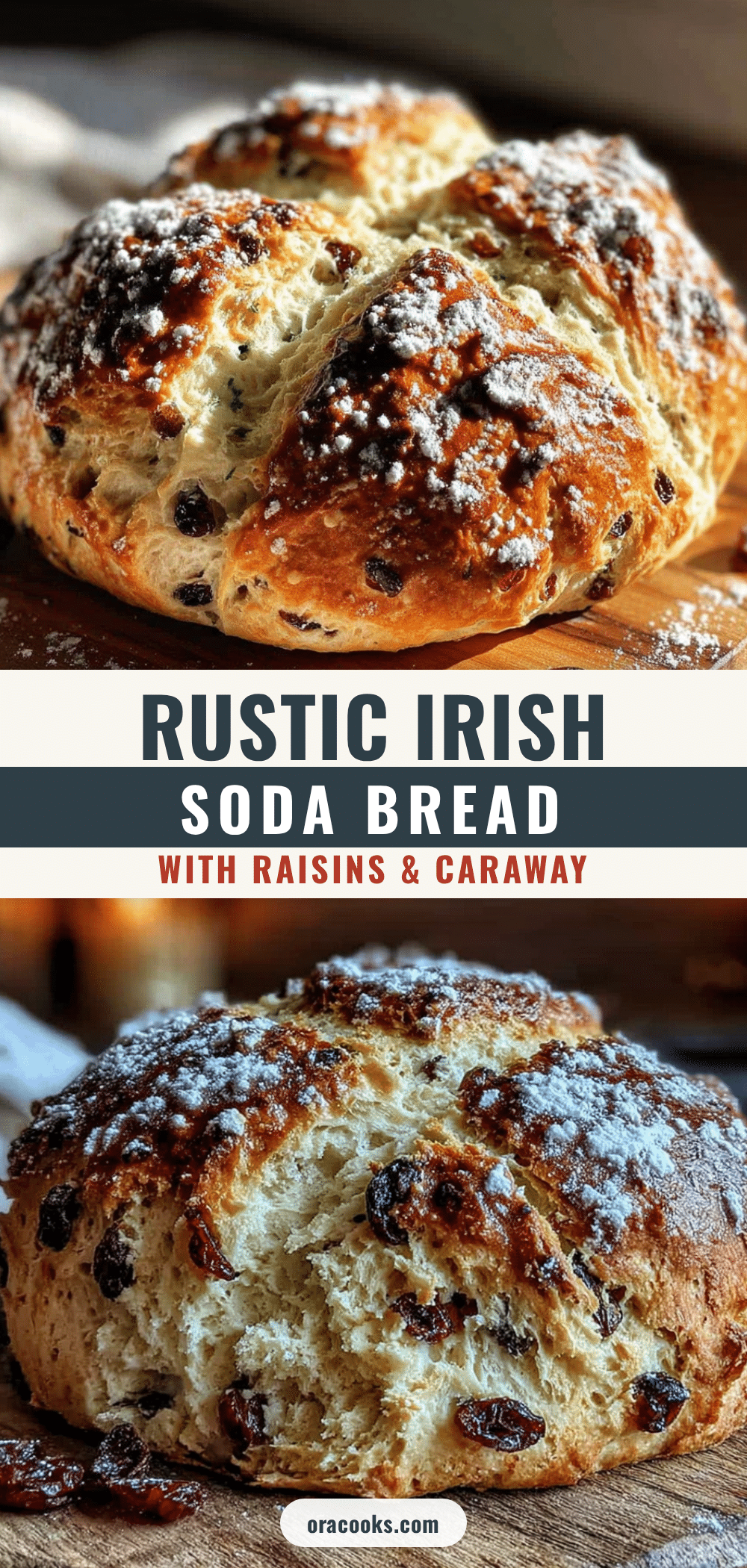
Easy Irish Soda Bread with Raisins & Caraway – Best Recipe

This easy Irish soda bread with raisins and caraway is a quick, no-yeast bread that comes together in under 15 minutes. It’s crusty on the outside, soft and tender on the inside, with a subtle tang from buttermilk and bursts of sweetness from raisins.
- Prep Time: 15 minutes
- Cook Time: 35-40 minutes
- Total Time: 50-55 minutes
- Yield: 12 servings 1x
- Category: Bread
- Cuisine: Irish
Ingredients
- 4 cups (500g) all-purpose flour
- 1 teaspoon baking soda
- 1 teaspoon salt
- 2 tablespoons (25g) granulated sugar
- 4 tablespoons (57g) unsalted butter, cold and cut into small cubes
- 1¾ cups (420ml) buttermilk, well-shaken
- 1 cup (150g) raisins
- 1½ tablespoons caraway seeds
- Optional: 1 egg beaten with 1 tablespoon water for egg wash
Instructions
- Preheat oven to 425°F (220°C). Line a baking sheet with parchment paper.
- In a large mixing bowl, whisk together flour, baking soda, salt, and sugar.
- Cut in cold butter using a pastry cutter or two knives until mixture resembles coarse crumbs with some pea-sized butter pieces.
- Stir in raisins and caraway seeds until evenly distributed.
- Make a well in the center and pour in buttermilk. Mix gently with a rubber spatula or wooden spoon until just combined. Dough will be shaggy and slightly sticky.
- Lightly flour hands and a work surface. Turn dough out and gently shape into a round disc about 1½ inches thick. Do not knead.
- Transfer to prepared baking sheet. Using a sharp knife, cut a deep cross into the top, about ½ inch deep.
- Bake for 35-40 minutes until golden brown and hollow when tapped on the bottom. Internal temperature should be around 200°F (93°C).
- Transfer to a wire rack to cool completely before slicing. Let rest at least 30 minutes.
Notes
Don’t overmix the dough; overworking develops gluten and makes the bread tough. Use cold ingredients for best rise. Let buttermilk and baking soda react for about 30 seconds before mixing. For extra-crispy bottom crust, preheat the baking sheet in the oven. Toss raisins with a tablespoon of flour to prevent sinking.
Nutrition
- Serving Size: 1 slice
- Calories: 245
- Sugar: 12
- Sodium: 320
- Fat: 5
- Saturated Fat: 3
- Carbohydrates: 45
- Fiber: 2
- Protein: 6
Keywords: Irish soda bread, soda bread, raisin bread, caraway bread, easy bread, no yeast bread, St. Patrick's Day bread